
Growing Palm Trees In North Carolina
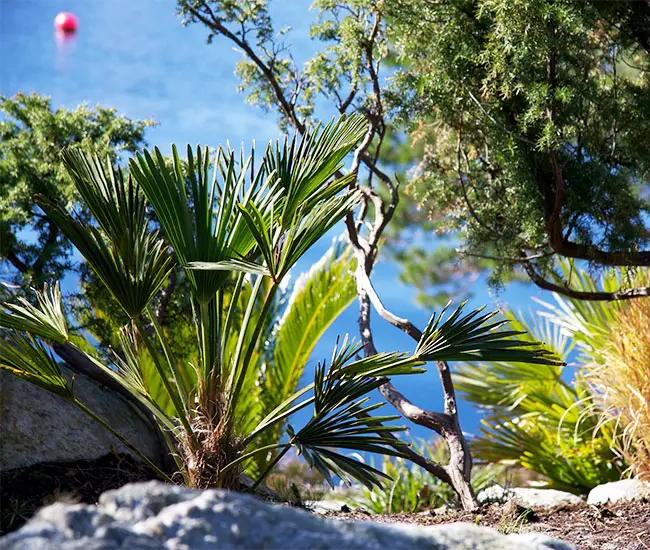
You can successfully grow palm trees in the warm areas of North Carolina. North Carolina boasts a humid subtropical climate with short, mild winters and warm, humid summers.
The average January temperatures in this state range from 46-56°F (7-13°C), while the average July temperatures vary from 83-90°F (28-32°C). North Carolina faces the threat of hurricanes and tropical storms during the summer and early fall seasons. On average, the state receives about 5 inches (130 mm) of snow per year.
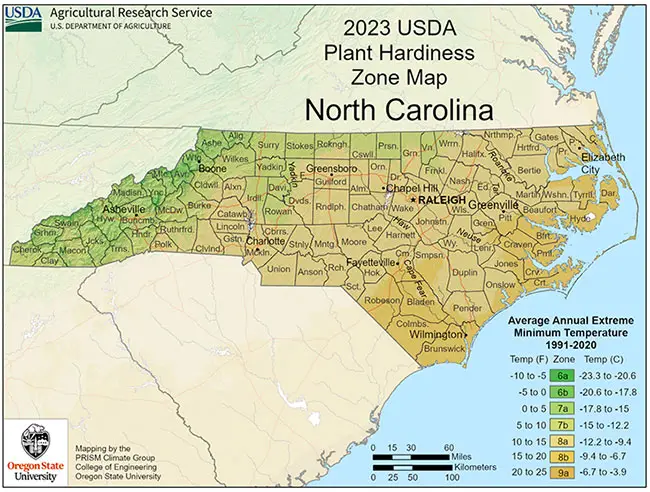
The highest temperature ever recorded in North Carolina reached 110°F (43°C), while the lowest dropped to a bone-chilling –34°F (–37°C). USDA hardiness zones in North Carolina range from 5b to 8b.
While attempting to grow palm trees in Zone 5b may be challenging, Zones 8a and 8b provide a warm enough climate for success. With proper winter protection and the creation of a favorable microclimate, even Zone 7 can be suitable for palm cultivation.
North Carolina USDA Zones
Palm Trees That Grow In North Carolina
Below, I’ve compiled a list of 14 cold-hardy palm trees that can thrive in the warm regions of North Carolina. These palms are resilient and capable of surviving cold temperatures, even as low as Zone 8a, down to 10°F.
In cases where freezing weather is accompanied by cold winds, some winter protection measures may be beneficial.
To prevent freeze damage, I recommend utilizing various cold protection techniques, many of which are easy to implement and budget-friendly. Some effective methods include heavy mulching, thorough watering, and the use of Christmas lights, among others.
1. California Fan Palm Tree (Washingtonia filifera)
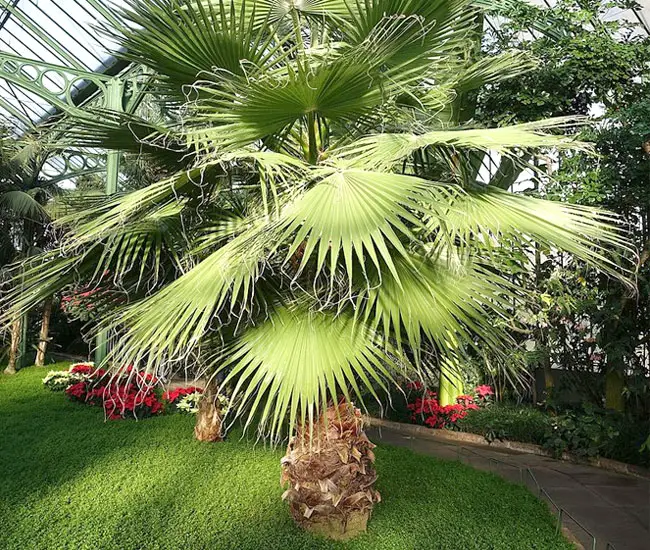
The California Fan Palm Tree, scientifically known as Washingtonia filifera, stands out as one of the most popular palm varieties due to its durability and stunning appearance.
It exhibits high drought tolerance, adapts well to a wide range of soils, and can endure cold temperatures as low as 10°F. It thrives in USDA Zones 8a to 11 (10 to 15°F).
2. Cabbage Palm Tree (Sabal palmetto)
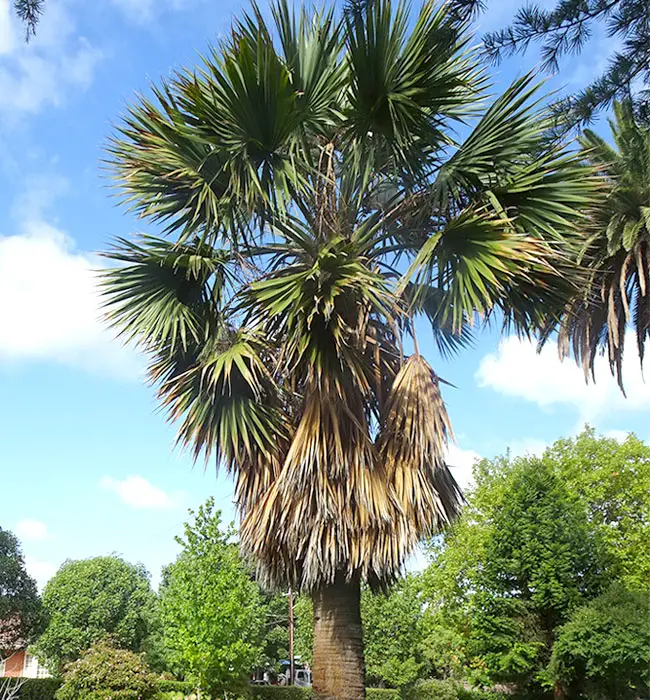
The Cabbage Palm Tree, scientifically named Sabal palmetto, is another exceptional choice for cold-hardy palms. This slow-growing palm has gained popularity thanks to its resilience and its ability to thrive in diverse soil and weather conditions.
It can withstand cold temperatures down to 10°F, making it a perfect fit for USDA Zones 8a (10-15°F) to 11 (above 40°F).
3. Canary Date Palm Tree (Phoenix canariensis)
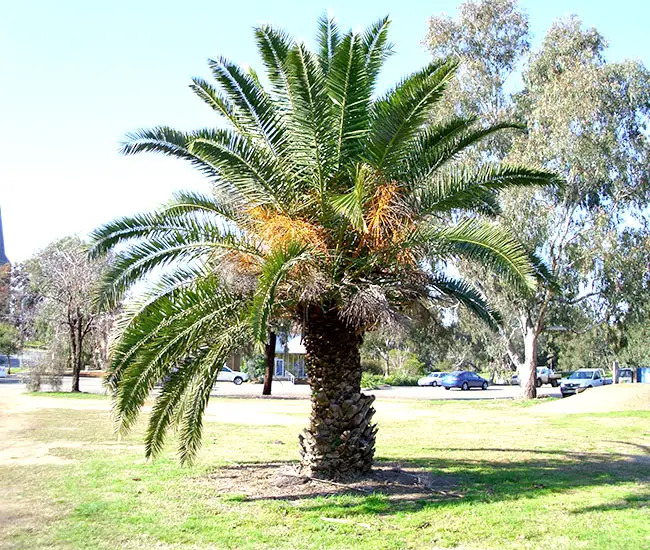
The Canary Date Palm Tree, scientifically known as Phoenix canariensis, stands out with its distinctive crown of leaves and trunk features. This slow-growing palm is highly adaptable to a wide range of soil conditions and can endure cold temperatures down to 15°F.
With some additional winter protection, it can thrive in Zone 8a, making it suitable for USDA Zones 8b (15 – 20°F) to 11 (above 40°F).
4. True Date Palm Tree (Phoenix dactylifera)
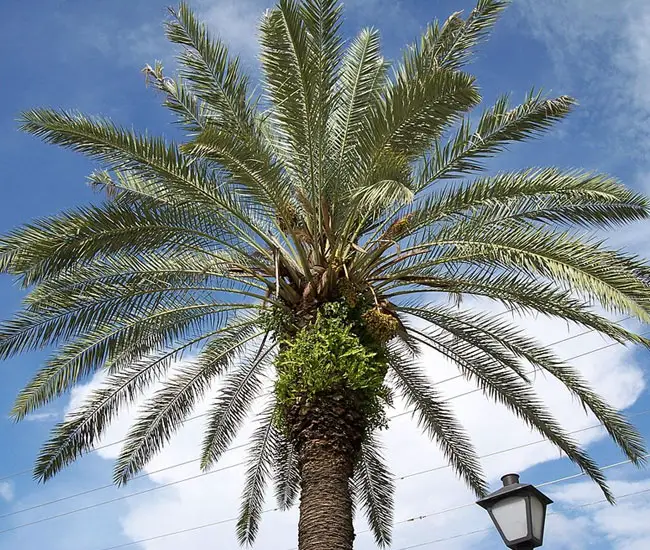
The True Date Palm Tree, scientifically named Phoenix dactylifera, is renowned worldwide for its delicious date fruits. This slow-growing palm is drought-tolerant, versatile in different soils, and can withstand cold down to 15°F. It’s an excellent choice for USDA Zones 8b (15 to 20°F) to 11 (above 40°F).
5. European Fan Palm Tree (Chamaerops humilis)
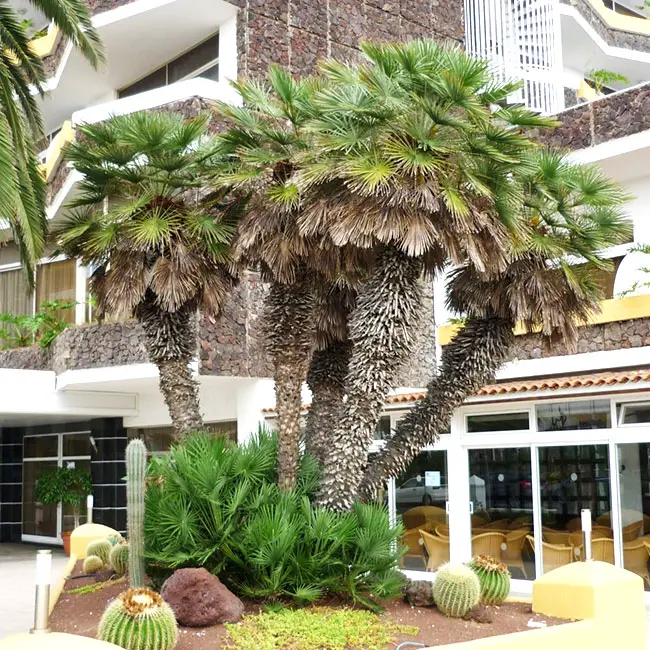
The European Fan Palm Tree (Chamaerops humilis) has gained popularity for its durability and cold resistance, making it a great addition to landscapes in USDA Zones 8a (10°F – 15°F) to 11 (above 40°F).
6. Mazari Palm Tree (Nannorrhops ritchiana)
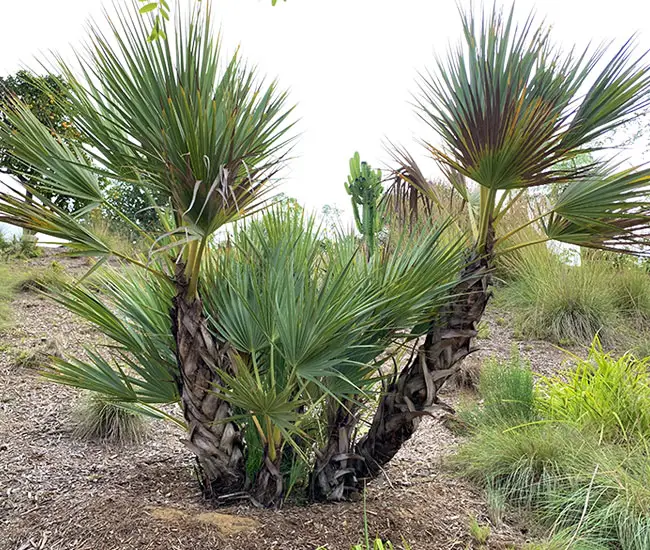
The Mazari Palm Tree, scientifically named Nannorrhops ritchiana, is a rare but increasingly sought-after palm due to its striking appearance and resilience.
It easily adapts to various soil types, tolerates drought, and can endure cold down to 10°F. It thrives in landscapes within USDA Zones 8a (10 – 15°F) to 11 (above 40°F).
7. Mexican Fan Palm Tree (Washingtonia robusta)
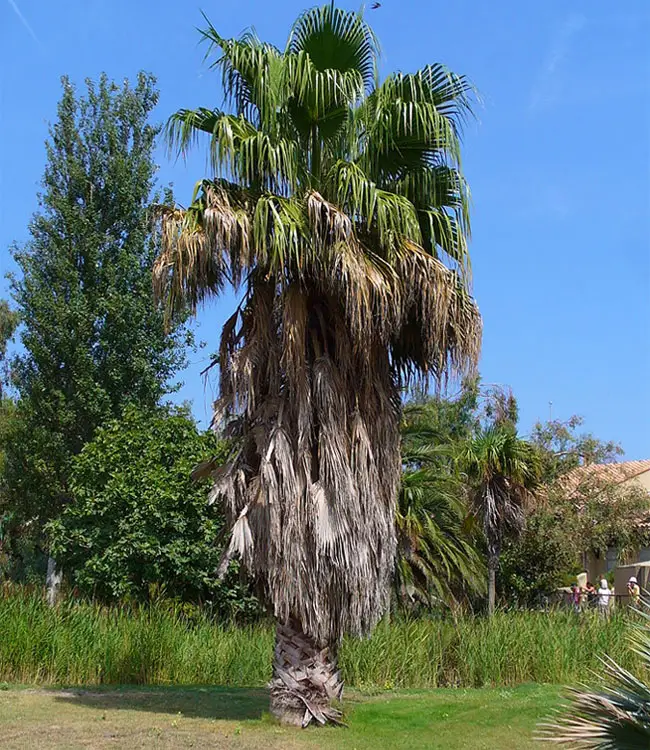
The Mexican Fan Palm Tree, scientifically known as Washingtonia robusta, is a popular choice for both indoor and outdoor settings due to its striking appearance and adaptability.
It can tolerate cold down to 10°F, making it suitable for landscapes in USDA Zones 8a (10 to 15°F) to 11 (above 40°F).
8. Miniature Chusan Palm Tree (Trachycarpus wagnerianus)
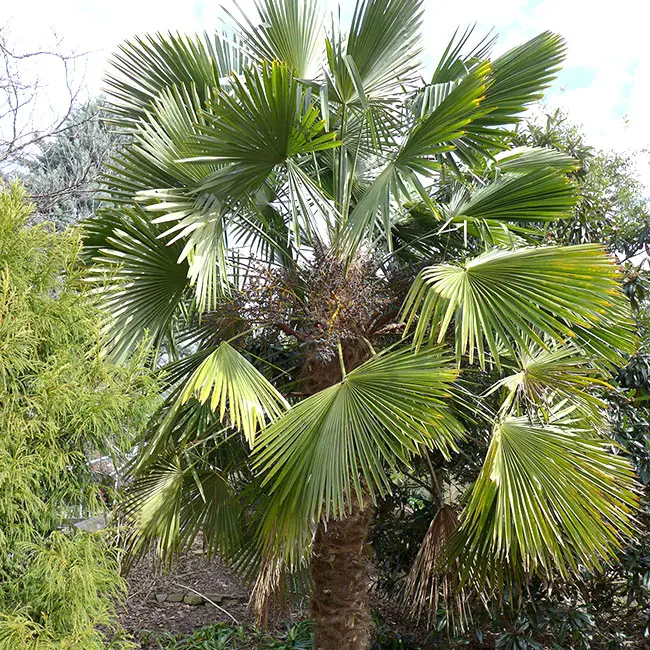
The Miniature Chusan Palm Tree, scientifically named Trachycarpus wagnerianus, is an excellent palm option for both indoor and outdoor spaces, prized for its durability and cold resistance. It thrives in landscapes within USDA zones 8-10b.
9. Needle Palm Tree (Rhapidophyllum hystrix)
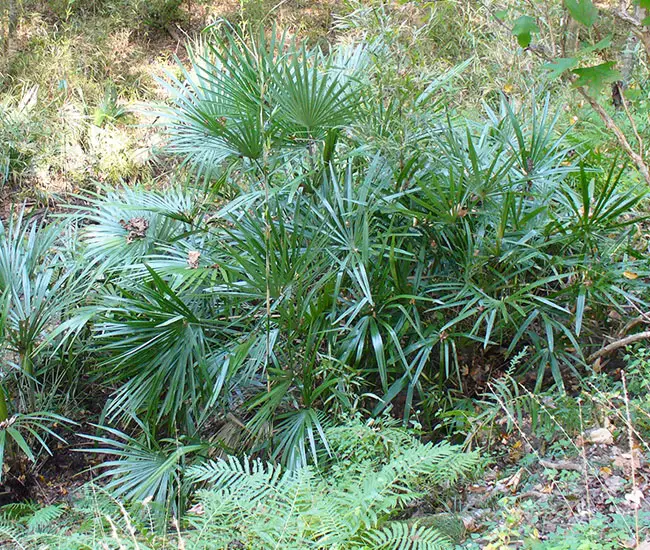
The Needle Palm Tree, scientifically known as Rhapidophyllum hystrix or Rhapidophylum hystrix, stands out as one of the most cold-hardy palm trees, capable of enduring temperatures as low as 10°F and even surviving freezing weather down to -5°F.
It’s an ideal choice for landscapes within USDA Zones 8a (10 to 15°F) to 10b (35 to 40°F).
10. Pindo Palm Tree (Butia capitata)
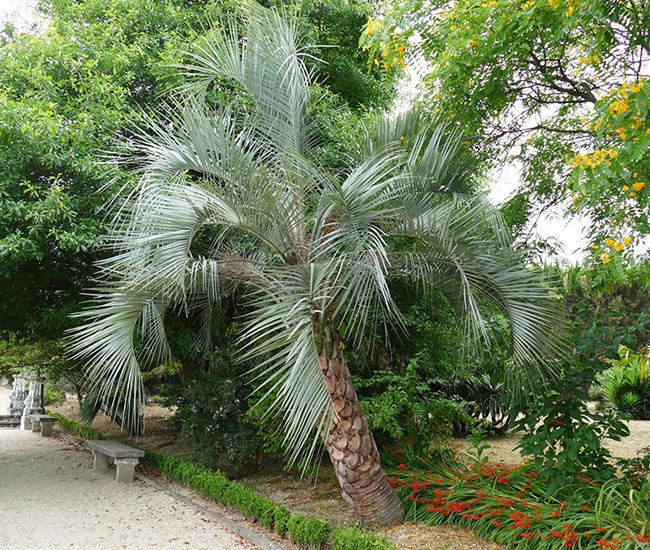
The Pindo Palm Tree, scientifically known as Butia capitata or Butia odorata, is a stunning palm that can serve as a perfect focal point in any landscape.
It also yields edible fruits used to make delicious jelly. Ideal for USDA Zones 8a (10 – 15°F) to 10b (35 – 40°F).
11. Saw Palmetto Palm Tree (Serenoa repens)
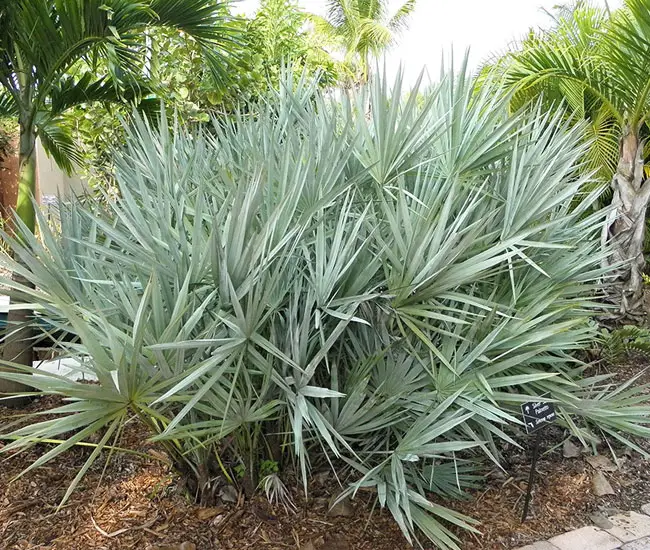
The Saw Palmetto Palm Tree (Serenoa repens), is a highly favored palm tree suitable for various purposes, such as a screening plant, focal point, or planting bed filler.
Like the other palm trees mentioned above, it boasts drought tolerance, adaptability, and cold resistance. Perfect for landscapes within USDA Zones 8a (10 – 15°F) to 11 (above 40°F).
12. Sago Palm Tree (Cycas revoluta)
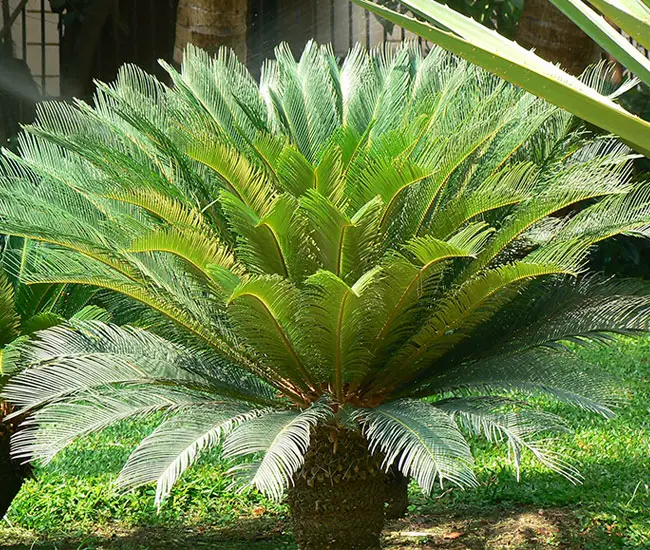
The Sago Palm, scientifically known as Cycas revoluta, although not a true palm but a cycad, is a slow-growing and exceptionally cold-hardy palm.
It can endure temperatures as low as 15°F and has even been known to withstand 10°F without enduring permanent damage. Well-suited for USDA Zones 8b (15 to 20°F) to 11 (above 40°F).
13. Sylvester Date Palm Tree (Phoenix sylvestris)
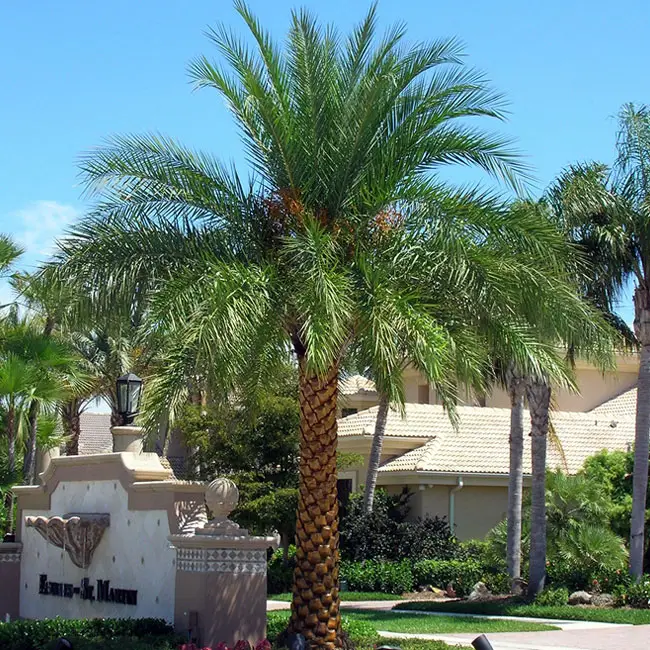
The Sylvester Date Palm Tree, scientifically known as Phoenix sylvestris, ranks among the world’s most popular palm trees, often gracing luxury homes, hotels, and golf courses.
Its slow growth, broad adaptability, ease of maintenance, and resilience to cold down to 15°F make it an excellent choice for USDA Zones 8b (15 to 20°F) to 11 (above 40°F).
14. Windmill Palm Tree (Trachycarpus fortunei)
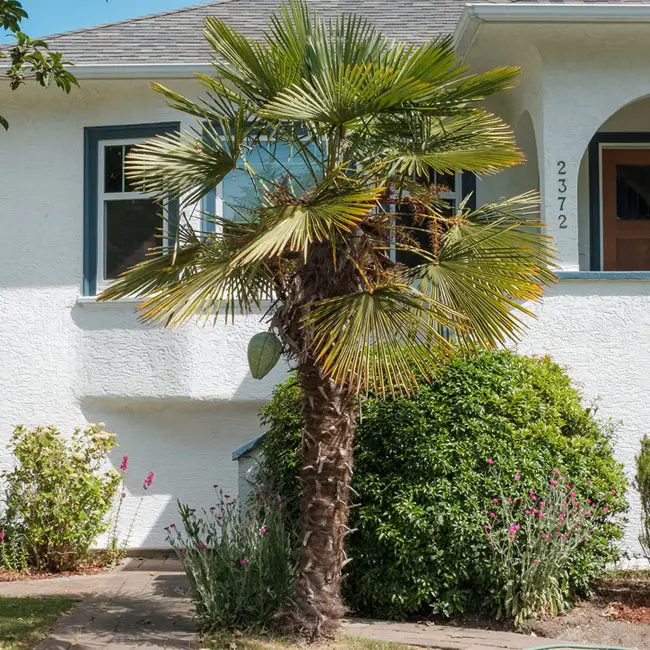
The Windmill Palm Tree, scientifically known as Trachycarpus fortunei, stands out as one of the most favored palms due to its cold resistance and durability.
It can withstand drought conditions and endure low temperatures down to 10°F. Ideal for USDA Zones 8a (10 – 15°F) to 11 (above 40°F).
Major Cities in North Carolina
Asheville – Hardiness Zone 7a
Charlotte – Hardiness Zone 7b
Durham – Hardiness Zone 7b
Fayetteville – Hardiness Zone 7b
Greensboro – Hardiness Zone 7a
Greenville – Hardiness Zone 7b
Raleigh – Hardiness Zone 7b
Wilmington – Hardiness Zone 8a
Winston-Salem – Hardiness Zone 7a
Conclusion
As you can see from the list above, there are many beautiful palm trees that can do well even in North Carolina’s chilly weather.
These palms are generally slow-growing, drought-tolerant, and adaptable to a wide range of soils. While they are cold-hardy up to Zone 8, with some winter protection, you can even cultivate them in Zone 7, creating a stunning tropical garden.
Of course, it’s essential to allow your palm to establish itself before subjecting it to cold weather. Acclimatization can expedite this process. According to the University of Florida, it typically takes three years for a palm tree to become fully established.
I live in area 7B Monroe North Carolina what kind of palm can I plant
I live in Winston Salem nc I want a pigmy palm and a sago palm bush for my yard will it survive
What zone is Hickory nc want to plant some dwarf palms or trees get no bigger than 10′
I live in Boonville North Carolina and I was wondering if I can plant a sago palm tree in my yard will it survive
I live in Boonville North Carolina Zone 7 and I was wondering if I can plant a sago palm tree outside
How fast do chinese windmill palms grow? Also ok its not a palm tree but can spanish moss grow in zone 7b in NC?
What’s the best Plam tree to grow or get already growing in mebane NC?
I live in Hendersonville NC, can I have palm trees? Ty
A majesty palm in zone 7a, full sun. Would it be possible outdoors?
I’m sorry. This is the most accurate, well layed out page of information I have found for what type palm to plant in what zone in North Carolina. As a fellow North Carolinian I am embarrassed by the 3 queation/statements made above…..rediculous. Stop the laziness folkes and read the information. Thank you…I now know exactly which three palms we will be adding to our yard in Wilmington.