Connecticut Palm Trees

While Connecticut may not be the palm tree paradise, there’s still hope for cold-hardy palm enthusiasts in zone 7. Connecticut’s climate is a blend of humid continental and humid subtropical, featuring hot and dry summers with average temperatures ranging from 81°F (27°C) to 87°F (31°C).

Winters, on the other hand, can be chilly, with average temperatures spanning from 31°F (−1°C) to 23°F (−5°C). The state has experienced temperature extremes, with the highest reaching 106°F (41°C) and the lowest plummeting to a bone-chilling −32°F (−36°C).

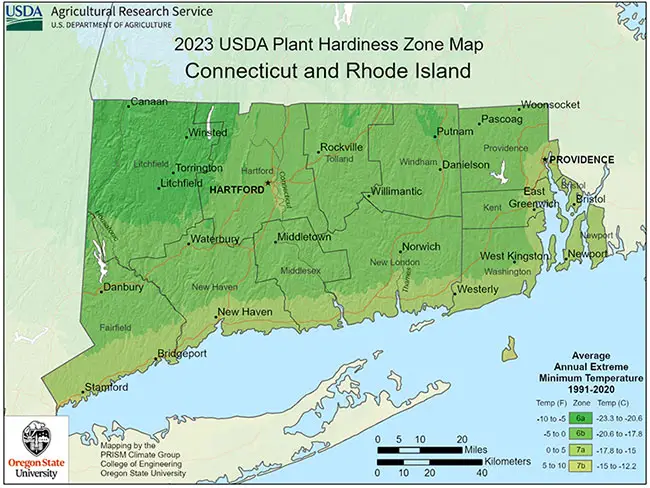
Connecticut also sees its fair share of weather drama, with around 30 thunderstorms and approximately one tornado per year. In terms of USDA hardiness zones, Connecticut covers zones 5b to 7a.

Growing Palm Trees in Connecticut

Zone 7 stands as your best bet for palm tree cultivation in Connecticut. When you’re in the market for palm trees, be sure they’ve been properly acclimatized for cold climates.

Opt for exceptionally cold-hardy palm varieties that can endure various soil conditions and stand up to the rigors of Connecticut’s weather.

Here are some palm trees that will grow in warm areas of Connecticut:

More Palm Trees»

Major Cities in Connecticut

Bridgeport – Hardiness Zone 7a
Hartford – Hardiness Zone 6a
New Britain – Hardiness Zone 6a
New Haven – Hardiness Zone 6a
Norwalk – Hardiness Zone 6b
Stamford – Hardiness Zone 6a
Waterbury – Hardiness Zone 5b
Similar Posts

  • West Virginia Palm Trees

    Growing palm trees in West Virginia can be quite challenging unless you create a special environment. West Virginia has a mix of climates, including a humid continental climate and some parts with a humid subtropical climate. Summers here are humid and warm to hot, with July temperatures typically ranging from 67 °F (19 °C) to…

  • 10 Palm Trees That Grow in Virginia (with Pictures)

    While Virginia may not be the ideal location for palm tree cultivation, there are several cold-hardy palm varieties that can thrive in the state’s unique climate. Virginia experiences a mild, humid coastal climate characterized by hot, humid summers and cold, snowy winters. July typically sees an average temperature of 78°F (26°C), while January’s average temperature…

  • Missouri Palm Trees

    Cultivating palm trees in Missouri is quite the challenge, primarily because of the harsh winter conditions that prevail in the state. Missouri’s climate can be described as humid continental, marked by lengthy, scorching summers and cool to downright cold winters. In July, the average temperature hovers around 79°F (26°C), but come January, it drops to…

  • Texas Palm Trees

    Texas offers a wide variety of palm trees suitable for cultivation. Spanning a vast expanse, Texas encompasses diverse climates, ranging from arid conditions in the west to humid environments in the east. The state experiences an average July temperature range of 73-91°F (22-32°C), while January temperatures typically fall between 42-61°F (5-16°C). Texas faces natural threats…

  • Louisiana Palm Trees

    There are numerous palm tree varieties that thrive in the state of Louisiana, thanks to its accommodating climate. Louisiana boasts a humid subtropical climate heavily influenced by the Gulf of Mexico. Summers are characterized by scorching heat and high humidity, with an average July temperature hovering around 82°F (28°C). Winters, on the other hand, are…

  • Hawaii Palm Trees

    With consistently delightful tropical weather year-round, Hawaii offers an ideal environment for cultivating a wide variety of palm trees. The state boasts a tropical climate marked by hot summers and warm winters. Summer temperatures typically range from 85-90°F (29-32°C), while in the winter months, they remain pleasantly mild, hovering between 79-83°F (26-28°C). Hawaii experiences abundant…

One Comment

  1. Dr Eugene Zampieron says:

    I have a huge sabal palmetto growing on the campus of The University Of Bridgeport in CT which has survived for 10 years now. It is in a great microclimate near a south facing building with DARK bricks, protection from the West and Northern wind, and close to Seaside park

Comments are closed.