
Texas Palm Trees
Texas offers a wide variety of palm trees suitable for cultivation. Spanning a vast expanse, Texas encompasses diverse climates, ranging from arid conditions in the west to humid environments in the east.
The state experiences an average July temperature range of 73-91°F (22-32°C), while January temperatures typically fall between 42-61°F (5-16°C). Texas faces natural threats in the form of hurricanes and tornadoes, with approximately 139 tornadoes occurring annually.
Additionally, the state frequently encounters severe thunderstorms and occasional hail. Snowfall in Texas varies significantly, with some areas receiving none, while others average between 4-15 inches annually.
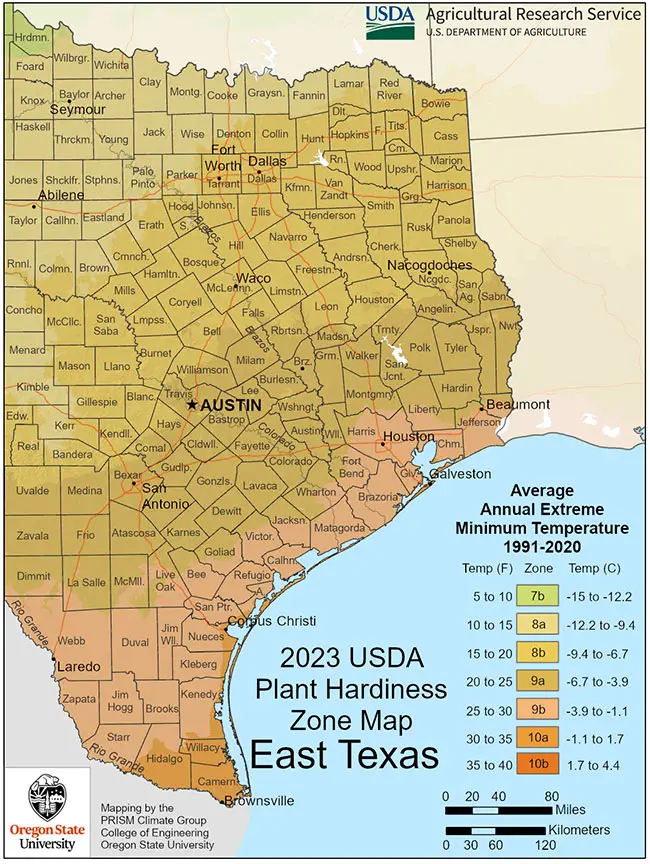
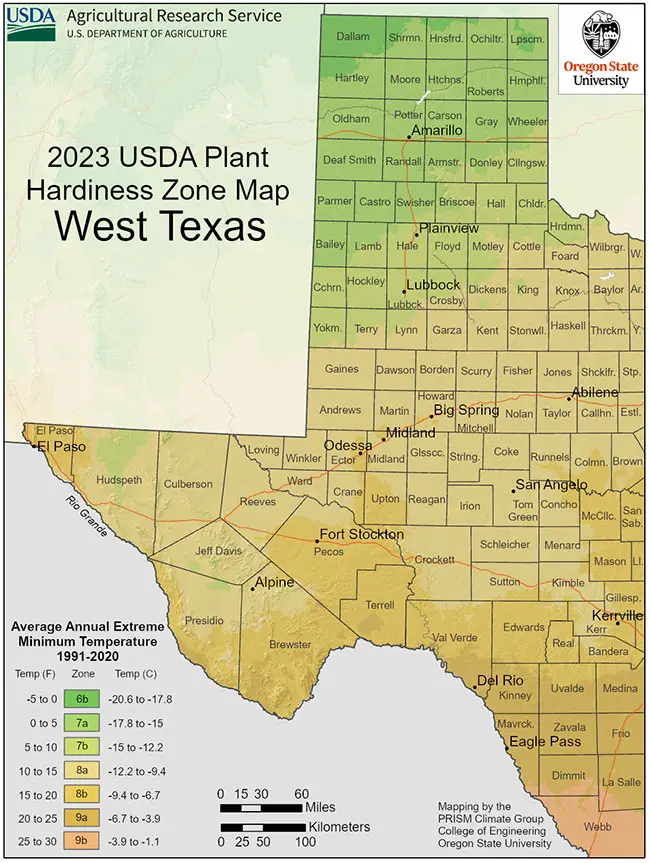
The state has seen extreme temperature swings, with the highest recorded temperature reaching a scorching 120°F (49°C) and the lowest plummeting to a bone-chilling -23°F (-31°C). Texas’ USDA hardiness zones encompass a range from 6b to 10a.
Texas USDA Zones
Growing Palm Trees in Texas
Hot sun and dry air are not the best conditions for palm trees that prefer tropical climates. Therefore, when choosing palm trees for your yard, make sure they are durable and will tolerate desert conditions.
Even though these palms are tough, you need to provide them with enough water. Here are some of the palm trees that can be grown in Texas:
- Bismarck Palm Tree – Zones 8b – 11 (15 to 20F)
- Caranday Palm Tree – Zones 9a – 11 (20 to 25F)
- Mexican Fan Palm Tree – Zones 8b – 11 (15 to 20F)
- Mazari Palm Tree – Zones 6b – 11 (-5 to 0F)
- Triangle Palm Tree – Zones 10a – 11 (30 to 35F)
- Saw Palmetto Palm Tree – Zones 7a-11 (0 to 5 F)
- Pindo Palm Tree – Zones 7b-11 (5 to 10 F)
More Palm Trees»
Major Cities in Texas
Austin – Hardiness Zone 8b
Dallas – Hardiness Zone 8a
El Paso – Hardiness Zone 7b
Houston – Hardiness Zone 9a
Pasadena – Hardiness Zone 9a
Plano – Hardiness Zone 7b
San Angelo – Hardiness Zone 8a
San Antonio – Hardiness Zone 8b
Sherman – Hardiness Zone 7b
Will magesty palms live inside with low light?
We live in Texas and have 2 Pindo Palms, one of the Palms has started to have dropping limbs in the last couple of weeks. They are still green but seem to be very weak like the palm cannot hold the limbs up. It has new fronds starting to come up through the bud. What can we do to stop this or save the palm?