
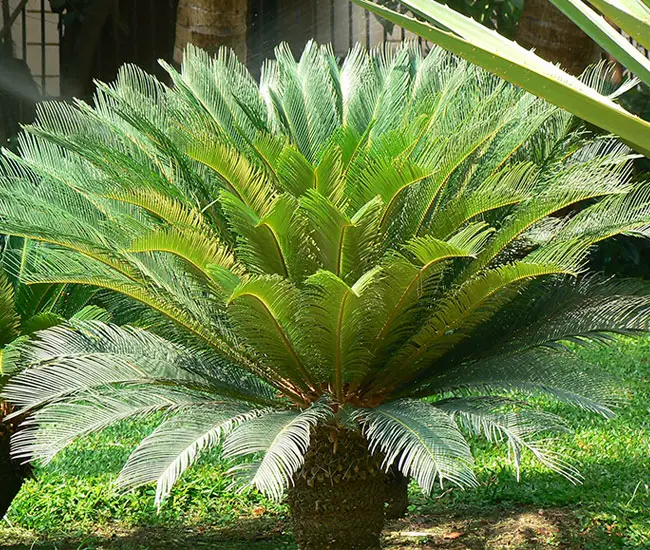
The scientific name for the Sago Palm is Cycas revoluta. Despite its appearance, this rugged and distinctly tropical-looking plant is not a true palm but rather a cycad.
Cycads are renowned for their ancient lineage, having remained virtually unchanged for millions of years, with their origins traced back to East Africa. This remarkable longevity has earned them the nickname “living fossils.”
Interestingly, while cycads share visual similarities with palm trees, they are taxonomically closer to pine trees than palms. In fact, cycads are cone-bearing woody plants, with male and female individuals producing cones akin to those found on pine trees.
Cycas revoluta is remarkably cold-hardy and can be successfully cultivated in various states, including Alaska, Alabama, Delaware, Maryland, Massachusetts, Mississippi, New Jersey, New York, Oklahoma, Tennessee, and more.
Buy Sago Palm Tree on Amazon »
Quick Facts:
| Scientific name: | Cycas revoluta |
| Common names: | Sago Palm, Japanese Sago Palm, King Sago Palm, Sago Cycas. |
| Origin: | Native to Japan. |
| Growth Rate: | Very Slow. Up to 7-10ft tall and 4-8 ft wide. |
| Cold Tolerance: | USDA Zones 8b (15 to 20 F) to 11 (above 40 F). |
| Light Req: | Full sun. |
| Water Req: | Moderate. |
| Soil Req: | Widely adaptable. |
| Fruit: | Yes. Red. Not edible. |
| Propagation: | By seeds, germinating in 4-9 months. By removal of offshoots or pups. |
Sago Palm Appearance
As a slow-growing palm, Cycas revoluta can reach heights of 7-10 feet, a process that can span 70-100 years for the Sago Palm to attain its maximum stature.
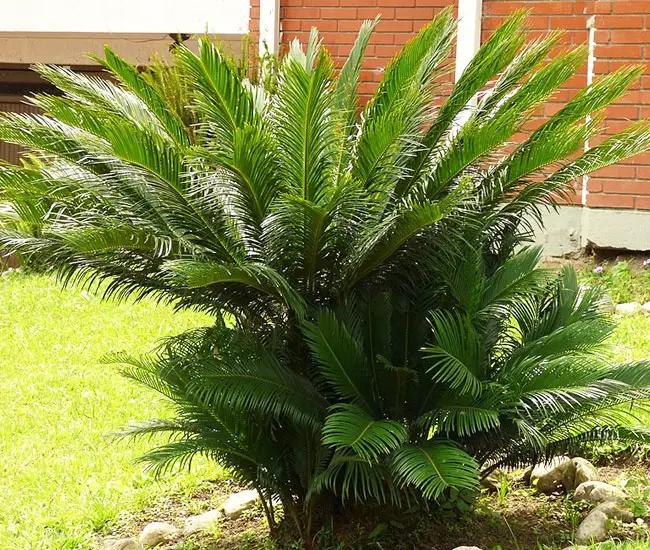
Young specimens exhibit thick, shaggy subterranean trunks measuring 8-10 inches in diameter. These trunks can branch multiple times, giving rise to multiple heads of leaves. As the cycad matures, it may produce suckers at its base, eventually forming a large multi-stemmed clump.
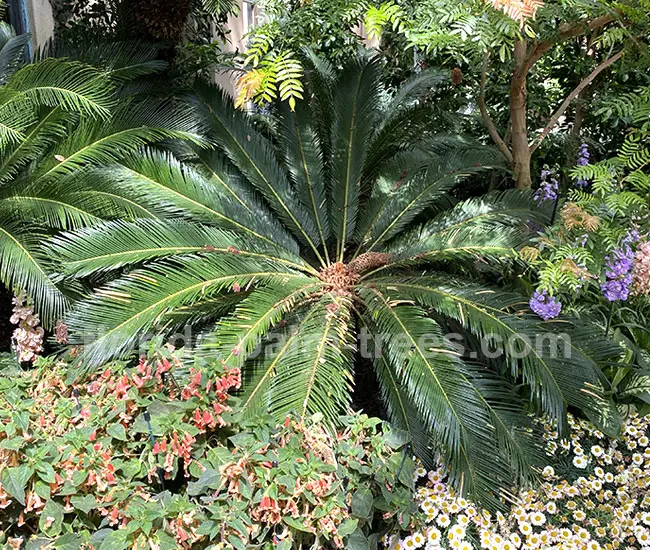
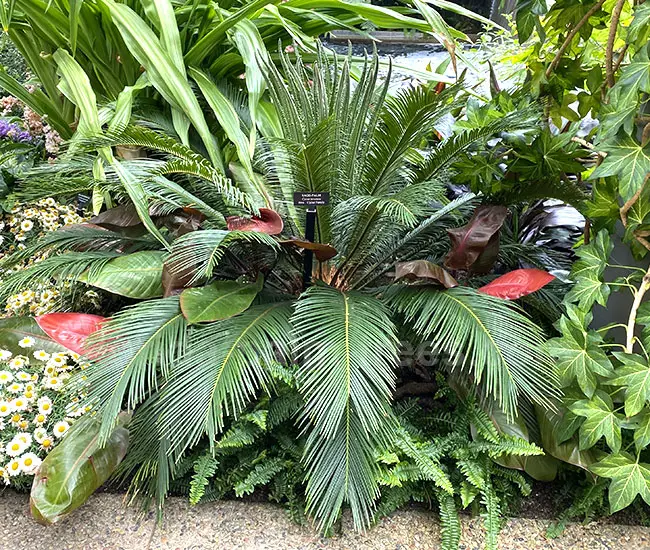
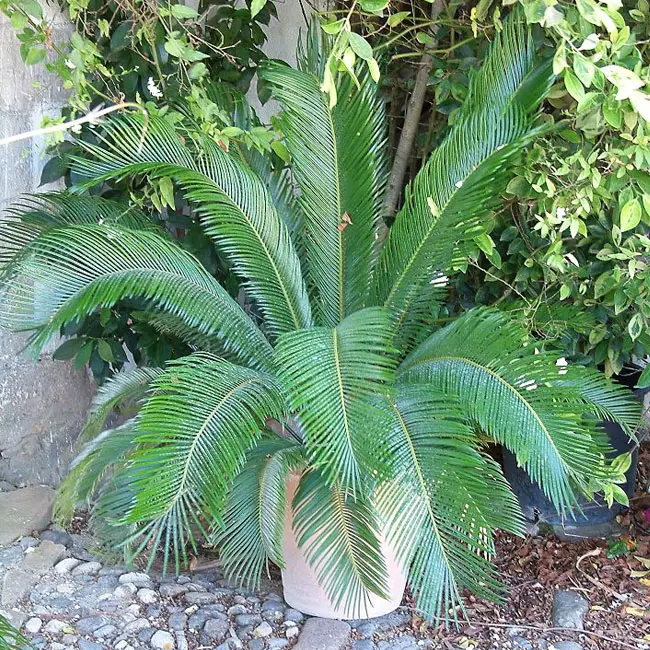
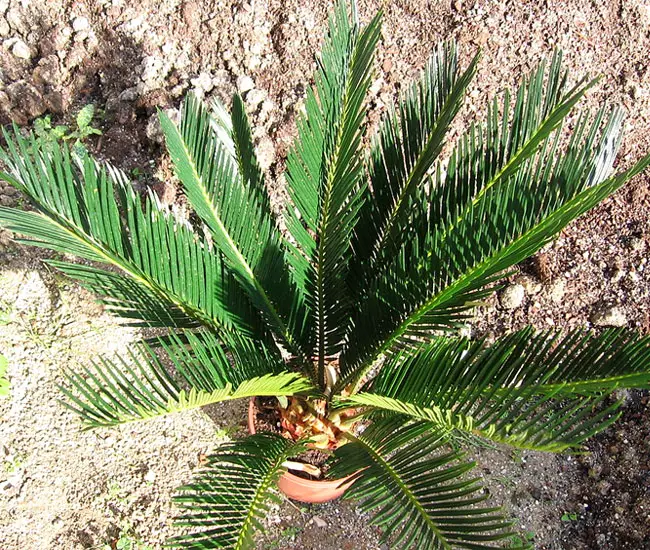
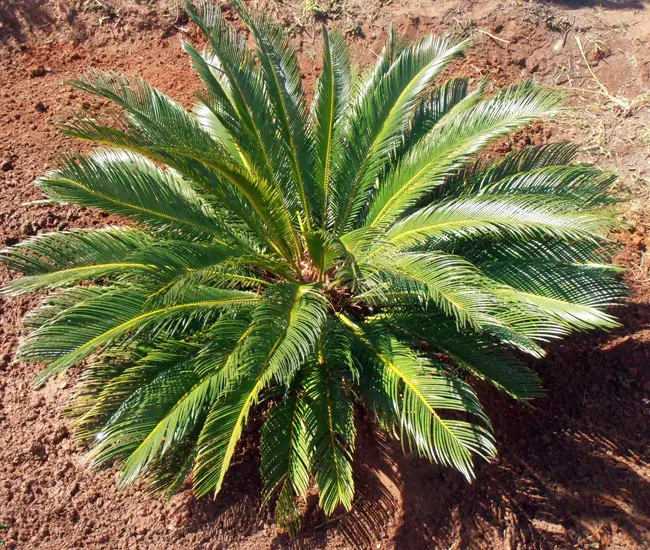
Sago palm boasts pinnate, or feather-like, leaves that measure 4-5 feet in length and 10 inches in width. It is a highly symmetrical plant, with fronds arranged in a circular pattern, forming a rosette.
The leaves are characterized by their dark green, glossy appearance, featuring stiff, pointed leaflets that are narrow, measuring only 4-7 inches in length, with strongly recurved edges.
In late spring or early summer, sagos produce light green spikes of new leaves, known as a ‘break,’ which gradually unfurl, ultimately reaching the full length of the leaf.
Sago Palm Flowers and Fruits
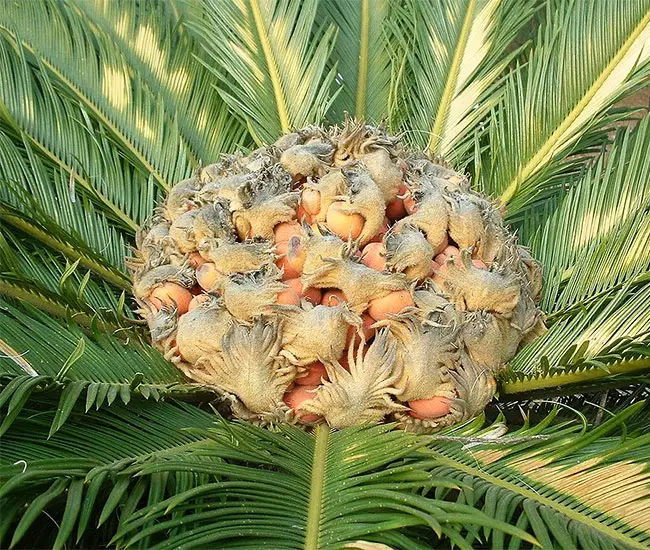
It typically takes around 13 years for a sago palm to begin flowering. These plants are dioecious, meaning each individual plant is either male or female, a unique characteristic among tropical plants.
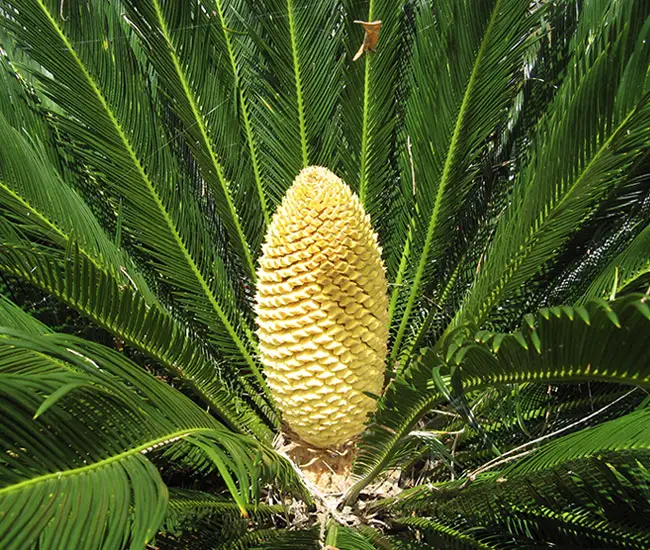
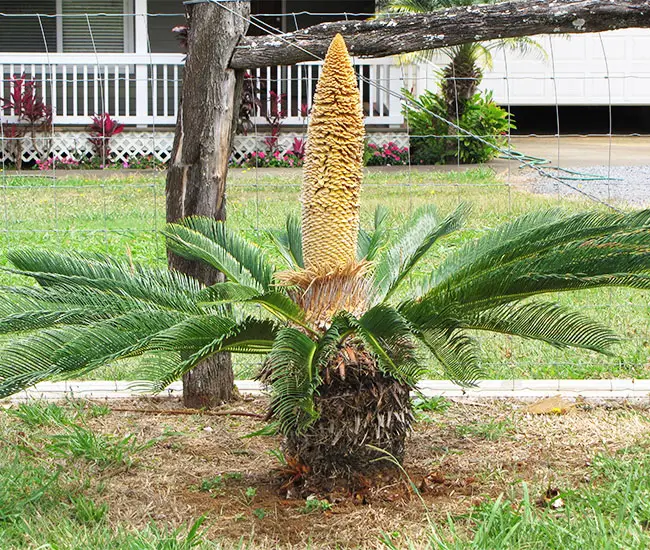
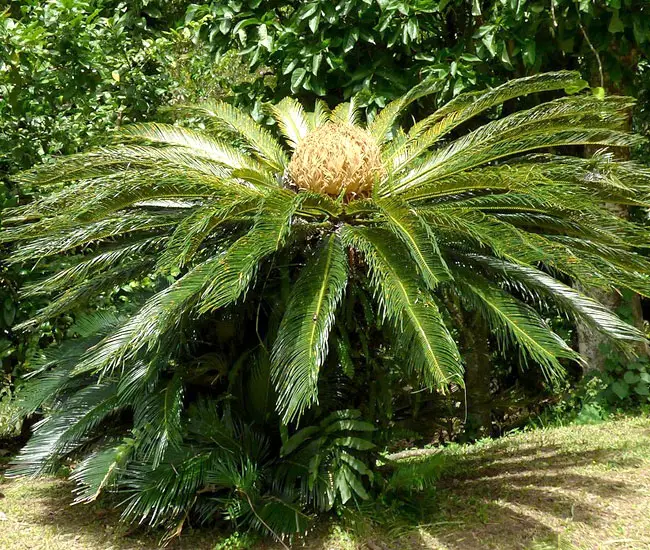
The female inflorescence resembles feathers and later forms a tightly packed seed head, resembling a ‘cabbage’ covered by whitish miniature leaves. In contrast, the male cone takes on a pineapple or torpedo-shaped appearance.
Male cones tend to be smaller, more slender, and occasionally more elongated than their female counterparts.
In the wild, pollen from the male cone is dispersed to the female through various means, including insects, beetles, and wind. When successful pollination occurs, fertile seeds develop within the female cones, eventually germinating to produce small seedlings.
Notably, a female cycad cannot produce fertile seeds without proper pollination. Initially, an isolated female may produce seeds that appear healthy but will not germinate due to the absence of an inner embryo.
Caring for the Sago Palm
One of the great advantages of the Sago Palm is its ease of growth. This is a robust plant that can withstand a fair amount of neglect and mistreatment.
Whether you’re redesigning your landscape or relocating, you can easily dig it out and replant it. Additionally, it’s an excellent choice for online orders, as it can endure being confined in a box without water for up to a week during shipping.
Furthermore, the Sago Palm exhibits salt and cold tolerance, adapts to a wide range of soil types, and can endure heat and drought. These attributes make it a perfect choice for individuals residing in cooler climates, those looking to conserve water, seeking a compact plant, or desiring minimal maintenance.
Light
While it thrives in full sun, it can also tolerate partial shade, with the amount of sunlight it needs depending on the local conditions. In hot, desert-like climates, providing it with half a day of sunlight is ideal. Conversely, in coastal regions, full sun is generally preferable.
While some partial shade is acceptable, excessive shade can weaken the plant and make it appear unhealthy. This can manifest as long, stretched-out leaves or even stalling to the point where it ceases to produce new fronds.
For indoor growth, place it near a bright window to maximize sunlight exposure. During warm months, you can move it outdoors to provide additional sunlight, but do so gradually to prevent shock.
Soil
Sago Palms can thrive in either acidic or alkaline soil as long as it is well-draining. However, in alkaline soils, they may develop manganese deficiencies if not regularly fed.
The ideal soil should be sandy, rich in organic matter, and slightly acidic. When cultivating them in containers, use a potting mix specifically formulated for palms.
Watering
Like many other cycads, they are drought-tolerant but benefit from regular watering. Allow the soil to dry somewhat before watering again, increasing the frequency during the summer and reducing it in the winter when the plant is less active.
Sagos dislike soggy soil, so it’s essential not to overwater them. Additionally, avoid overhead watering, as it can lead to foliage rot or plant decay.
For container-grown Sagos, it’s best to water them with filtered or distilled water to prevent chemical and salt deposits.
Fertilizing
Sago palms typically thrive without the need for fertilization. The natural yellowing or browning of the lower fronds is a normal process, unless the yellowing occurs in the center “new growth” area.
However, if new fronds quickly turn yellow and progress to brown, it indicates a nutritional issue. Sometimes, it may take a year or more for the “quick yellowing” symptom to develop. Fortunately, this problem can be easily rectified by applying a slow-release fertilizer twice a year during the growing season.
Opt for a high-quality fertilizer with an NPK ratio of 15-5-15 or 10-10, where Nitrogen and Potassium are present in equal amounts. The higher the number, the more potent the fertilizer. Avoid using inexpensive fertilizers that can wash away after a few rains.
Temperature
Sago palms exhibit excellent cold tolerance, making them suitable for growing in USDA Zones 8b (with temperatures ranging from 15 to 20°F) to Zone 11 (above 40°F).
They can endure temperatures between 20 and 25°F but may experience leaf damage if the mercury drops below 15°F. While they might survive at 10°F, they will lose all their leaves.
The good news is that with some cold protection, a defoliated sago palm can survive in Zone 7 and usually rebounds quickly in the following growing season. Beyond Zone 8, creating a microclimate may be essential for successful sago palm cultivation.
Pruning
It’s best to trim sago fronds only when they are completely dead, indicated by their brown color. While some people may be tempted to remove yellowing fronds for aesthetic reasons, this is not advisable, as sagos utilize these leaves for nutrients.
As leaves turn yellow and then brown, the plant transfers nutrients from dying fronds to new ones. Prematurely removing dying leaves can deprive the plant of essential nutrients, potentially stunting its growth and weakening it.
Moreover, a weakened palm may become vulnerable to pests and diseases. Prune only severely damaged, entirely dead, or diseased fronds.
Additionally, you can remove the fruit and flower stalks if they are not needed. Always use clean, disinfected tools to prevent the spread of infections from other plants.
When cutting, trim the oldest and lowest leaves as close to the trunk as possible without damaging it. Never trim any green fronds below the horizontal plane of the crown.
Insects and Diseases
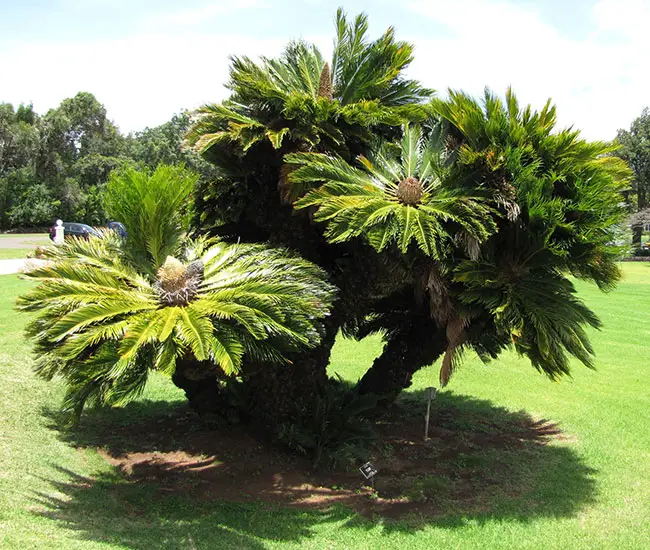
Sago palms typically do not face significant issues with pests or diseases. However, occasional encounters with scale and spider mites can pose problems.
Additionally, all cycads, including king sago, are highly susceptible to the potentially devastating Asian cycad scale.
Therefore, it’s essential to inspect your plant closely for damaged or discolored fronds and tiny bugs. Consider natural treatments before resorting to harsh chemicals.
Sago Palm Propagation
Sago palms can be propagated either by seed or by removing offshoots or pups. Seeds will typically germinate within 3-9 months, but it may take more than three years of growth for them to reach a small bulb size of approximately 1 inch in diameter.
To propagate by seed, soak the seeds in water for several days, then remove the red skin, leaving the white hard seed coat.
Plant the seed in well-drained soil and keep it in a warm, lightly moist environment. Over time, the mature specimen will develop a thick, stout trunk, usually reaching a height of 6 feet and a trunk size of about 9 inches in diameter.
Alternatively, sago palms can be propagated by removing offsets or pups growing at the base or along the sides of mature plants. Remove all the leaves and roots from the pups, allow the exposed area to dry, and then plant them in well-drained soil or a sandy mixture, ensuring that about half of the bulb or trunk is below the soil level.
Water thoroughly to promote rapid growth, and roots will gradually form, with the first leaves appearing several months later. At this stage, apply a mild dose of fertilizer and water when the soil is almost, but not completely, dry. Before repotting, allow the new plants to establish a robust root system.
Growing Sago Palm Indoors
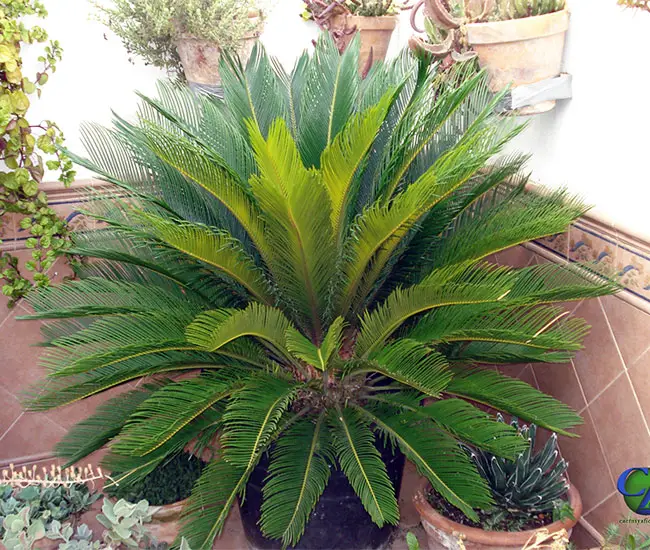
Sago palms make excellent container plants, whether grown indoors or outdoors, as they are slow-growing, drought-tolerant, and adaptable to different soil types.
While they can tolerate drought, regular watering is preferred. However, it’s crucial to avoid overwatering, as soggy soil is detrimental.
Use a high-quality slow-release fertilizer during the growing season, and ensure that the container provides ample root depth, at least 15 inches deep, to allow the root system to expand. Inadequate root room can result in stunted growth.
Unlike many houseplants that require repotting annually, sago palms can go three years or more between repottings. Nevertheless, it’s advisable to replace the old loose soil with fresh mix each year, even if you continue using the same container.
It’s essential to keep in mind that all parts of the sago palm are highly toxic to humans and pets. If you have cats, dogs, or small children who may chew on the leaves, it’s wise to consider alternative plant options.
Frequently Asked Questions
In this section, I want to answer some of the most popular questions I get about this plant.
Is Sago Palm Toxic?
Yes, it is. According to the ASPCA, ALL PARTS of the sago palm are toxic to both people and pets. The seeds, in particular, are highly poisonous. If you have small children, dogs, or cats, it’s crucial to keep this plant out of their reach.
This plant poses a severe risk to pets, including cats and dogs. Symptoms of toxicity may include vomiting, seizures, drooling, and abdominal pain.
Ingesting any part of this plant can be fatal for a dog or a cat, so it’s imperative to seek immediate veterinary attention if you suspect ingestion.
Why Is My Sago Palm Turning Yellow?
If you observe that the bottom leaves of your Sago palm are turning yellow, it’s essential to understand that this is a natural progression in the life cycle of plant leaves, including palms and cycads. Leaves typically transition from green to yellow and eventually to brown.
The yellowing stage signifies that the lower frond is losing its chlorophyll as it is reabsorbed by the plant. The final brown stage marks the completion of the nutrient reabsorption process and is not a cause for concern.
Pruning off sago fronds prematurely can deprive the plant of its natural method for conserving nutrients. It’s best to wait until a frond is entirely brown and has shriveled into small pieces before removing it.
Another potential reason for yellowing leaves could be a nutrient deficiency. Applying a slow-release fertilizer and observing the appearance of new fronds can help determine if the issue is resolved.
However, it’s important to note that the yellow leaves will not turn green again even after the problem is addressed. Excessive moisture or insufficient sunlight can also contribute to yellowing leaves.
How Fast Do Sago Palms Grow?
Sago palms are known for their slow growth, typically expanding by about 1 to 2 inches per year. Generally, they grow larger and faster when planted in the ground compared to container cultivation, as they have better access to water and nutrients.
The growth rate of this palm species can vary based on the specific conditions and environment in which it is planted. Exposure to full sun, adequate water, well-draining soil, and sufficient nutrients can promote healthier and faster growth.
Regardless of the conditions, it can take approximately 8 to 10 years for a sago palm to grow a foot of trunk. If you encounter a sago with a trunk measuring 5 feet, it is likely around 30 years old.
Other Sago Palm Varieties
While Cycas revoluta is the most well-known cycad bearing the common name of sago palm, there are other plant species that share this name. These include:
- Metroxylon sagu (True sago palm): Unlike Cycas revoluta, this plant is a true multi-stemmed evergreen palm tree that can grow up to about 20 feet in height.
- Cycas rumphii (Queen sago palm): This cycad grows more like a tree than a shrub, reaching heights of around 33 feet. It is native to Indonesia, New Guinea, and Christmas Island.
- Cycas circinalis (Queen sago palm): This slow-growing, tree-like plant can reach heights of approximately 11 feet and is native to India.
Sago Palm Tree Pictures
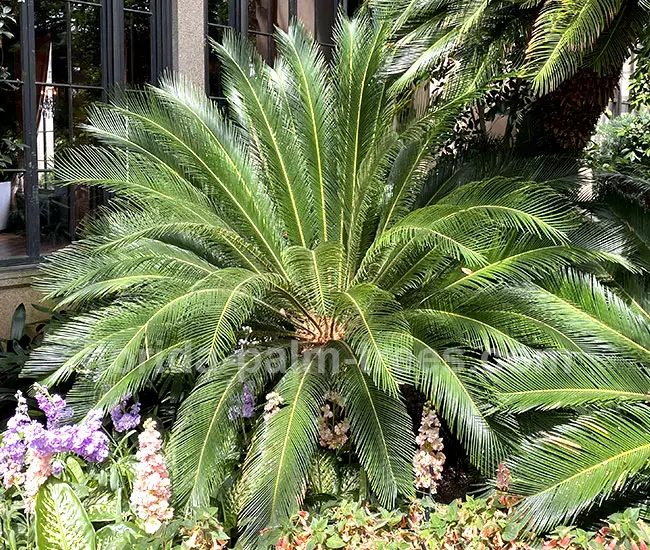
Buy Sago Palm Tree on Amazon »


Question on how to get rid of chinsee scale? My sago palm is doing pretty good, but it has scale on it.
Thanks
Mark Laursen
I have fronds growing around my ssgo. What can I do ? They don’t seem to be a part of the tree but new tree growth.
My Sago is turning yellow, could it be over watered? I’m trying to let it dry out some.