New York Palm Trees

New York state’s chilly climate isn’t ideal for palm trees. It has a humid continental climate influenced by the Atlantic Ocean.

July temperatures average between 79°F and 84°F (26°C to 28°C), while January temperatures range from 28°F to 38°F (-2°C to 3°C). Snowfall varies from 29 to 110 inches (74-279 cm) across the state, depending on the region. New York also occasionally faces hurricanes and tropical storms.

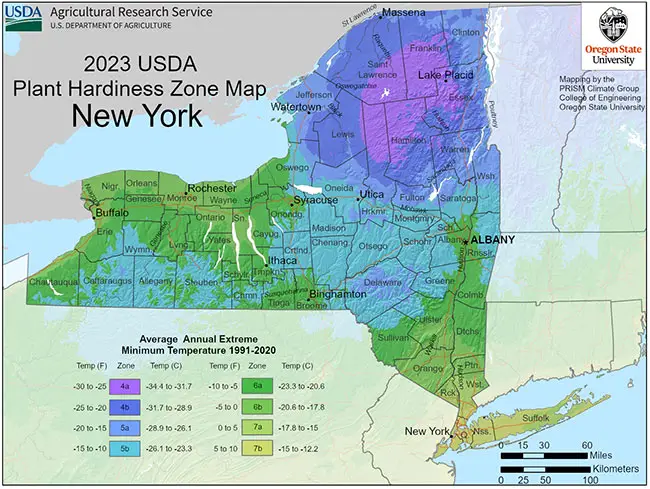
The highest recorded temperature was 108°F (42°C), and the lowest was a bone-chilling -52°F (-47°C). New York USDA hardiness zones range from 3b to 7b.

Growing Palm Trees in New York

While New York’s climate is generally too cold for palm trees, those in zones 7a or 7b can give it a try. Some cold-hardy palms can endure temperatures as low as 0°F.

To make it work, you’ll need to create a microclimate and offer protection during the winter months. Here are some palms that can grow in zone 7:

More Palm Trees»

Major Cities in New York

Binghamton – Hardiness Zone 5b
Bronx – Hardiness Zone 7a
Brooklyn – Hardiness Zone 7a
Buffalo – Hardiness Zone 6a
Jamaica – Hardiness Zone 7a
New York – Hardiness Zone 7a
Rochester – Hardiness Zone 6a
Syracuse – Hardiness Zone 5a
Yonkers – Hardiness Zone 6b
Similar Posts

  • New Jersey Palm Trees

    Growing palm trees in New Jersey presents significant challenges. The state’s climate includes several regions, with variations from humid mesothermal to a humid continental climate. Summers tend to be hot and humid, featuring average July temperatures around 75°F (24°C). Winters, on the other hand, are cold, with average January temperatures of 31°F (–1°C). Snowfall accumulates…

  • California Palm Trees

    Growing palm trees in California is a breeze, especially if you’re situated in the warmer regions. California’s climate spans the gamut from arid to subarctic, featuring dry summers and rainy winters. In July, temperatures across the state average between 75°F (24°C) and 93°F (34°C), varying by location. Come January, you can expect average temperatures to…

  • Iowa Palm Trees

    Iowa presents a challenging environment for palm tree cultivation, as it is generally too cold for these tropical plants. Even the most cold-hardy palm varieties can only endure the colder temperatures found in zone 7 and higher. Iowa’s climate is characterized as humid continental, featuring wet springs, hot summers, and cold winters, with significant annual…

  • Colorado Palm Trees

    Colorado presents a significant challenge for anyone thinking of cultivating palm trees, given its frigid climate and diverse geography. The state comprises mountains, foothills, high plains, and desert lands, resulting in a semi-arid to alpine climate that varies with elevation. Extreme weather is par for the course in Colorado. Winters are bitterly cold and snow-laden,…

  • Washington DC Palm Trees

    Washington DC boasts a humid subtropical climate with distinctive seasonal variations. Winters are relatively cool, featuring an average temperature of 38°F (3.3°C) in January, while summers can be hot and humid, with an average temperature of 79.2°F (26.2°C). Winter in the district typically witnesses an annual snowfall averaging 14.7 inches (37cm), while summers bring frequent…

  • Rhode Island Palm Trees

    Rhode Island’s climate is not conducive to palm trees, as it experiences cold temperatures throughout the year. The state features a humid continental climate characterized by chilly winters and brief, rainy summers. Summers are relatively warm, with average July temperatures around 73°F (23°C), while winters are cold, with an average January temperature of 28°F (–2°C)….

3 Comments

  1. Carrie Coakley says:

    Can I grow or plant a grown palm tree on Long Island or keep potted and move indoors in winter and will they survive?

  2. Hi I. Was wondering g if I can grow a date palm on long island n.y. and if I can how do Inprotect it during the cold weather.

  3. Hi I live i Buffalo. Can I plant a palm tree, a needle palm perhaps. and were can I buy one Thanks John Getzville 14068
    john66bug@yahoo.com

Comments are closed.