Florida Palm Trees

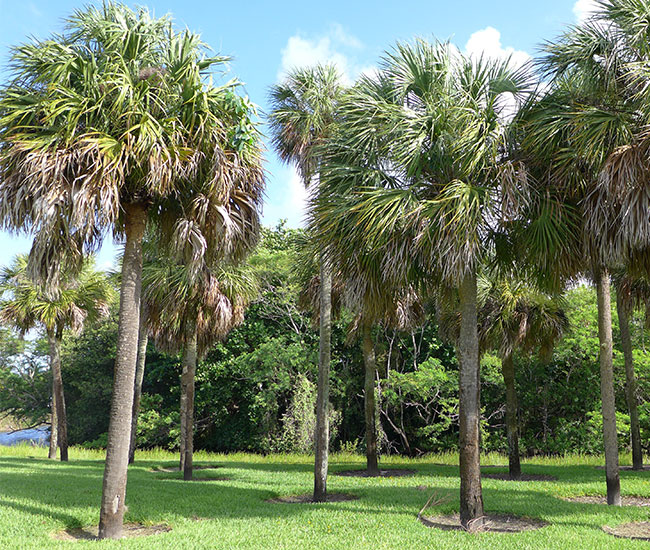
Palm trees thrive in the warm, humid embrace of Florida’s climate. The state’s weather ranges from tropical to subtropical, featuring mild winters and scorching summers.

In the northern part, temperatures typically hover between 65°F to 70°F (18°C to 21°C), while in the south, it’s a balmy 74°F to 77°F (23°C to 25°C). Despite the annual occurrence of hurricanes and tropical storms, tornadoes and waterspouts are exceedingly rare in the state.

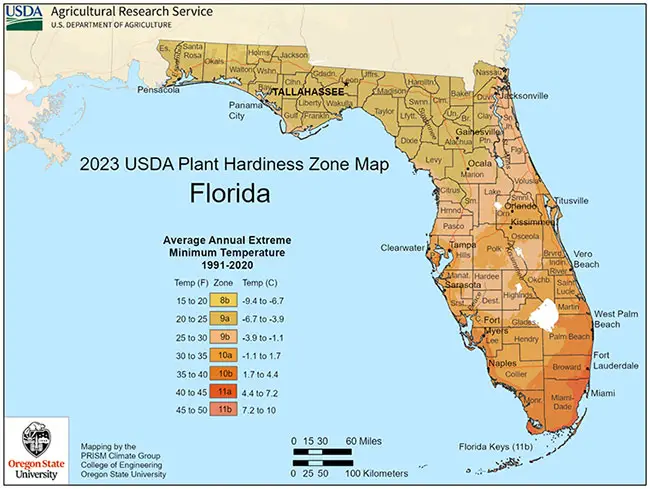
From June through September, brace yourself for heavy rainfall, as these months bring extremely wet conditions. Temperature extremes have soared to a sweltering 109°F (43°C) and dropped to a chilly –2°F (–19°C). Florida’s USDA hardiness zones span from 8a to 11a.

Growing Palm Trees in Florida

When it comes to growing palm trees in Florida, the possibilities are nearly limitless, especially in zone 11. Here are some of the palms that can grow in Florida:

More Palm Trees»

Major Cities in Florida

Fort Lauderdale – Hardiness Zone 10a
Jacksonville – Hardiness Zone 9a
Miami – Hardiness Zone 10b
Orlando – Hardiness Zone 9b
Panama City – Hardiness Zone 8b
Sarasota – Hardiness Zone 9b
Tampa – Hardiness Zone 9b
West Palm Beach – Hardiness Zone 10a
Similar Posts

  • Kentucky Palm Trees

    Growing palm trees in the state of Kentucky can be quite challenging due to its climate conditions. Kentucky features a humid subtropical climate, characterized by warm and humid summers, with an average maximum July temperature of 87°F (30°C). Winters in Kentucky are moderately cold, with an average temperature in January hovering around 40°F (4°C). The…

  • Mississippi Palm Trees

    You can successfully cultivate palm trees in the warmer regions of Mississippi, which enjoys a humid subtropical climate characterized by short, mild winters and long, scorching summers. The summertime here can be quite humid, with an average July temperature soaring to about 95°F (approximately 35°C). On the other hand, January ushers in milder weather, with…

  • New Mexico Palm Trees

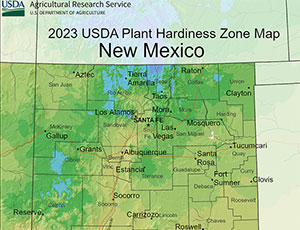
    You can successfully cultivate palm trees in New Mexico. The state’s climate varies from arid to semiarid, characterized by brief, mild winters and hot, dry summers. In January, average temperatures range from 35-55°F (2-13°C), with freezing temperatures common during winter. July brings average temperatures ranging from 78-92°F (26-33°C), with frequent occurrences of temperatures exceeding 100°F…

  • Michigan Palm Trees

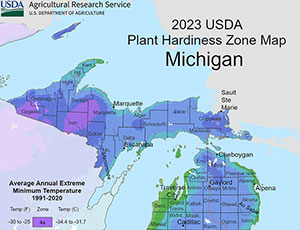
    Cultivating palm trees in Michigan can be a daunting challenge due to the state’s predominantly cold climate. Michigan is characterized by a continental climate, which translates to scorching summers and extremely cold winters. In July, the average temperatures typically span the range of 64 to 72°F (18 to 22°C). However, come January, the average temperatures…

  • 10 Palm Trees That Grow in Virginia (with Pictures)

    While Virginia may not be the ideal location for palm tree cultivation, there are several cold-hardy palm varieties that can thrive in the state’s unique climate. Virginia experiences a mild, humid coastal climate characterized by hot, humid summers and cold, snowy winters. July typically sees an average temperature of 78°F (26°C), while January’s average temperature…

  • Georgia State Palm Trees

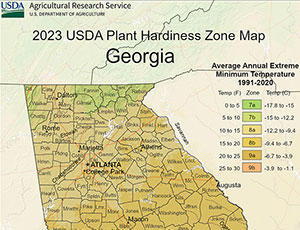
    While Georgia may not boast the same tropical warmth as Florida, it’s still a place where cold-hardy palm trees can thrive. The state enjoys a humid subtropical climate characterized by hot summers and mild winters, thanks to the influence of the nearby Atlantic Ocean. In January, you can expect an average temperature of 39°F (4°C),…

3 Comments

  1. MARIE Dichiara says:

    I want tp plant a palm tree in palmetto florida can i plant it no in ecember?

  2. Gregg L. Friedman MD says:

    Would the Florida Keys be in USDA Zone 11? By Gregg L. Friedman MD

  3. I moved from south to north east Florida and have germinated three foxtail palms. Will the grow well in zone 9A?

Comments are closed.