New Mexico Palm Trees

You can successfully cultivate palm trees in New Mexico. The state’s climate varies from arid to semiarid, characterized by brief, mild winters and hot, dry summers. In January, average temperatures range from 35-55°F (2-13°C), with freezing temperatures common during winter.

July brings average temperatures ranging from 78-92°F (26-33°C), with frequent occurrences of temperatures exceeding 100°F during the summer. Snowfall annually varies from 10-100 inches (25-254 cm), depending on the region.

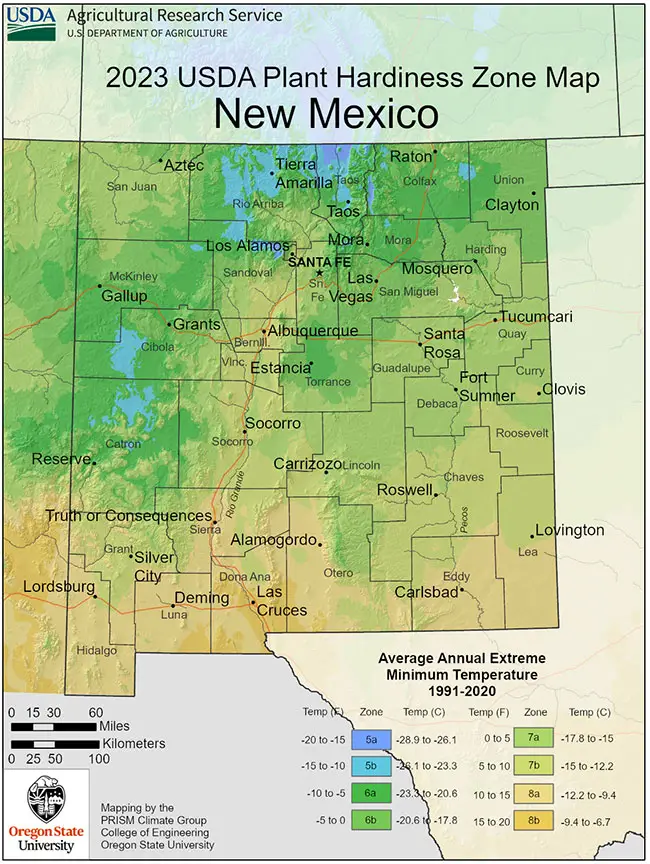
The highest recorded temperature reached a scorching 122°F (50°C), while the lowest plummeted to a frigid -50°F (-46°C). New Mexico’s USDA hardiness zones span from 4b to 9a.

Growing Palm Trees in New Mexico

New Mexico provides a favorable environment for palm cultivation, particularly in zone 8a, where temperatures don’t drop below 10°F.

Numerous cold-hardy palm species thrive in the warm regions of New Mexico. Here are some of them:

More Palm Trees»

Major Cities in New Mexico

Albuquerque – USDA Zone 7a
Similar Posts

  • Montana Palm Trees

    Montana, one of the states notorious for its frigid climate, isn’t exactly the ideal locale for palm tree cultivation. This vast state can be categorized into two distinct climatic regions: semi-arid and continental. Its average January temperature hovers at 27°F (–2°C), while July brings an average temperature of 85°F (29°C). Winters here can be exceptionally…

  • Ohio Palm Trees

    Ohio’s climate is generally too cold to support the growth of palm trees. The state primarily experiences a humid continental climate, with some southern areas featuring a humid subtropical climate. Summers in Ohio are characterized by heat and humidity, with average July temperatures ranging from 72 to 76°F (22 to 24°C). In contrast, winters tend…

  • Texas Palm Trees

    Texas offers a wide variety of palm trees suitable for cultivation. Spanning a vast expanse, Texas encompasses diverse climates, ranging from arid conditions in the west to humid environments in the east. The state experiences an average July temperature range of 73-91°F (22-32°C), while January temperatures typically fall between 42-61°F (5-16°C). Texas faces natural threats…

  • Mississippi Palm Trees

    You can successfully cultivate palm trees in the warmer regions of Mississippi, which enjoys a humid subtropical climate characterized by short, mild winters and long, scorching summers. The summertime here can be quite humid, with an average July temperature soaring to about 95°F (approximately 35°C). On the other hand, January ushers in milder weather, with…

  • Delaware Palm Trees

    Delaware might not be the ideal locale for growing palm trees, primarily due to its temperate and humid climate with a limited number of sunny days. The state experiences a climate that’s a mix of humid subtropical and continental, heavily influenced by the Atlantic Ocean. Southern Delaware enjoys a milder climate compared to the northern…

  • West Virginia Palm Trees

    Growing palm trees in West Virginia can be quite challenging unless you create a special environment. West Virginia has a mix of climates, including a humid continental climate and some parts with a humid subtropical climate. Summers here are humid and warm to hot, with July temperatures typically ranging from 67 °F (19 °C) to…