Michigan Palm Trees

Cultivating palm trees in Michigan can be a daunting challenge due to the state’s predominantly cold climate. Michigan is characterized by a continental climate, which translates to scorching summers and extremely cold winters.

In July, the average temperatures typically span the range of 64 to 72°F (18 to 22°C). However, come January, the average temperatures plunge dramatically, ranging from 13 to -23°F (–5 to –11°C).

Temperature extremes in Michigan paint a vivid picture, with the highest ever recorded at a sweltering 112°F (44°C) and the lowest plummeting to a bone-chilling –51°F (–46°C).

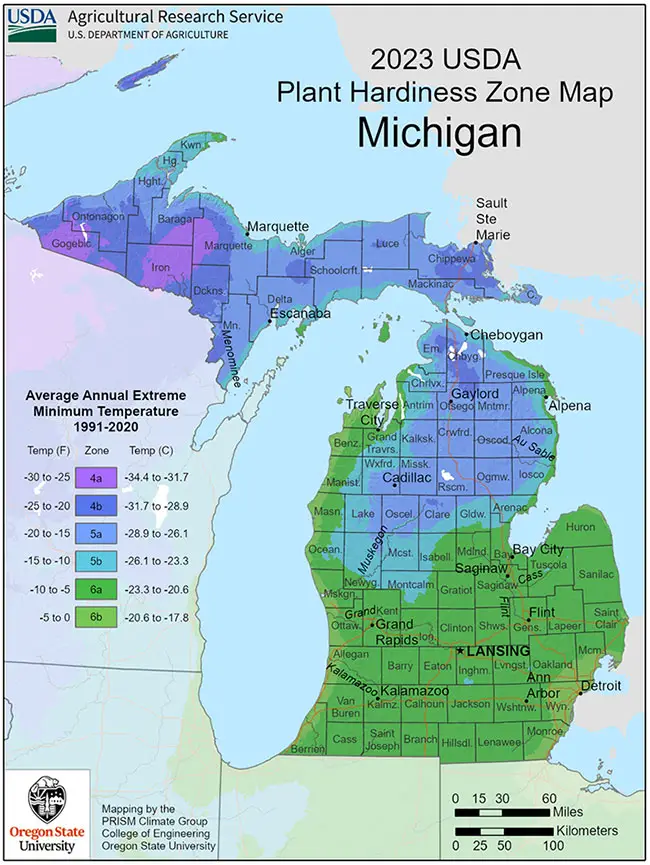
Thunderstorms are relatively frequent in Michigan, occurring approximately 30 days annually, with about 17 tornadoes also making occasional appearances. Michigan’s USDA hardiness zones encompass the range of 4a to 6b.

Growing Palm Trees in Michigan

Given the state’s chilly climate, growing palm trees outdoors is an uphill battle. A more feasible approach would involve nurturing palm trees indoors within containers and giving them a taste of the great outdoors during the warmer summer months.

This way, you can enjoy the presence of palm trees in your garden for a few months each year. Some great indoor palms are:

More Palm Trees»

Major Cities in Michigan

Alpena – Hardiness Zone 5b
Dearborn – Hardiness Zone 6a
Detroit – Hardiness Zone 6a
Kalamazoo – Hardiness Zone 5b
Lansing – Hardiness Zone 5b
Sault Ste Marie – Hardiness Zone 4a
Southfield – Hardiness Zone 6a
Sterling Heights – Hardiness Zone 6a
Warren – Hardiness Zone 6a
Westland – Hardiness Zone 6a
Similar Posts

  • Oklahoma Palm Trees

    You can grow cold-hardy palm trees in the warm regions of Oklahoma. The state features a humid subtropical climate characterized by hot summers and cold winters. The average January temperature is 36°F (2°C), while the average July temperature is 82°F (27°C). Oklahoma experiences an annual snowfall of approximately 8.6 inches (21.8 cm). It’s worth noting…

  • North Dakota Palm Trees

    North Dakota’s climate is simply too cold to support the growth of palm trees. The state experiences a continental climate characterized by hot summers and cold winters. In January, the average temperature drops to a chilly 7°F (-14°C), while July brings an average temperature of 69°F (21°C). North Dakota is known for its extreme weather,…

  • Hawaii Palm Trees

    With consistently delightful tropical weather year-round, Hawaii offers an ideal environment for cultivating a wide variety of palm trees. The state boasts a tropical climate marked by hot summers and warm winters. Summer temperatures typically range from 85-90°F (29-32°C), while in the winter months, they remain pleasantly mild, hovering between 79-83°F (26-28°C). Hawaii experiences abundant…

  • New Mexico Palm Trees

    You can successfully cultivate palm trees in New Mexico. The state’s climate varies from arid to semiarid, characterized by brief, mild winters and hot, dry summers. In January, average temperatures range from 35-55°F (2-13°C), with freezing temperatures common during winter. July brings average temperatures ranging from 78-92°F (26-33°C), with frequent occurrences of temperatures exceeding 100°F…

  • Rhode Island Palm Trees

    Rhode Island’s climate is not conducive to palm trees, as it experiences cold temperatures throughout the year. The state features a humid continental climate characterized by chilly winters and brief, rainy summers. Summers are relatively warm, with average July temperatures around 73°F (23°C), while winters are cold, with an average January temperature of 28°F (–2°C)….

  • Connecticut Palm Trees

    While Connecticut may not be the palm tree paradise, there’s still hope for cold-hardy palm enthusiasts in zone 7. Connecticut’s climate is a blend of humid continental and humid subtropical, featuring hot and dry summers with average temperatures ranging from 81°F (27°C) to 87°F (31°C). Winters, on the other hand, can be chilly, with average…