
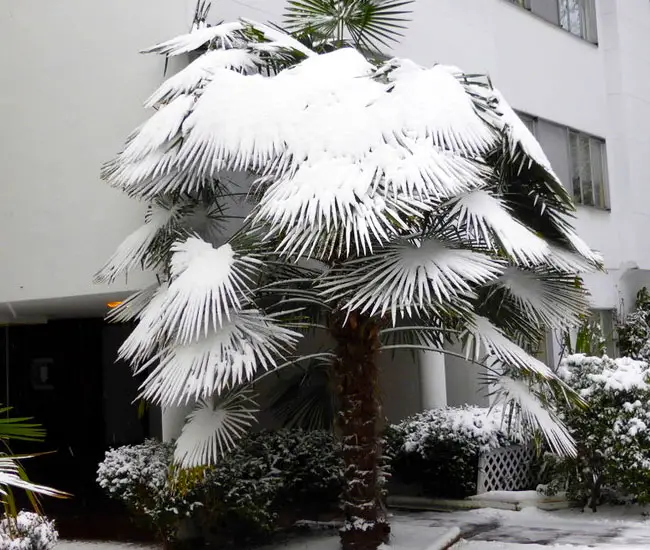
While most people associate palm trees with warm climates, it’s a common misconception that they exclusively thrive in tropical and subtropical regions. Surprisingly, palm trees can flourish not just in Florida but also in over 30 other states.
Although the majority of palm species can only endure temperatures down to 40°F, there are many types of cold-hardy palms capable of withstanding freezing temperatures as low as 20°F (-7°C), and even more astonishingly, temperatures below 0°F (-18°C).
Some of these cold-tolerant palms can be cultivated in regions such as Texas, California, Georgia, Virginia, and even further north.
It’s important to note that for a palm tree to endure such harsh cold weather, it must be fully established. This typically takes three full seasons for a palm tree to achieve.
Additionally, the age of the palm tree significantly impacts its cold hardiness. There is a substantial difference in resilience between juvenile and mature plants.
As palm trees mature, they develop extensive root systems and sturdier trunks, making them much more capable of withstanding colder temperatures.
Top 20 Popular Cold Hardy Palm Trees
Here’s a list of the top 20 popular cold-hardy palm trees that can be grown in Zones 9 to 11 without requiring any cold protection.
With proper winter care and by utilizing your garden’s microclimates, some of these palm trees can even thrive in Zone 8, and in some cases, Zone 7.
All of these palm species are known for their durability, ease of cultivation, and adaptability to various soil conditions.
The information regarding the cold hardiness of each palm type is based on my personal experience, input from fellow palm enthusiasts, and extensive research conducted at Miami University.
1. Bismarck Palm Tree (Bismarckia nobilis)
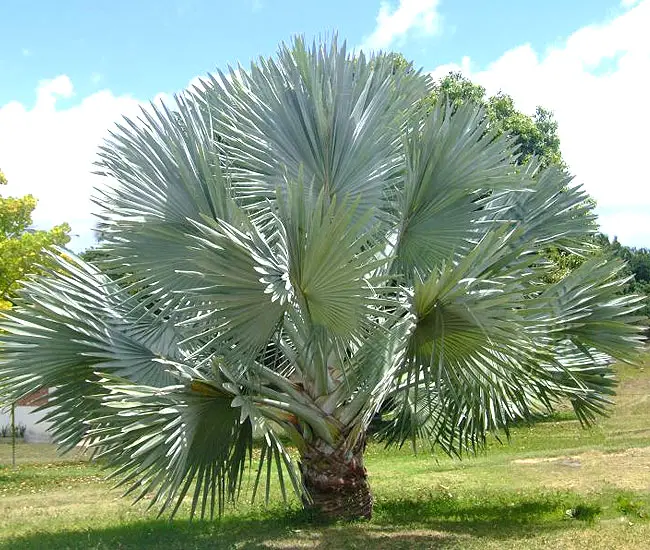
The Bismarck Palm Tree, scientifically known as Bismarckia nobilis, is native to the island of Madagascar. While not the hardiest palm on this list, it boasts durability and can withstand high winds and scorching heat. Its silver-green fan-shaped leaves bring a dramatic flair to any landscape.
Bismarckia nobilis is low-maintenance and easy to cultivate. This palm exhibits cold hardiness, enduring temperatures as low as 25°F (-4°C), making it a suitable choice for USDA zones 9b-11.
2. Blue Hesper Palm Tree (Brahea armata)
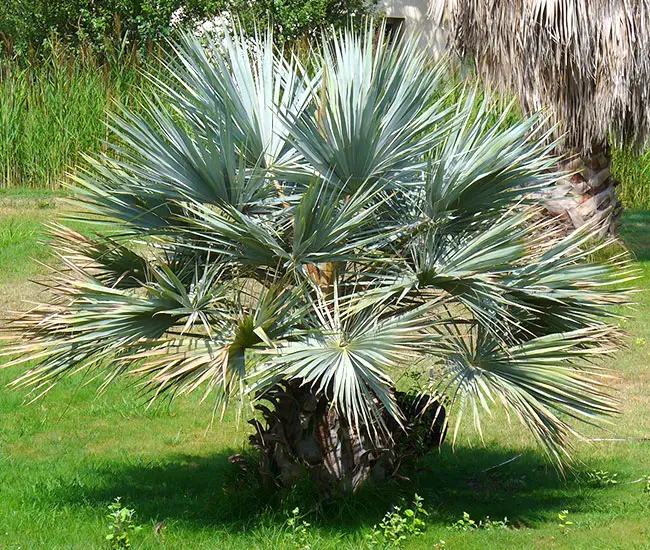
The Blue Hesper Palm, also referred to as Brahea armata, comes from Baja California and thrives in drier, colder climates of South America. It is a drought-tolerant palm distinguished by its brownish trunk and striking silvery-blue foliage.
This palm is relatively new to cultivation in the United States, rendering it somewhat expensive and challenging to acquire. In contrast to many other palms that prefer dry, cold winters, this species can actually endure cold, wet winters.
This slow-growing palm adapts to a wide range of soils and can withstand temperatures as low as 25°F (-4°C), with some reports suggesting survival down to 15°F (-9°C).
However, exposure to temperatures below 15°F (-9°C) can result in foliage damage. It is an excellent choice for areas within USDA zones 9b-11.
3. Cabbage Palm Tree (Sabal palmetto)
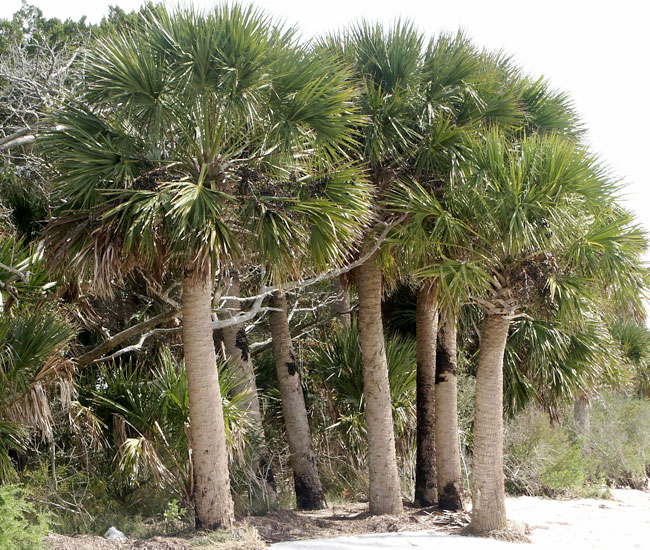
The Cabbage Palm, scientifically named Sabal palmetto, originates from the southern coastal regions, stretching from extreme southern North Carolina through Florida, the Caribbean, and the Gulf of Mexico coast.
This palm is exceptionally hardy and can thrive in a wide range of soil types and weather conditions. It is well-suited for Zones 8 and 9, and can even be found in certain areas of Zone 7.
This slow-growing palm can endure both drought and cold, tolerating temperatures as low as 10-15°F (-12 to -9°C) when mature.
While temperatures below 10°F (-12°C) may damage the leaves, the trunk of a mature palm can survive even at 0°F (-18°C). It is ideally suited for USDA Zones 8a-11.
4. Canary Date Palm Tree (Phoenix canariensis)
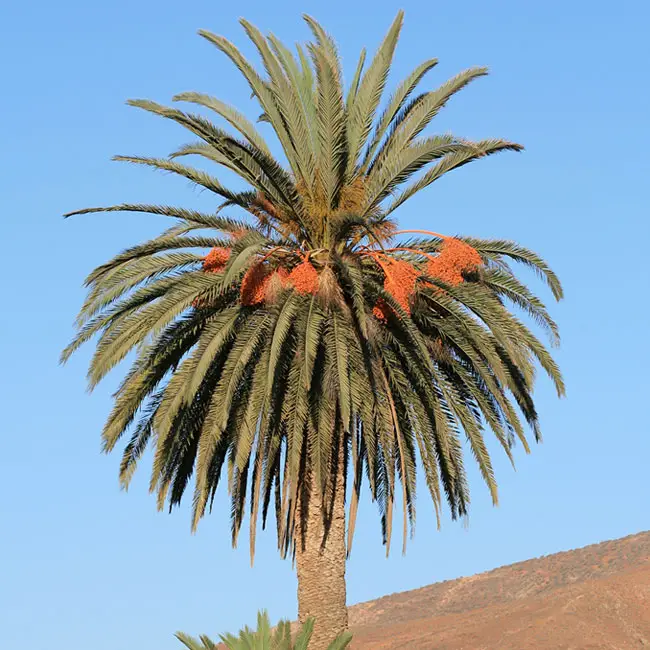
The Canary Date Palm, scientifically known as Phoenix canariensis, originates from the Canary Islands and North Africa. It is easily recognizable due to its large crown of leaves and distinctive trunk with a crisscross pattern.
This slow-growing palm adapts well to a variety of soil conditions and can endure cold down to 15°F (-9°C). With some additional winter protection, it can be cultivated in Zone 8a. It thrives in USDA Zones 8b-11.
5. California Fan Palm Tree (Washingtonia filifera)
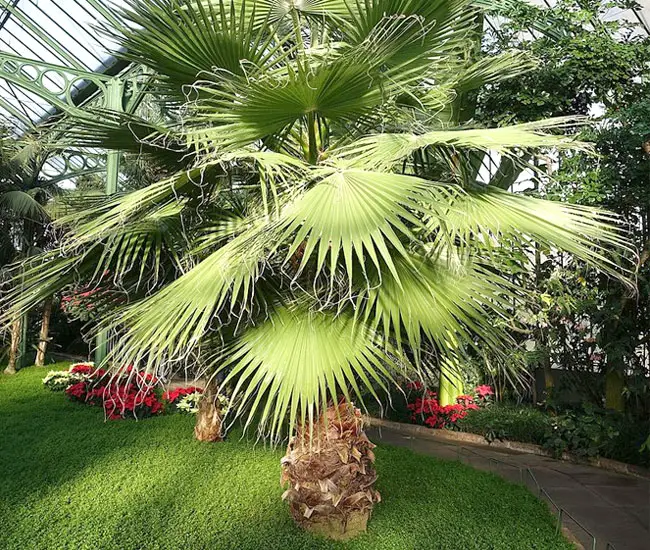
The California Fan Palm, also referred to as Washingtonia filifera, is native to North America. It is commonly cultivated as an ornamental landscape tree in Arizona, Mexico, and California. While it can withstand considerable cold in dry climates, it is less tolerant of cold in wet conditions.
This palm tree can endure both drought and cold, handling temperatures as low as 15-20°F (-9 to -7°C) when mature. Its cold tolerance increases as it matures.
Mature specimens can be found growing in Zone 7a in Oklahoma City and Zone 6b in Tulsa with minimal winter protection. Therefore, it is a suitable choice for USDA Zones 8a-11.
6. Chinese Fan Palm Tree (Livistona chinensis)
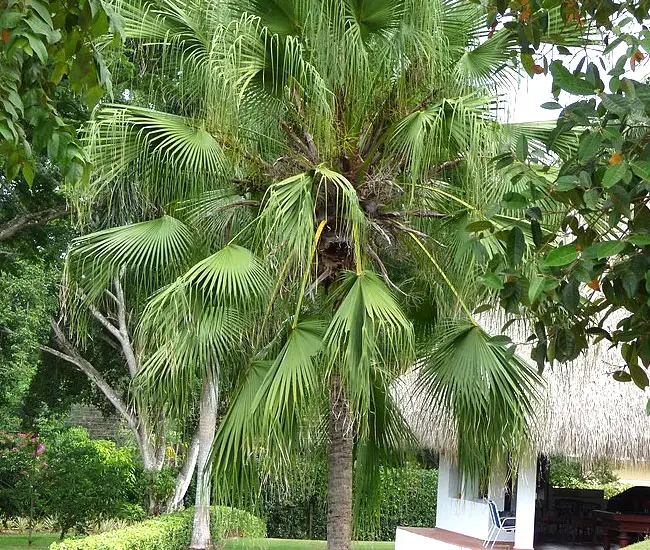
The Chinese Fan Palm, also known as Livistona chinensis, hails from China and southern Japan. This moderately-paced growing palm is tough, withstanding both drought and cold when mature, enduring temperatures as low as 20-25°F (-7 to -4°C).
However, anything below 20°F (-7°C) harms the leaves, and temperatures below 15°F (-9°C) lead to complete defoliation.
Livistona chinensis is widely cultivated in Arizona, Texas, and California. It’s an excellent fit for landscaping in USDA zones 9a-11. If you aim to grow it in Zone 8b, providing some shelter is advisable.
Alternatively, if you don’t mind losing the foliage, you can cultivate this shrub in Zones 6 and 7 as a die-back perennial. Each winter, it regenerates from the ground when warmer weather returns. Pretty cool, right?
7. Dwarf Palmetto (Sabal minor)
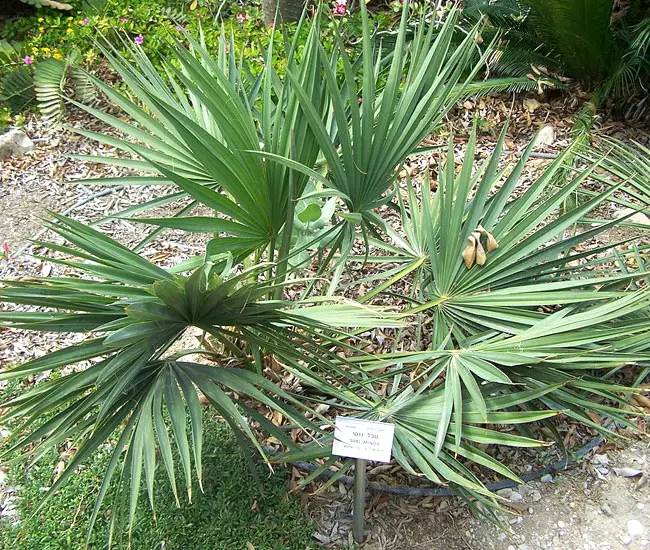
The Dwarf Palmetto Palm, also referred to as Sabal minor, is a petite palm species native to northeastern Mexico, as well as southeastern and south-central regions of the United States.
This palm is impressively cold-tolerant, enduring temperatures near 0°F (−18°C) and even surviving short periods of −5°F (−21°C). It’s a perfect choice for landscaping in USDA zones 7b-10a.
8. European Fan Palm Tree (Chamaerops humilis)
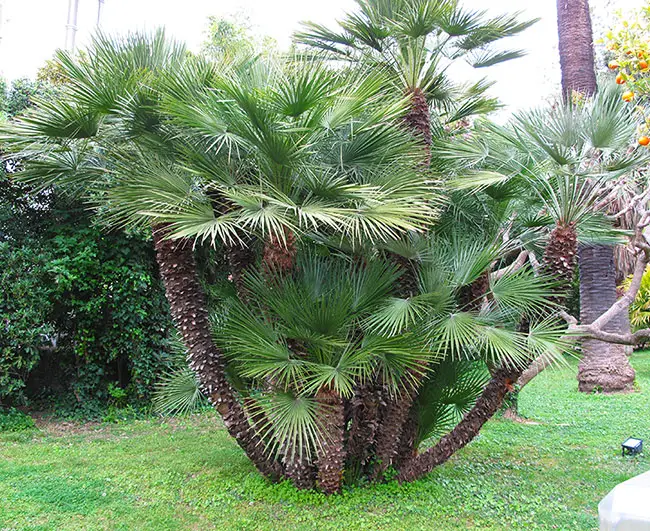
The European Fan Palm, also known as the Mediterranean Palm, is a slow-growing palm native to northern Africa and the Mediterranean regions of Europe. It’s an eye-catching, dense, evergreen palm that’s incredibly resilient.
The European Fan Palm can endure cold down to 5-10°F (-15 to -12°C), with defoliation occurring around 15°F (-9°C).
It’s even been known to survive temperatures as low as 3°F (-16°C) without permanent damage, although it’s best not to plant it in areas with temperatures below 5°F (-15°C). This palm thrives in USDA zones 7b-11.
9. Lady Palm Tree (Rhapis excelsa)
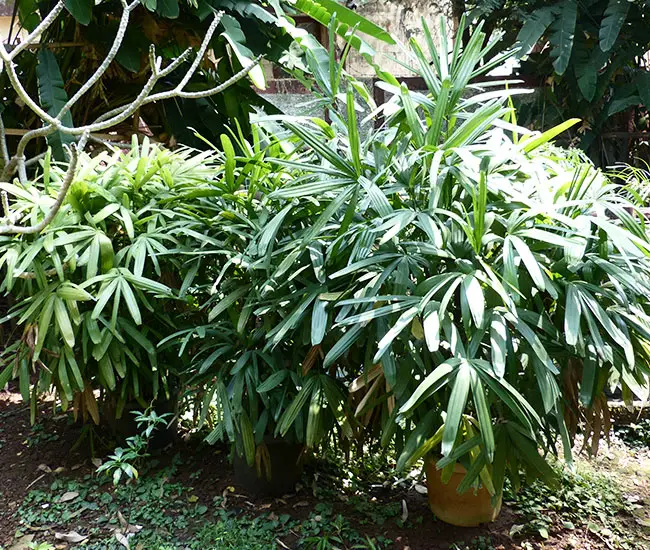
The Lady Palm Tree, scientifically known as Rhapis excelsa, is a highly favored choice for both indoor and outdoor settings because of its low-maintenance nature and ability to withstand cold temperatures.
This palm, native to the Southeast region of China, is a slow-growing evergreen shrub that can endure chilly weather down to 15°F (-9°C). It’s an excellent addition to landscapes in USDA zones 8b-11.
10. Mexican Fan Palm Tree (Washingtonia robusta)
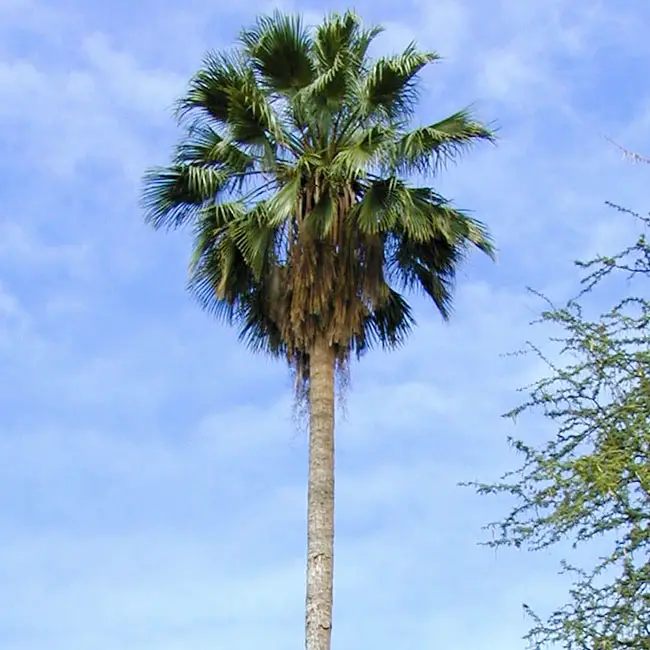
The Mexican Fan Palm, scientifically named Washingtonia robusta, originates from desert regions in Mexico. Similar to the California Fan Palm, it handles cold weather better in dry climates but isn’t as robust as its Californian counterpart.
This cold-hardy palm can endure temperatures as low as 15-20°F (-9 to -7°C) when mature. In fact, with proper care like protective wrapping and heavy mulching, it’s been known to survive temperatures as low as 0°F (-18°C).
This moderately paced growing palm is an excellent choice for landscaping in USDA zones 8b-11. If you’re attempting to cultivate the Mexican Fan Palm outside its usual zone (8b), ensure it’s planted in full sun with proper drainage.
11. Mazari Palm Tree (Nannorrhops ritchiana)
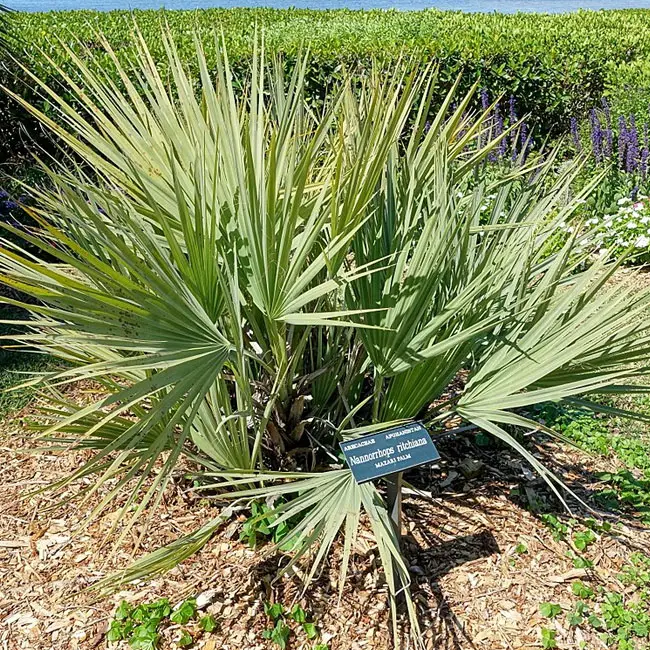
The Mazari Palm Tree, scientific name Nannorrhops ritchiana, is native to to Afghanistan and Pakistan. It’s a rare palm gaining popularity thanks to its striking appearance and rugged durability. Although somewhat challenging to find, the Mazari Palm is nearly as cold-hardy as the Needle Palm.
This palm readily adapts to various soil types, can endure both drought and cold down to 10°F (-12°C). In the frigid deserts of the Middle East, the Mazari Palm has even been known to survive temperatures below 0°F (-18°C).
Interestingly, it appears to handle cold conditions better in dry environments than in wet ones. This extremely slow-growing palm is an excellent addition to landscapes in USDA Zones 8a – 11.
12. Needle Palm Tree (Rhapidophyllum hystrix)
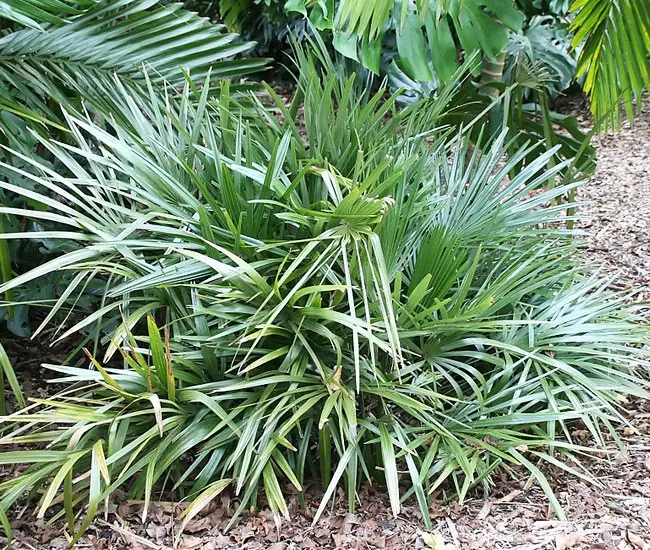
The Needle Palm, scientifically known as Rhapidophyllum hystrix, is indigenous to the coastal plain of the southeastern United States. It stands as the most cold-hardy palm globally in regions with warm to hot summers. You can easily find images of Needle Palms covered in snow.
A well-established Needle Palm can readily withstand cold temperatures down to -5°F (-21°C) without any protective measures. When mature, it can even endure -10°F (-23°C) but will shed all of its foliage.
Surprisingly, it has been documented surviving temperatures as low as -24°F (-31°C) in Knoxville, Tennessee, back in 1985. Believe it or not, this palm can endure harsh winters in northern Ohio, Michigan, New England, and other areas with a similar climate.
Once a Needle Palm has been in the ground for three years, it should be able to endure conditions in Zone 6a without any damage and manage to survive in Zone 5b with some leaf burn. This slow-growing palm is an excellent choice for landscaping in USDA zones 5b-11.
13. Paurotis Palm Tree (Acoelorrhaphe wrightii)
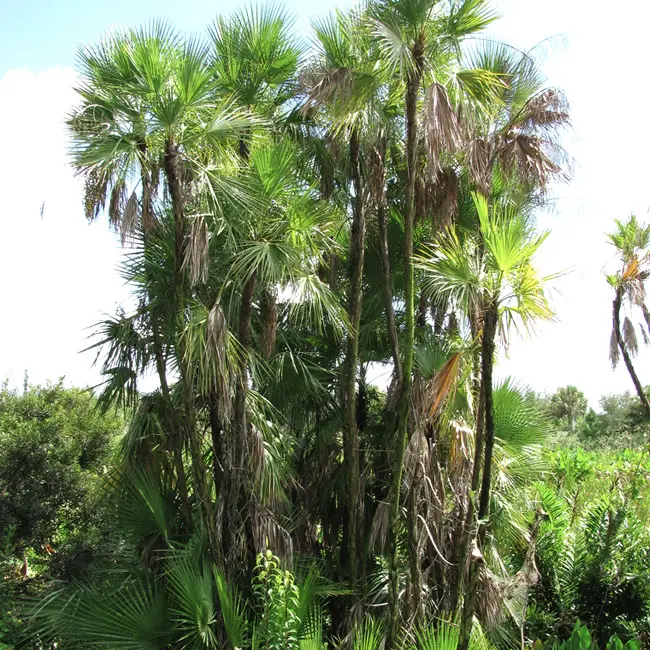
The Paurotis Palm Tree, scientifically named Acoelorrhaphe wrightii, is native to southern Florida. This slow-growing palm is exceptionally durable and adapts well to various soil types.
It can withstand low temperatures down to 25°F (-4°C) and has been known to endure temperatures as low as 20°F (-7°C). It’s an ideal addition to USDA zones 9b-11.
14. Pindo Palm Tree (Butia capitata)
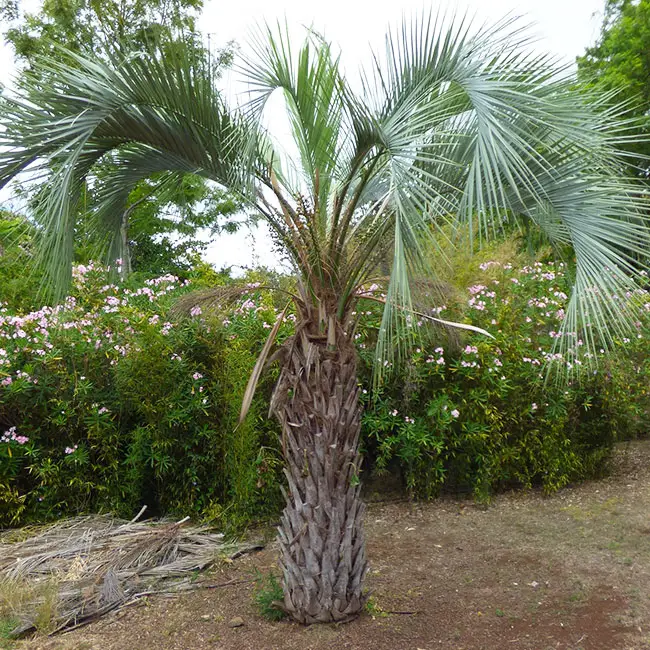
The Pindo Palm, also known as Jelly Palm, hails from Brazil, Argentina, and Uruguay. It is the most cold-hardy palm with feather-shaped leaves available in today’s market.
This palm is easy to cultivate but requires some maintenance to maintain its attractive appearance. It’s a hardy palm that can tolerate temperatures as low as 5-10°F (-15 to -12°C), with leaf damage occurring at around 15°F (-9°C).
While it can survive temperatures as low as 0°F (-18°C) for a brief period, it will lose all of its foliage. This very slow-growing palm is a superb choice for landscaping in USDA zones 7b-11. Any location outside of Zone 7b will necessitate winter protection.
15. Texas Sabal Palm Tree (Sabal mexicana)
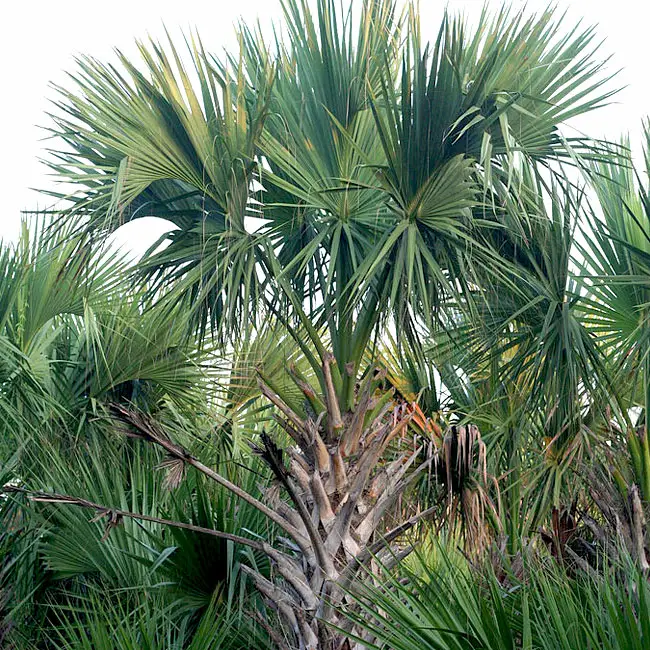
The Texas Sabal Palm, known scientifically as Sabal mexicana or Sabal texana, is indigenous to the far southern regions of Texas and northern Mexico, extending through Central America. It closely resembles the popular Sabal palmetto but distinguishes itself with larger foliage and a more substantial trunk.
Similar to the Sabal palmetto, it can endure freezing temperatures down to 10°F (-12°C) and is even documented to survive at 1°F (-17°C) when it reaches maturity. However, temperatures below 5°F (-15°C) are likely to damage most of the leaf tissue.
This palm can be grown in USDA Zones 8a-11 without the need for protection, and in Zone 7b with the appropriate winter safeguards.
16. Saw Palmetto Palm Tree (Serenoa repens)
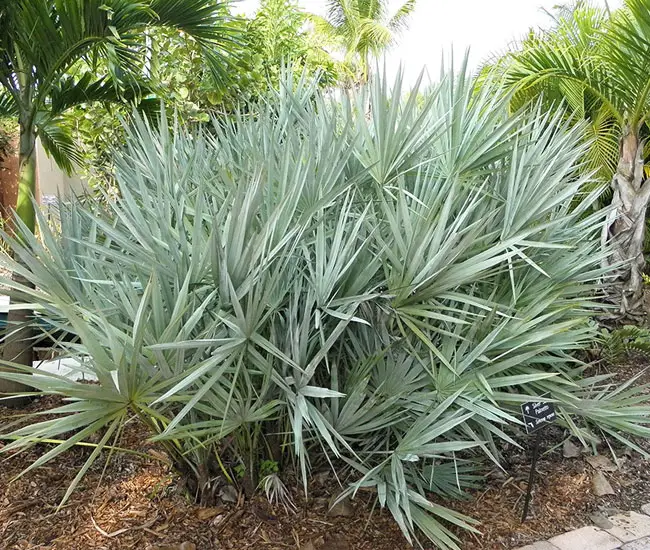
The Saw Palmetto Palm, also known as the Sabal Palm, is native to Florida and thrives throughout the southeastern United States.
This palm is exceptionally cold-hardy, capable of withstanding temperatures as low as 0-5°F (-18 to -15°C). It’s an excellent choice for landscaping in USDA zones 7a-11.
17. Sago Palm Tree (Cycas revoluta)

The Sago Palm, scientifically identified as Cycas revoluta, is not a true palm but rather a cycad.
This slow-growing palm exhibits remarkable cold hardiness, enduring temperatures down to 15°F (-9°C), and has been known to withstand 10°F without suffering permanent damage. It’s well-suited for USDA Zones 8b-11.
18. Sylvester Date Palm Tree (Phoenix sylvestris)
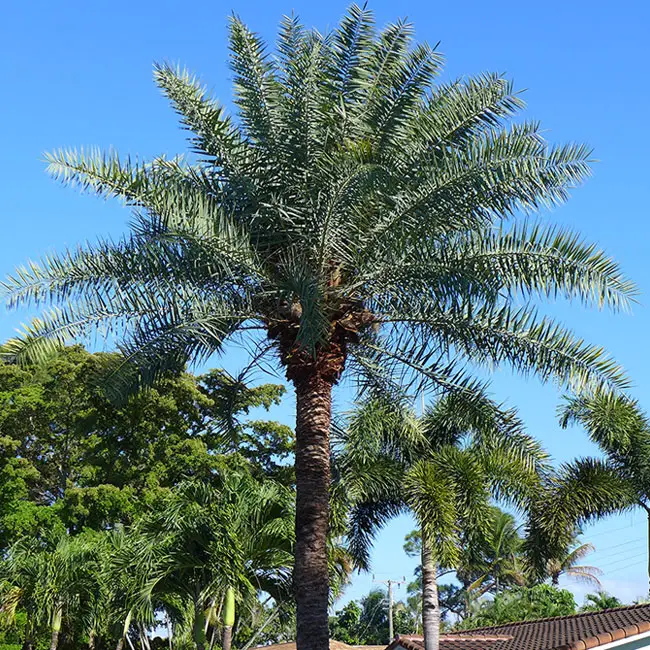
The Sylvester Date Palm Tree, scientifically named Phoenix sylvestris, is one of the most popular palm trees globally, commonly used in luxury homes, hotels, and golf courses.
It grows slowly, boasts wide adaptability, is easy to maintain, and can tolerate cold temperatures down to 15°F (-9°C). It’s an excellent choice for USDA Zones 8b-11.
19. True Date Palm Tree (Phoenix dactylifera)
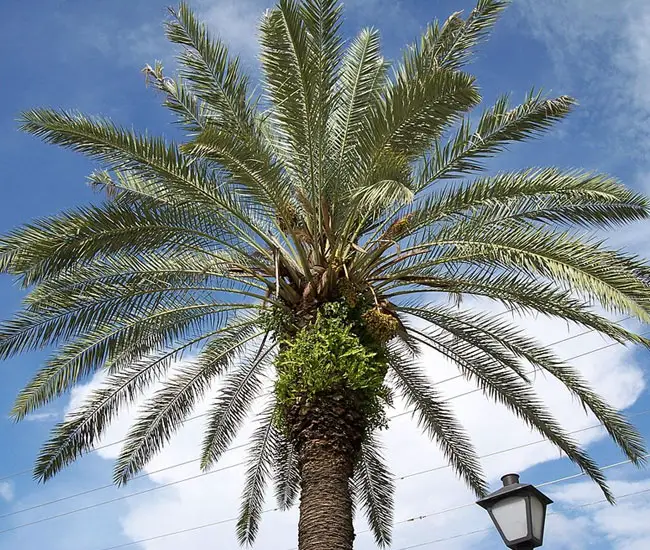
The True Date Palm Tree, scientifically identified as Phoenix dactylifera, is one of the most recognizable palm trees worldwide, largely due to its delicious fruits, known as ‘dates.’
This slow-growing palm is drought-tolerant, adaptable to a wide range of soils, and can endure cold temperatures down to 15°F (-9°C). It thrives in USDA Zones 8b-11.
20. Windmill Palm Tree (Trachycarpus fortunei)
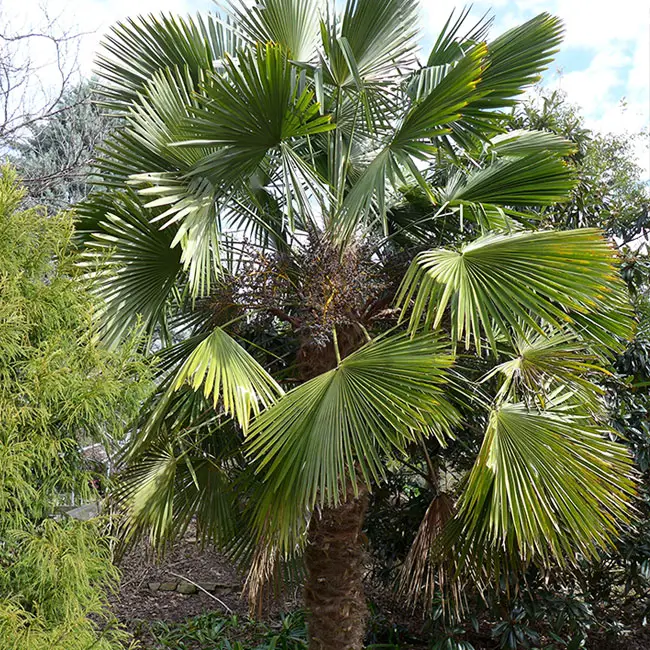
The Windmill Palm, scientifically named Trachycarpus fortunei, originates from the northern regions of India, Myanmar (Burma), Thailand, Nepal, and southern China. It thrives in mountainous terrain at elevations above 6650 ft.
This palm is accustomed to cold temperatures below freezing and frequent heavy snowfall. While Needle Palms and Dwarf Palmettos require hot summers to recover and build strength before the next winter, the Windmill Palm prefers cooler summers, making it an ideal choice for the cool climates of the Pacific Northwest.
The Windmill Palm is an exceptionally cold-hardy palm, capable of enduring temperatures as low as 5-10°F (-15 to -12°C), with its lowest survival point being around -10°F (-23°C). Leaf damage typically occurs at approximately 10°F (-12°C). It’s a slow-growing palm, well-suited for landscaping in USDA zones 7b-11.
What Is The Most Cold Tolerant Palm Tree
Windmill Palm (Trachycarpus fortunei) is considered to be the MOST cold-tolerant palm tree in the world in regions with cool summers. However, it’s important to note that when grown in areas with hot, wet summers, its cold hardiness diminishes.
Furthermore, the cold tolerance of the Windmill Palm significantly depends on the age and maturity of the palm. A mature and well-established Windmill Palm can withstand temperatures as low as 15°F without sustaining damage.
In contrast, young Windmill Palms are more susceptible to cold and will lose all of their foliage if exposed to temperatures as low as 15°F.
An example from the book “Palms Won’t Grow Here” cites a mature Trachycarpus fortunei surviving exposure to -20°F in Bulgaria, although it did lose all of its foliage. In general, the lowest temperature a mature Windmill Palm can endure is around -10°F.
While the Windmill Palm takes the top spot in regions with cool summers, the Needle Palm (Rhapidophyllum hystrix) holds the title of the MOST cold-tolerant palm tree in climates with hot summers.
A mature Needle Palm can withstand temperatures as low as -5°F without any damage, and it can survive down to -10°F, albeit at the cost of losing all of its foliage.
Another palm variety that comes close to the cold tolerance of the Needle Palm is the Dwarf Palmetto Palm (Sabal minor).
There is evidence suggesting that the Dwarf Palmetto can endure temperatures as low as 5°F without suffering damage. Additionally, it is known to survive short periods of −5°F (−21°C) temperatures.
Dwarf Palmetto vs Windmill Palm vs Needle Palm
Here is a comparison table to show you how these palms measure up against each other when it comes to cold tolerance.
| Dwarf Palmetto (Sabal minor) | Windmill Palm ( Trachycarpus fortunei) | Needle Palm (Rhapidophyllum hystrix) | |
|---|---|---|---|
| Max Height: | 5 – 6 ft | 20 – 25ft | 5 – 10 ft |
| Cold Tolerance: | 7 to 10b | Zones 7b to 11 | 7 to 10b |
| Min. Survival Temp: | -10F | -10F | -10F |
| Water Req: | Drought tolerant | Drought tolerant | Drought tolerant |
| Light Req: | Full sun to partial shade | Full sun to partial shade | Full sun to partial shade |
Factors Affecting Palm Cold Tolerance
Have you ever wondered why some gardeners in northern regions can successfully grow palms, while others in the same location struggle to do so? There are several factors that can significantly influence the survival of palm trees.
- Maturity: As mentioned earlier, the age of the palm tree plays a crucial role. Mature palms have thicker trunks, more extensive root systems, and a greater number of leaves, all of which provide better cold protection.
- Microclimate: A microclimate is a relatively small area, often just a few yards or smaller, that exhibits a slightly different climate compared to the broader regional climate.
You can create a microclimate on your property using buildings, fences, rocks, or patios. For instance, planting a palm tree beneath a taller tree, behind a windbreak, or within a sheltered courtyard can shield it from harsh winter winds, which can otherwise cause significant damage. - Acclimatization: If your palm tree has been raised in a greenhouse, it will need time to acclimatize to your local environment in order to withstand cold weather.
Acclimatization involves exposure not only to lower temperatures but also to reduced moisture levels, increased sunshine, stronger winds, and other environmental variables. During this transition period, it’s essential to provide your new palm with some cold protection until it becomes fully acclimated. - Health: The overall health of the palm tree greatly impacts its ability to withstand cold temperatures.
It’s crucial to provide the palm with ample water, nutrients, and sunlight during the growing season to keep it in peak condition and better prepared to cope with cold weather. A healthy palm is more resilient in the face of adverse conditions.
Simple Palm Tree Cold Protection
By using some simple cold protection techniques, you can push a palm tree’s hardiness zone by one, or even one and a half, USDA zones! More advanced measures might even allow you to shift it by two full zones.
You should start your palm’s winter protection in the late fall or early winter when the temperature noticeably drops. A bit of cold weather is beneficial because it initiates the dormancy process, enhancing the tree’s cold hardiness.
So, don’t start too early. The goal is to protect the leaves, stems, and, most crucially, the bud—the heart of the palm tree. Here are a few easy steps you can take:
- Heavy mulching: One of the simplest measures is to apply a layer of 4-12 inches of mulch. This insulates the ground, preventing it from deep freezing, thus safeguarding the roots and the lower part of the trunk.
- Heavy watering: Give the palm a good watering with lukewarm water to slightly warm up the ground, aiding in increased water uptake.
- Antidesiccant spray: This spray creates a waxy layer that prevents water loss from the tree’s foliage. Keep in mind that it gradually washes off with rain, so you’ll need to reapply it.
- Snow: Surprisingly, a few inches of snow can offer excellent cold protection, with temperatures under the snow often being as much as 3°F warmer than the surrounding air. However, heavy snowfall can potentially cause damage.
- Christmas lights: Placing Christmas lights around the trunk of the tree is another simple idea that can provide an additional 2-3°F of warmth.
Conclusion
As evident, various palm tree species thrive in subtropical and temperate climates. By exclusively selecting palms from the list above, you can create a captivating tropical garden that will capture the attention of your neighbors.
Additionally, by strategically utilizing the microclimate on your property and employing cold protection techniques, the possibilities are virtually limitless.
It’s important to note that palms, even within the same species or variety, exhibit some variation in cold tolerance, as they are unique individuals.
Related articles:
–10 Ways To Protect Palm Trees From Winter Freeze, Cold, and Frost
–How to Save Cold Damaged Palm Tree
–Importance of Microclimate When Choosing Cold Hardy Palms
–Top 5 Factors Affecting Cold Hardy Palm Tree Growth
Loved looking at your Pal Trees, reminded me how Hot Florida is.
How much do they cost?
I love Royal Palm trees. I live in north central Texas in the Dallas area and would like to know if they will grow here. I don’t think I have ever seen any here.
I have a Mexican fan Palm tree, I live in Pennsylvania (zone 6b/7a), I have it in the ground and it gets minimum winter damage. The winters up CAN be pretty brutal with the polar air (down to -10 with the wind chill) but if I know that the winter is going to be rough I wrap in burlap then bubble wrap with small holes, more burlap, then clear Xmas lights (for heat) then more burlap)
It’s mid December and I’ve just purchased two sago palms here in Fresno, Ca. I’ve read how the best time of year to plant is Spring. My question is will they survive through Winter and past if I plant them right now? Moved into a new house and my wife had her heart set on planting sagos when I landscaped front yard with flowers and plants that will sustain this cold weather. Well if they, don’t, guess I’ll just have to take them back to Lowe’s.
I live in Delaware (7b) and we see needle palms everywhere.
We are moving into the Sevierville area that is mostly a 6B – 7A zone. We love palm trees. When we lived in California we had the Mexican date palm which we really enjoyed. We do understand that it cannot be the same but still love to see some a[lm trees in our yard
Can you please recommend some types?
Thank you,
I’m looking for palm tree that looks like a palm of a hand or an open fan. I had this palm tree in my house in 2000 at 18904 NW 47 Place, Carol City, Fl