
Arkansas Palm Trees
Despite Arkansas’ reputation for extreme weather, it is possible to cultivate palm trees in the state. Arkansas boasts a subtropical climate characterized by hot, humid summers and relatively colder, drier winters. Summers see average temperatures in the low 90s, accompanied by high humidity levels, while winters tend to linger in the low 50s.
Throughout a typical year, Arkansas experiences a variety of weather events, including thunderstorms, tornadoes, hail, snowfall, and ice storms. Freezing rains are common statewide, with heavier snowfalls occurring primarily in the northern half of the state.
While Arkansas doesn’t directly face hurricanes, it can feel the impact of tropical systems’ remnants, resulting in flooding and storm damage.
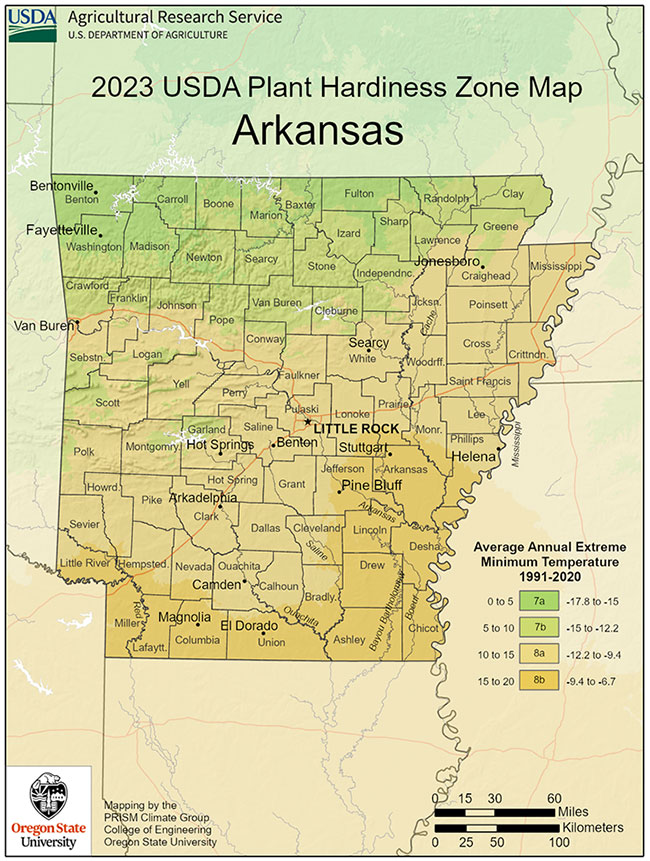
The state typically witnesses around 60 thunderstorms each year, and tornadoes are another significant concern, with some of the most catastrophic tornadoes in U.S. history having struck Arkansas. The USDA hardiness zones in the state range from 6b to 8a.
Growing Palm Trees in Arkansas
It’s worth noting that there are indeed hardy palm varieties that can thrive in Arkansas’ diverse climate. Here is a list of cold hardy palms that can be grown there:
- European Fan Palm Tree – Zones 7b-11 (5 to 10 F)
- Pindo Palm Tree – Zones 7b-11 (5 to 10 F)
- Sago Palm Tree – Zones 7b-11 (5 to 10 F)
- Saw Palmetto Palm Tree – Zones 7a-11 (0 to 5 F)
- Windmill Palm Tree – Zones 7b-11 (5 to 10 F)
- Cabbage Palm Tree – Zones 8a -11 (10 -15 F)
More Palm Trees»
Major Cities in Arkansas
Fort Smith – Hardiness Zone 7a
Jonesboro – Hardiness Zone 6b
Little Rock – Hardiness Zone 7b

What month is best to plant palm trees and what variety in the Southern part of Arkansas