Iowa Palm Trees

Iowa presents a challenging environment for palm tree cultivation, as it is generally too cold for these tropical plants. Even the most cold-hardy palm varieties can only endure the colder temperatures found in zone 7 and higher.

Iowa’s climate is characterized as humid continental, featuring wet springs, hot summers, and cold winters, with significant annual precipitation, including both rain and snowfall.

During the summer, Iowa experiences hot and humid conditions, with average temperatures hovering around 86°F (30°C) in July. Winters in the state are cold, with an average temperature of 10°F (–4°C) in January.

Iowa has witnessed temperature extremes, with the highest recorded at a scorching 118°F (48°C) and the lowest plummeting to a bone-chilling -47°F (-44°C).

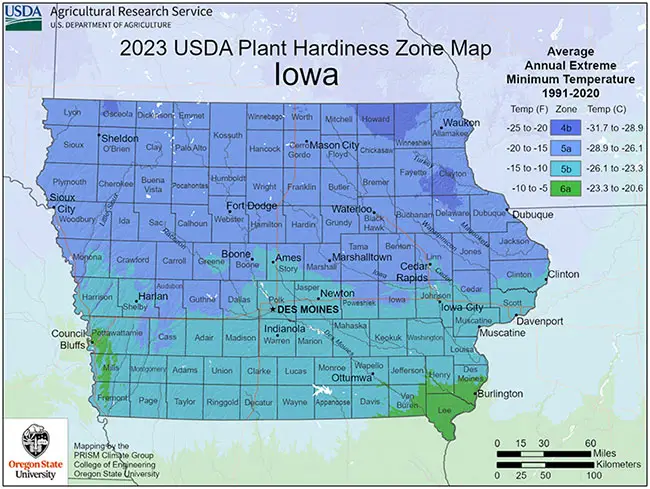
Spring brings an average of about 37 tornadoes to the state, some of which can be highly destructive. Iowa’s USDA hardiness zones span from 4b to 6a.

Growing Palm Trees in Iowa

Given Iowa’s frequent extreme weather conditions, it may not be an ideal location for palm trees to thrive. As an alternative, it is recommended to grow palm trees indoors in containers and bring them outdoors during the summer months.

This approach allows you to enjoy palm trees in your garden for a few months each year while protecting them from the harsh Iowa climate. Some great indoor palms are:

More Palm Trees»

Major Cities in Iowa

Cedar Rapids – Hardiness Zone 4b
Davenport – Hardiness Zone 6a
Des Moines – Hardiness Zone 5a
Ottumwa – Hardiness Zone 5a
Sioux City – Hardiness Zone 5a
Similar Posts

  • Georgia State Palm Trees

    While Georgia may not boast the same tropical warmth as Florida, it’s still a place where cold-hardy palm trees can thrive. The state enjoys a humid subtropical climate characterized by hot summers and mild winters, thanks to the influence of the nearby Atlantic Ocean. In January, you can expect an average temperature of 39°F (4°C),…

  • Arizona Palm Trees

    While palm trees are typically associated with tropical climates, some hardy varieties can endure the arid desert conditions found in Arizona. Selecting the right palms for your Arizona landscape can indeed be a challenge. This vast state is predominantly desert, characterized by scorching summers and mild winters, and it sees minimal rainfall. During winter, temperatures…

  • Idaho Palm Trees

    In some of Idaho’s warmer regions, you can indeed cultivate cold-hardy palm trees. Idaho’s climate is decidedly continental, marked by hot summers and harsh winters. In Boise city, for example, you can expect an average temperature of 29°F (–2°C) in January and a balmy 74°F (23°C) in July. Generally, the state experiences low humidity levels….

  • North Dakota Palm Trees

    North Dakota’s climate is simply too cold to support the growth of palm trees. The state experiences a continental climate characterized by hot summers and cold winters. In January, the average temperature drops to a chilly 7°F (-14°C), while July brings an average temperature of 69°F (21°C). North Dakota is known for its extreme weather,…

  • Connecticut Palm Trees

    While Connecticut may not be the palm tree paradise, there’s still hope for cold-hardy palm enthusiasts in zone 7. Connecticut’s climate is a blend of humid continental and humid subtropical, featuring hot and dry summers with average temperatures ranging from 81°F (27°C) to 87°F (31°C). Winters, on the other hand, can be chilly, with average…

  • Arkansas Palm Trees

    Despite Arkansas’ reputation for extreme weather, it is possible to cultivate palm trees in the state. Arkansas boasts a subtropical climate characterized by hot, humid summers and relatively colder, drier winters. Summers see average temperatures in the low 90s, accompanied by high humidity levels, while winters tend to linger in the low 50s. Throughout a…

One Comment

  1. Tiffani King says:

    My inlaws live in Iowa. I would love to send them a palm tree to plant. What kind of palm trees survive in Iowa? how much would it cost? shipping cost?

Comments are closed.