Wisconsin Palm Trees

Growing palm trees in Wisconsin is impractical due to the state’s cold climate. Wisconsin experiences a continental climate characterized by warm summers and extremely cold winters. The presence of Lake Michigan and Superior also influences its weather patterns.

During the summer months, particularly in July, Wisconsin witnesses average temperatures ranging from 68°F (20°C) to 80°F (27°C). However, come January, the state faces significantly colder conditions, with average temperatures varying between 8°F (–13°C) and 26°F (–3°C), depending on the specific location.

In the upper northeast and north-central regions of Wisconsin, the freeze-free season lasts for approximately 80 days per year, making it challenging for tropical or subtropical plants to thrive. In the north-central region, this season extends to around 180 days.

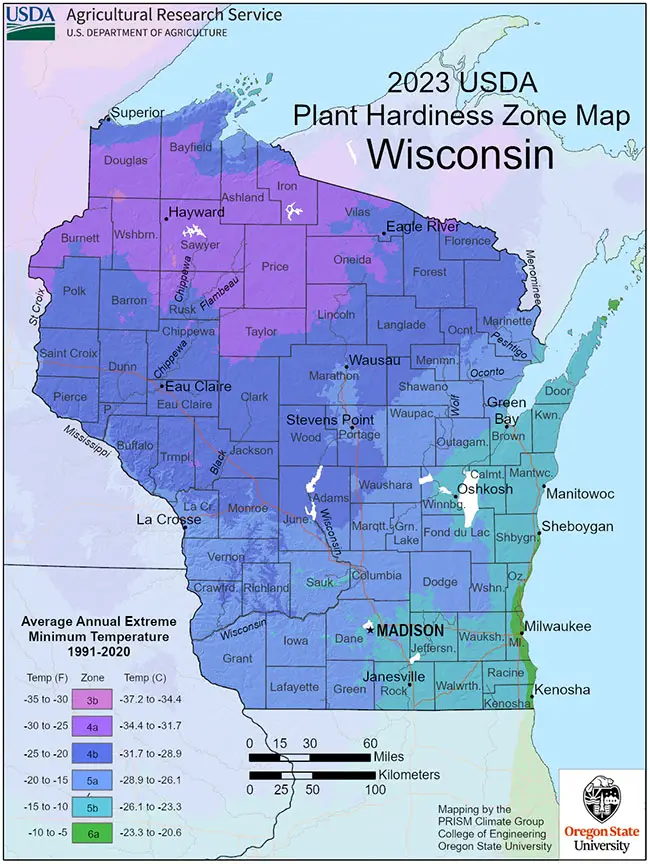
Wisconsin falls within USDA hardiness zones ranging from 3b to 5b. These zones show that palm trees won’t thrive in Wisconsin’s weather.

Growing Palm Trees in Wisconsin

This state is too cold for growing palm trees outdoors, but you can grow them indoors and take them outside during warm months. Some great indoor palms are:

More Palm Trees»

Major Cities in Wisconsin

Eau Claire – Hardiness Zone 4a
Green Bay – Hardiness Zone 4b
Kenosha – Hardiness Zone 5a
Madison – Hardiness Zone 4b
Milwaukee – Hardiness Zone 5a
Racine – Hardiness Zone 5a
Wausau – Hardiness Zone 4a
Similar Posts

  • Mississippi Palm Trees

    You can successfully cultivate palm trees in the warmer regions of Mississippi, which enjoys a humid subtropical climate characterized by short, mild winters and long, scorching summers. The summertime here can be quite humid, with an average July temperature soaring to about 95°F (approximately 35°C). On the other hand, January ushers in milder weather, with…

  • Indiana Palm Trees

    Indiana’s climate isn’t favorable to palm tree cultivation. The state experiences a humid continental climate, characterized by chilly winters and warm summers. In January, temperatures typically range from 17°F (–8°C) to 35°F (2°C), while July sees averages ranging from 63°F (17°C) to 88°F (31°C). The USDA hardiness zones in Indiana span from 5b to 6b….

  • Kansas Palm Trees

    Kansas is not conducive to palm tree cultivation due to its predominantly cold climate. The state of Kansas experiences three distinct climate types: humid subtropical, humid continental, and semi-arid steppe. Depending on the region, summers can be either hot and humid or hot and dry, with July maximum temperatures ranging from 91°F (32°C) to 93°F…

  • Tennessee Palm Trees

    Growing palm trees in Tennessee poses a considerable challenge due to its cold winters. The state’s climate varies, encompassing a humid subtropical climate in some areas and a humid continental climate in others. Summers tend to be hot and humid, with average July temperatures hovering around 90°F (32°C). Winters, while generally mild to cool, feature…

  • Illinois Palm Trees

    You can give palm tree growing a shot in zone 7a, especially near the Kentucky border where the climate leans closer to humid subtropical. Illinois, however, is more on the temperate side. Summers here get hot and humid, with average temperatures ranging from 70°F (21°C) to 77°F (25°C), while winters can be cool to downright…

  • Minnesota Palm Trees

    Minnesota’s climate isn’t exactly palm tree-friendly. The state boasts a continental climate, featuring warm summers and frigid winters. Summers vary from hot and humid to warm and less muggy, with average July temperatures ranging between 61°F (16°C) and 76°F (24°C), depending on your location. Meanwhile, January brings chilly temperatures that hover between 3°F(−16°C) and 18°F…