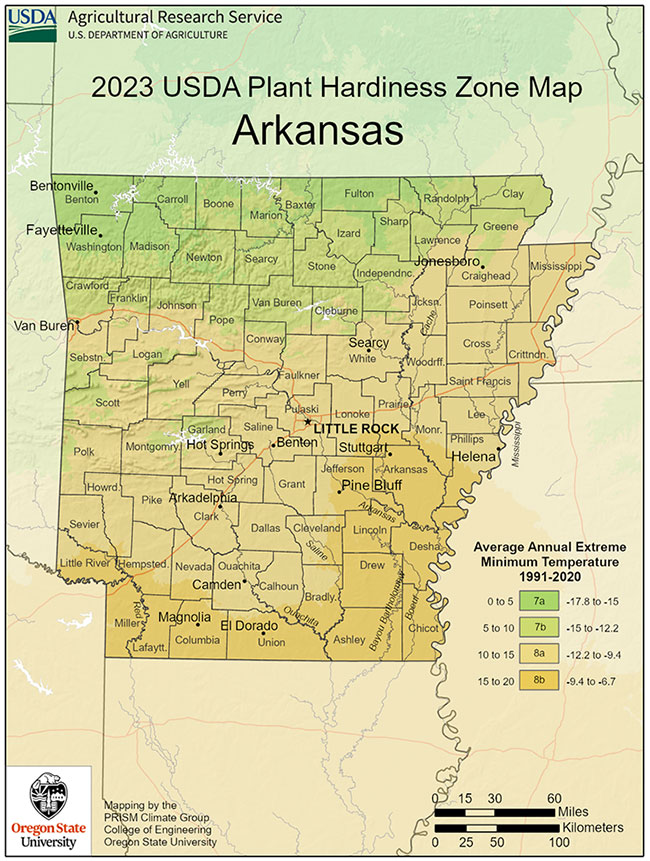
Arkansas Palm Trees

Despite Arkansas’ reputation for extreme weather, it is possible to cultivate palm trees in the state. Arkansas boasts a subtropical climate characterized by hot, humid summers and relatively colder, drier winters. Summers see average temperatures in the low 90s, accompanied by high humidity levels, while winters tend to linger in the low 50s.

Throughout a typical year, Arkansas experiences a variety of weather events, including thunderstorms, tornadoes, hail, snowfall, and ice storms. Freezing rains are common statewide, with heavier snowfalls occurring primarily in the northern half of the state.

While Arkansas doesn’t directly face hurricanes, it can feel the impact of tropical systems’ remnants, resulting in flooding and storm damage.

The state typically witnesses around 60 thunderstorms each year, and tornadoes are another significant concern, with some of the most catastrophic tornadoes in U.S. history having struck Arkansas. The USDA hardiness zones in the state range from 6b to 8a.

Growing Palm Trees in Arkansas

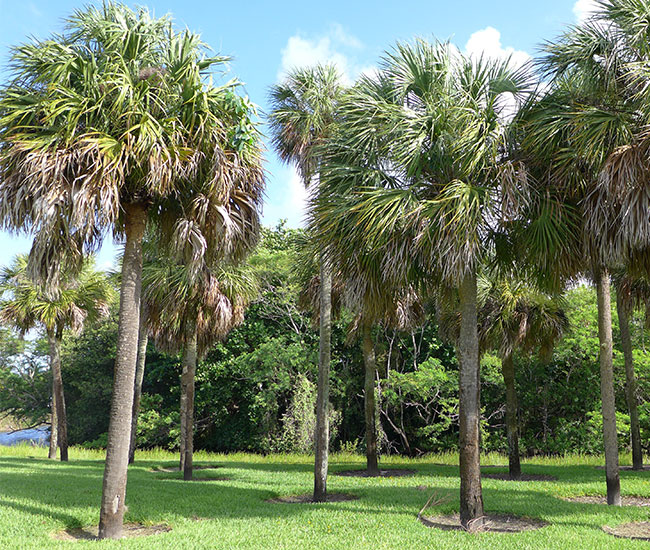
It’s worth noting that there are indeed hardy palm varieties that can thrive in Arkansas’ diverse climate. Here is a list of cold hardy palms that can be grown there:

More Palm Trees»

Major Cities in Arkansas

Fort Smith – Hardiness Zone 7a
Jonesboro – Hardiness Zone 6b
Little Rock – Hardiness Zone 7b
Similar Posts

  • Idaho Palm Trees

    In some of Idaho’s warmer regions, you can indeed cultivate cold-hardy palm trees. Idaho’s climate is decidedly continental, marked by hot summers and harsh winters. In Boise city, for example, you can expect an average temperature of 29°F (–2°C) in January and a balmy 74°F (23°C) in July. Generally, the state experiences low humidity levels….

  • Maryland Palm Trees

    While Maryland experiences cool winters overall, there are specific regions where palm trees can thrive. Maryland boasts a humid subtropical climate influenced by the Atlantic Ocean, featuring hot and humid summers with an average July temperature of 77°F (25°C) and cool winters with an average January temperature of 33°F (1°C). The annual snowfall varies significantly,…

  • Tennessee Palm Trees

    Growing palm trees in Tennessee poses a considerable challenge due to its cold winters. The state’s climate varies, encompassing a humid subtropical climate in some areas and a humid continental climate in others. Summers tend to be hot and humid, with average July temperatures hovering around 90°F (32°C). Winters, while generally mild to cool, feature…

  • Colorado Palm Trees

    Colorado presents a significant challenge for anyone thinking of cultivating palm trees, given its frigid climate and diverse geography. The state comprises mountains, foothills, high plains, and desert lands, resulting in a semi-arid to alpine climate that varies with elevation. Extreme weather is par for the course in Colorado. Winters are bitterly cold and snow-laden,…

  • Kentucky Palm Trees

    Growing palm trees in the state of Kentucky can be quite challenging due to its climate conditions. Kentucky features a humid subtropical climate, characterized by warm and humid summers, with an average maximum July temperature of 87°F (30°C). Winters in Kentucky are moderately cold, with an average temperature in January hovering around 40°F (4°C). The…

One Comment

  1. Ken Allen says:

    What month is best to plant palm trees and what variety in the Southern part of Arkansas

Comments are closed.