Maryland Palm Trees
While Maryland experiences cool winters overall, there are specific regions where palm trees can thrive. Maryland boasts a humid subtropical climate influenced by the Atlantic Ocean, featuring hot and humid summers with an average July temperature of 77°F (25°C) and cool winters with an average January temperature of 33°F (1°C).
The annual snowfall varies significantly, ranging from 9 to 100 inches (23-250 cm) depending on the location within the state.
Notably, Maryland has experienced extreme temperature fluctuations, with the highest recorded temperature reaching 109°F (43°C) and the lowest plummeting to -40°F (-40°C).
Additionally, the state encounters approximately 30 to 40 thunderstorms and sees an average of 6 tornadoes annually.
Growing Palm Trees in Maryland
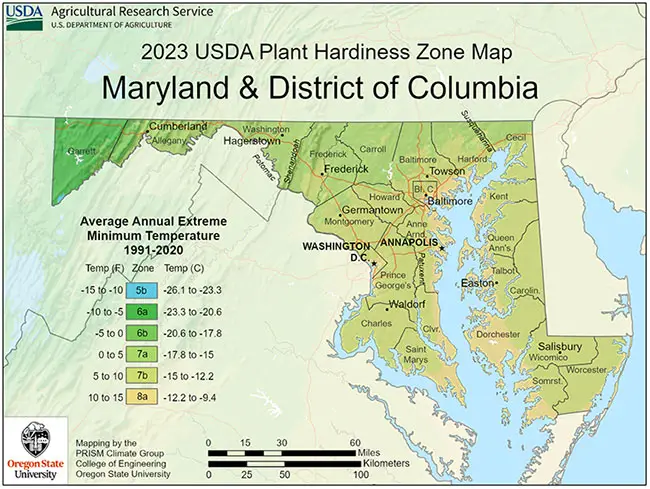
Maryland’s USDA hardiness zones span from 5b to 8a, providing suitable conditions for the cultivation of palm trees. For successful palm growth in the warmer parts of Maryland, specifically in zones 7 and 8, it’s essential to select palm tree varieties known for their cold-hardiness and adaptability to varying soil conditions.
To protect them during the winter months, it’s crucial to provide adequate cold protection measures. Here are some of the palms that could grow in Maryland:
- Needle Palm Tree – Zones 5b-11 (-15 to -10F)
- European Fan Palm Tree – Zones 7b-11 (5 to 10 F)
- Pindo Palm Tree – Zones 7b-11 (5 to 10 F)
- Sago Palm Tree – Zones 7b-11 (5 to 10 F)
- Saw Palmetto Palm Tree – Zones 7a-11 (0 to 5 F)
- Windmill Palm Tree – Zones 7b-11 (5 to 10 F)
More Palm Trees»
Major Cities in Maryland
Baltimore – Hardiness Zone 7a
Columbia – Hardiness Zone 6b
Salisbury – Hardiness Zone 7a
Silver Spring – Hardiness Zone 6b