Wisconsin Palm Trees
Growing palm trees in Wisconsin is impractical due to the state’s cold climate. Wisconsin experiences a continental climate characterized by warm summers and extremely cold winters. The presence of Lake Michigan and Superior also influences its weather patterns.
During the summer months, particularly in July, Wisconsin witnesses average temperatures ranging from 68°F (20°C) to 80°F (27°C). However, come January, the state faces significantly colder conditions, with average temperatures varying between 8°F (–13°C) and 26°F (–3°C), depending on the specific location.
In the upper northeast and north-central regions of Wisconsin, the freeze-free season lasts for approximately 80 days per year, making it challenging for tropical or subtropical plants to thrive. In the north-central region, this season extends to around 180 days.
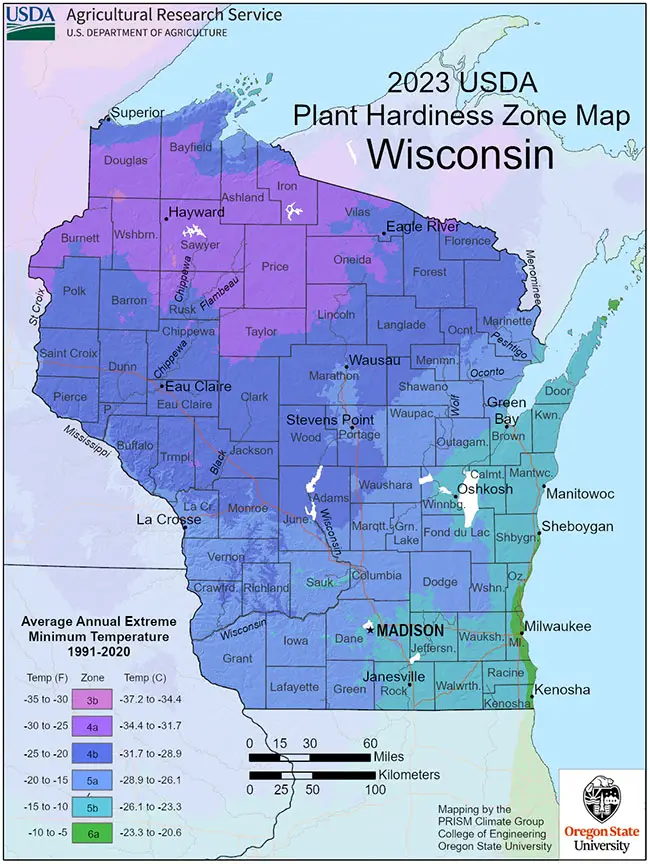
Wisconsin falls within USDA hardiness zones ranging from 3b to 5b. These zones show that palm trees won’t thrive in Wisconsin’s weather.
Growing Palm Trees in Wisconsin
This state is too cold for growing palm trees outdoors, but you can grow them indoors and take them outside during warm months. Some great indoor palms are:
- Areca Palm Tree – Zones 9a – 11 (20 to 25 F)
- Chinese Fan Palm Tree – Zones 8a – 11 (10 to 15 F)
- Kentia Palm Tree – Zones 9b – 11 (25 to 30 F)
- Lady Palm Tree – Zones 8b – 11 (15 to 20 F)
More Palm Trees»
Major Cities in Wisconsin
Eau Claire – Hardiness Zone 4a
Green Bay – Hardiness Zone 4b
Kenosha – Hardiness Zone 5a
Madison – Hardiness Zone 4b
Milwaukee – Hardiness Zone 5a
Racine – Hardiness Zone 5a
Wausau – Hardiness Zone 4a