Nebraska Palm Trees

Nebraska, being a predominantly cold state, is not favorable to the cultivation of palm trees. It is geographically divided into two distinct climatic regions: the eastern half of the state experiences a humid continental climate, while the western half is characterized by a semi-arid climate.

Summers here tend to be hot, with an average July temperature of 76°F (24°C), while winters are notably cold, featuring an average January temperature of 22°F (–6°C).

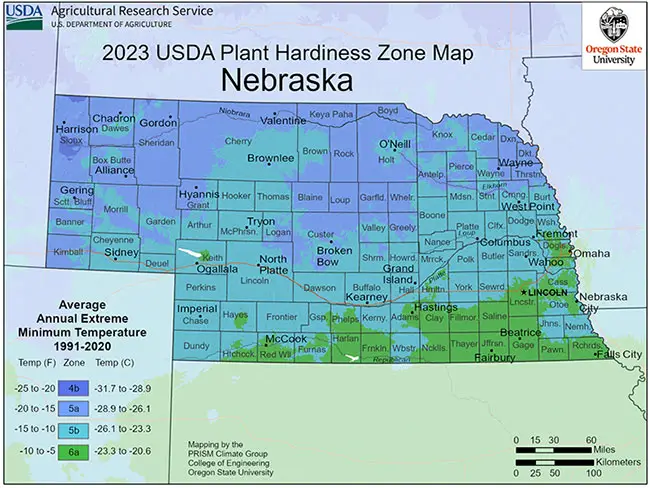
Precipitation in the form of snowfall is quite common, averaging about 25-35 inches (65-90 cm) annually. The state has witnessed its warmest temperature on record, reaching a scorching 118°F (48°C), and its coldest temperature plummeting to a bone-chilling −47°F (−44°C). Nebraska’s USDA hardiness zones span from 4a to 5b.

Growing Palm Trees in Nebraska

If you take a look at the hardiness zone map, you’ll see that most of the state is in zones 4b and 5a, which are just too chilly for palm trees to thrive.

But if you’re dead set on growing palm trees in Nebraska, here’s a more relaxed plan: keep them indoors in containers and move them outside when the summer heat kicks in. Here are some great indoor palms:

More Palm Trees»

Major Cities in Nebraska

Lincoln – Hardiness Zone 5b
North Platte – Hardiness Zone 5a
Omaha – Hardiness Zone 5a
Similar Posts

  • Maryland Palm Trees

    While Maryland experiences cool winters overall, there are specific regions where palm trees can thrive. Maryland boasts a humid subtropical climate influenced by the Atlantic Ocean, featuring hot and humid summers with an average July temperature of 77°F (25°C) and cool winters with an average January temperature of 33°F (1°C). The annual snowfall varies significantly,…

  • Oklahoma Palm Trees

    You can grow cold-hardy palm trees in the warm regions of Oklahoma. The state features a humid subtropical climate characterized by hot summers and cold winters. The average January temperature is 36°F (2°C), while the average July temperature is 82°F (27°C). Oklahoma experiences an annual snowfall of approximately 8.6 inches (21.8 cm). It’s worth noting…

  • Nevada Palm Trees

    You can successfully cultivate palm trees in the warm regions of Nevada, which boasts a desert and semiarid climate characterized by a wide range of daily temperatures. Generally, the weather in Nevada is dry and sunny, with the southern region experiencing long, hot summers and short, mild winters. Moving westward, you’ll find short, hot summers…

  • Washington Palm Trees

    You can indeed grow palm trees in the warm parts of Washington state. Washington has a mild climate, and it’s divided into two main regions: the western part, which has an oceanic climate, and the eastern part, which leans more towards a continental climate. The Cascade Mountains split the state. In the western region, the…

  • Utah Palm Trees

    In Utah, you can successfully cultivate cold-hardy palm trees that exhibit remarkable durability and adaptability to desert conditions. Utah boasts a semi-arid to arid climate, characterized by pleasant weather featuring warm summers and mild winters. Approximately 33% of the state comprises true desert areas, where winter temperatures typically average below 32°F during the winter months….

  • Mississippi Palm Trees

    You can successfully cultivate palm trees in the warmer regions of Mississippi, which enjoys a humid subtropical climate characterized by short, mild winters and long, scorching summers. The summertime here can be quite humid, with an average July temperature soaring to about 95°F (approximately 35°C). On the other hand, January ushers in milder weather, with…