North Dakota Palm Trees

North Dakota’s climate is simply too cold to support the growth of palm trees. The state experiences a continental climate characterized by hot summers and cold winters. In January, the average temperature drops to a chilly 7°F (-14°C), while July brings an average temperature of 69°F (21°C).

North Dakota is known for its extreme weather, with very cold winters featuring below-freezing temperatures and heavy snowfall. The state also encounters freezing rain, ice, sleet, and blizzards.

From late spring to early fall, North Dakota experiences 22–34 days of thunderstorm activity and witnesses 13 tornadoes per year.

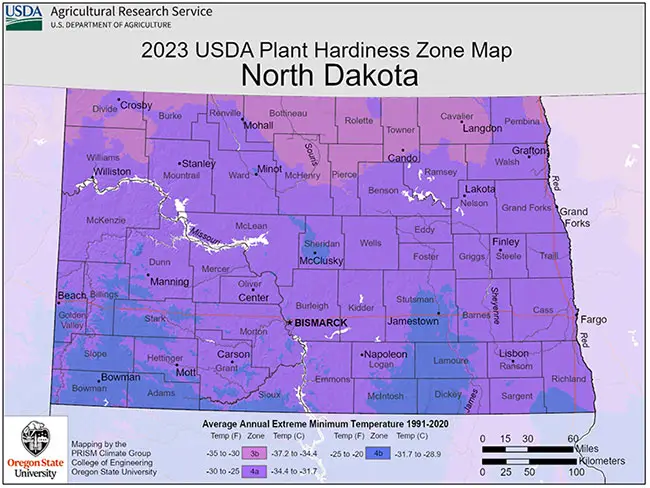
The highest temperature ever recorded in North Dakota reached a scorching 121°F (49°C), while the lowest plummeted to a bone-chilling -60°F (-51°C). USDA hardiness zones in North Dakota range from 3a to 4b.

Growing Palm Trees in North Dakota

Given that most areas of North Dakota are situated within the cold zone 3, the only feasible way to cultivate palm trees in the state is to grow them indoors, providing the necessary warmth and protection from harsh outdoor conditions. Here are some great indoor palms:

More Palm Trees»

Major Cities in North Dakota

Bismarck – Hardiness Zone 3a
Fargo – Hardiness Zone 3b
Similar Posts

  • Missouri Palm Trees

    Cultivating palm trees in Missouri is quite the challenge, primarily because of the harsh winter conditions that prevail in the state. Missouri’s climate can be described as humid continental, marked by lengthy, scorching summers and cool to downright cold winters. In July, the average temperature hovers around 79°F (26°C), but come January, it drops to…

  • Iowa Palm Trees

    Iowa presents a challenging environment for palm tree cultivation, as it is generally too cold for these tropical plants. Even the most cold-hardy palm varieties can only endure the colder temperatures found in zone 7 and higher. Iowa’s climate is characterized as humid continental, featuring wet springs, hot summers, and cold winters, with significant annual…

  • 10 Palm Trees That Grow in Virginia (with Pictures)

    While Virginia may not be the ideal location for palm tree cultivation, there are several cold-hardy palm varieties that can thrive in the state’s unique climate. Virginia experiences a mild, humid coastal climate characterized by hot, humid summers and cold, snowy winters. July typically sees an average temperature of 78°F (26°C), while January’s average temperature…

  • Minnesota Palm Trees

    Minnesota’s climate isn’t exactly palm tree-friendly. The state boasts a continental climate, featuring warm summers and frigid winters. Summers vary from hot and humid to warm and less muggy, with average July temperatures ranging between 61°F (16°C) and 76°F (24°C), depending on your location. Meanwhile, January brings chilly temperatures that hover between 3°F(−16°C) and 18°F…

  • Nebraska Palm Trees

    Nebraska, being a predominantly cold state, is not favorable to the cultivation of palm trees. It is geographically divided into two distinct climatic regions: the eastern half of the state experiences a humid continental climate, while the western half is characterized by a semi-arid climate. Summers here tend to be hot, with an average July…

  • Louisiana Palm Trees

    There are numerous palm tree varieties that thrive in the state of Louisiana, thanks to its accommodating climate. Louisiana boasts a humid subtropical climate heavily influenced by the Gulf of Mexico. Summers are characterized by scorching heat and high humidity, with an average July temperature hovering around 82°F (28°C). Winters, on the other hand, are…