New Hampshire Palm Trees

New Hampshire is not a suitable place for palm trees due to its cold climate. The state experiences a humid continental climate characterized by cold and snowy winters, as well as warm and humid summers.

In the southeastern part of the state, the influence of the Atlantic Ocean is felt. July sees average temperatures around 70°F (21°C), while January averages around 21°F (–6°C). Annually, New Hampshire receives a significant amount of snowfall, ranging from 60 to 100 inches (150 to 250 cm) across the state.

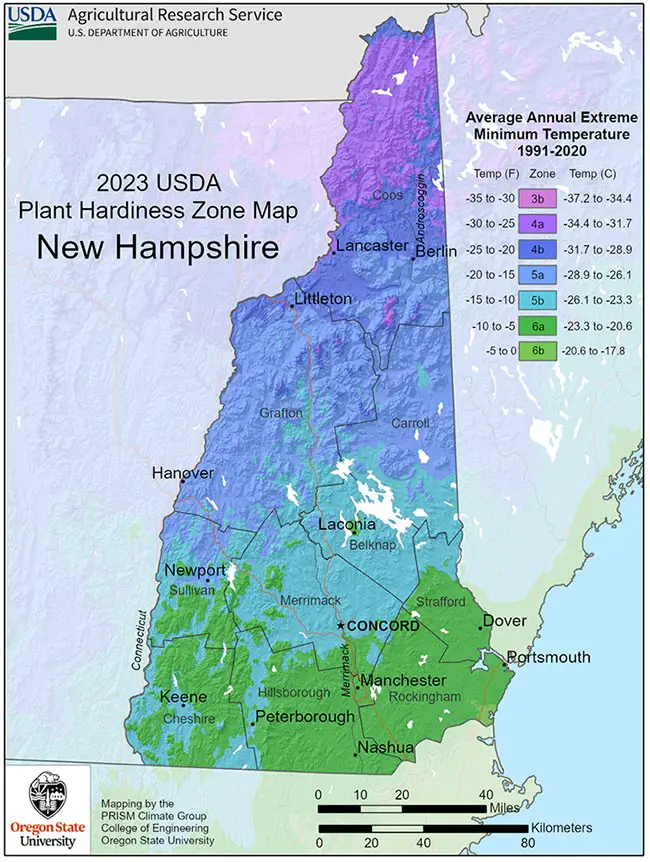
Extreme temperatures in New Hampshire have reached as high as 106°F (41°C) during the hottest times and as low as –46°F (–43°C) during the coldest periods. The state occasionally experiences the effects of hurricanes, tropical storms, and blizzards. New Hampshire’s USDA hardiness zones range from 3b to 6a.

Growing Palm Trees in New Hampshire

While some palm trees can tolerate short periods of cold down to -10°F, they need to be fully mature to withstand such conditions. In reality, New Hampshire’s climate is too cold for palm trees to thrive.

However, you can cultivate palm trees indoors in containers and bring them outside during the summer months, allowing you to enjoy palm trees in your garden for a few months each year. Some great indoor palms are:

More Palm Trees»

Major Cities in New Hampshire

Manchester – Hardiness Zone 4b
Nashua – Hardiness Zone 5a

Similar Posts

  • California Palm Trees

    Growing palm trees in California is a breeze, especially if you’re situated in the warmer regions. California’s climate spans the gamut from arid to subarctic, featuring dry summers and rainy winters. In July, temperatures across the state average between 75°F (24°C) and 93°F (34°C), varying by location. Come January, you can expect average temperatures to…

  • Colorado Palm Trees

    Colorado presents a significant challenge for anyone thinking of cultivating palm trees, given its frigid climate and diverse geography. The state comprises mountains, foothills, high plains, and desert lands, resulting in a semi-arid to alpine climate that varies with elevation. Extreme weather is par for the course in Colorado. Winters are bitterly cold and snow-laden,…

  • Missouri Palm Trees

    Cultivating palm trees in Missouri is quite the challenge, primarily because of the harsh winter conditions that prevail in the state. Missouri’s climate can be described as humid continental, marked by lengthy, scorching summers and cool to downright cold winters. In July, the average temperature hovers around 79°F (26°C), but come January, it drops to…

  • Washington DC Palm Trees

    Washington DC boasts a humid subtropical climate with distinctive seasonal variations. Winters are relatively cool, featuring an average temperature of 38°F (3.3°C) in January, while summers can be hot and humid, with an average temperature of 79.2°F (26.2°C). Winter in the district typically witnesses an annual snowfall averaging 14.7 inches (37cm), while summers bring frequent…

  • Idaho Palm Trees

    In some of Idaho’s warmer regions, you can indeed cultivate cold-hardy palm trees. Idaho’s climate is decidedly continental, marked by hot summers and harsh winters. In Boise city, for example, you can expect an average temperature of 29°F (–2°C) in January and a balmy 74°F (23°C) in July. Generally, the state experiences low humidity levels….

  • Delaware Palm Trees

    Delaware might not be the ideal locale for growing palm trees, primarily due to its temperate and humid climate with a limited number of sunny days. The state experiences a climate that’s a mix of humid subtropical and continental, heavily influenced by the Atlantic Ocean. Southern Delaware enjoys a milder climate compared to the northern…