
Washington DC Palm Trees
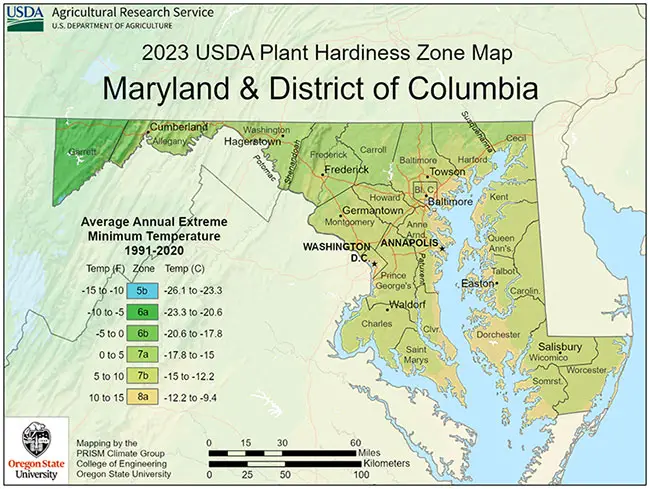
Washington DC boasts a humid subtropical climate with distinctive seasonal variations. Winters are relatively cool, featuring an average temperature of 38°F (3.3°C) in January, while summers can be hot and humid, with an average temperature of 79.2°F (26.2°C).
Winter in the district typically witnesses an annual snowfall averaging 14.7 inches (37cm), while summers bring frequent thunderstorms. Washington DC experiences blizzards approximately every 4 to 6 years, with tornadoes and hurricanes being rare occurrences.
The temperature extremes in the state have reached a sweltering 106°F (41°C) at the highest and a bone-chilling -15°F (-26°C) at the lowest. Washington DC’s USDA Hardiness Zones span from 5b to 8a.
Growing Palm Trees in Washington DC
Given the cold winters with ample snowfall and occasional blizzards, growing palm trees in this region presents its challenges. Successful palm cultivation in Washington DC necessitates the creation of a microclimate and the provision of winter protection for your palms.
Opt for extremely cold-hardy palm varieties that are resilient and adaptable to diverse conditions. Here are some palm options suitable for Washington DC, but it’s important to note that you’ll need to reside in zone 7b to successfully grow any palms, as other zones are simply too cold.
- European Fan Palm Tree – Zones 7b-11 (5 to 10 F)
- Pindo Palm Tree – Zones 7b-11 (5 to 10 F)
- Sago Palm Tree – Zones 7b-11 (5 to 10 F)
- Saw Palmetto Palm Tree – Zones 7a-11 (0 to 5 F)
- Windmill Palm Tree – Zones 7b-11 (5 to 10 F)
More Palm Trees»
Major Cities in District Of Columbia
Washington – Hardiness Zone 7a
Hi I live an hour east of Vancouver, British Columbia in the Fraser valley.
Our plant hardiness zone is 8b, as is Seattle 2 1/2 hours drive from here.
All through the Fraser valley including Vancouver we have many Windmill palm trees, some as tall as 25-30 feet. And many tall banana plants.
I have a palm tree and 7 banana plants that are thriving.
Throughout our 3 month winter (Dec to Feb) we typically get highs of 5-7C (40-44F) and lows of 1-4C (34-39F).
Sometimes in mid Feb absolutely everything is blooming such as magnolias, fruit trees and daffodils, etc.
It quite often rains a lot during wintertime and therefore the temps warm up dramatically.
Our summers are long and hot ranging between 89-100F. With lots of sun.
I just wanted to know if palm trees are grown in DC.
Cheers