South Dakota Palm Trees

South Dakota’s climate is far from suitable for growing palm trees due to its extreme cold. The state boasts a continental climate marked by hot semi-humid summers and bitterly cold winters.

Average July temperatures typically span from 74°F to 80°F (23°C to 26°C), while January brings frigid temperatures ranging from 15°F to 25°F (-9°C to -3°C). South Dakota contends with around 30 tornadoes annually, and during the winter months, it is prone to blizzards and ice storms.

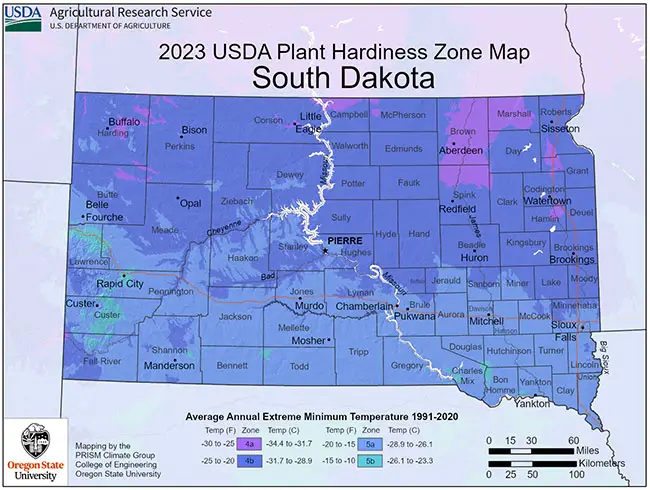
Temperature extremes are a notable feature of South Dakota’s climate, with the highest ever recorded temperature reaching a scorching 120°F (49°C) and the lowest plummeting to a staggering -58°F (-50°C). The USDA hardiness zones in South Dakota range from 3b to 5b.

Growing Palm Trees in South Dakota

This state is way too cold for palm trees. The only way you can have palm trees is if you grow them indoors and take them out during warm days. Here are some great indoor palms:

More Palm Trees»

Major Cities in South Dakota

Rapid City – Hardiness Zone 5a
Sioux Falls – Hardiness Zone 4a
Similar Posts

  • Maine Palm Trees

    Palm trees are not suited for cultivation in the state of Maine due to its harsh winters. Maine features a humid continental climate characterized by warm and humid summers as well as extremely cold winters. In July, temperatures typically range from 75 to 80 °F (24–27 °C), while in January, they plummet to a chilly…

  • North Dakota Palm Trees

    North Dakota’s climate is simply too cold to support the growth of palm trees. The state experiences a continental climate characterized by hot summers and cold winters. In January, the average temperature drops to a chilly 7°F (-14°C), while July brings an average temperature of 69°F (21°C). North Dakota is known for its extreme weather,…

  • Mississippi Palm Trees

    You can successfully cultivate palm trees in the warmer regions of Mississippi, which enjoys a humid subtropical climate characterized by short, mild winters and long, scorching summers. The summertime here can be quite humid, with an average July temperature soaring to about 95°F (approximately 35°C). On the other hand, January ushers in milder weather, with…

  • California Palm Trees

    Growing palm trees in California is a breeze, especially if you’re situated in the warmer regions. California’s climate spans the gamut from arid to subarctic, featuring dry summers and rainy winters. In July, temperatures across the state average between 75°F (24°C) and 93°F (34°C), varying by location. Come January, you can expect average temperatures to…

  • Missouri Palm Trees

    Cultivating palm trees in Missouri is quite the challenge, primarily because of the harsh winter conditions that prevail in the state. Missouri’s climate can be described as humid continental, marked by lengthy, scorching summers and cool to downright cold winters. In July, the average temperature hovers around 79°F (26°C), but come January, it drops to…

  • Oregon Palm Trees

    Oregon offers some warm areas where cold-hardy palm trees can thrive. The state is divided into several regions with climates ranging from temperate to drier semi-arid, and its weather is significantly influenced by the Pacific Ocean. Average January temperatures span from 25°F (–4°C) to 45°F (7°C), while average July temperatures vary from 5°F (18°C) to…