
Pennsylvania Palm Trees
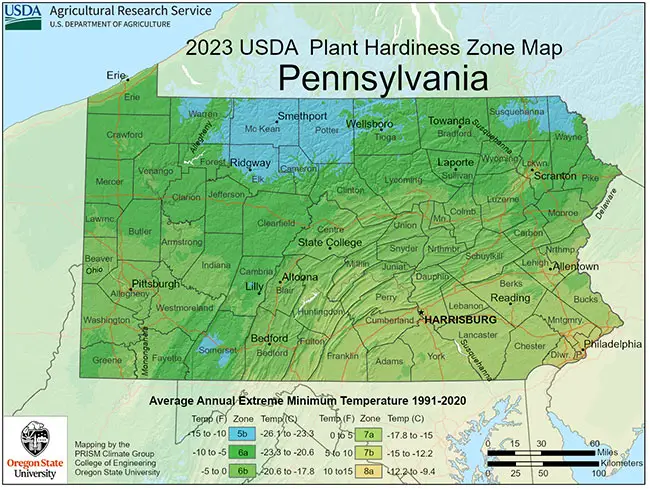
Growing palm trees in Pennsylvania is tough because of its very cold winters. Pennsylvania occupies a humid continental zone, but its climate varies significantly due to diverse geographic features.
The interior regions, closer to the mountains, experience a moderate humid continental climate characterized by cool to cold winters and hot, humid summers. These areas also tend to have more cloudy days and heavier snowfall.
The highland areas within the Appalachians are slightly cooler, featuring even colder winters with substantial snowfall and somewhat cooler summers. Conversely, the southeastern part of the state enjoys a humid subtropical climate, leading to milder winters.
In terms of temperature, Pennsylvania sees average January temperatures ranging from 31-39°F (1-4°C), while average July temperatures span from 80-90°F (26-32°C). Extreme temperature records include a highest recorded temperature of 111°F (44°C) and a lowest of –42°F (–41°C).
Annual snowfall varies across the state, ranging from 21 inches (53 cm) to 54 inches (137 cm) depending on the location. Additionally, Pennsylvania faces threats from tornadoes and tropical cyclones. USDA hardiness zones for Pennsylvania encompass a range from 5a to 7b.
Growing Palm Trees in Pennsylvania
But, to put it simply, Pennsylvania is not a good place for palm trees. There’s a tiny area in zone 7 where you might try, but it won’t be easy. Because of all the snow we get every year, even the palm trees that can handle the cold won’t do well here. Here are some palm trees that can grow in zone 7:
- European Fan Palm Tree – Zones 7b-11 (5 to 10 F)
- Pindo Palm Tree – Zones 7b-11 (5 to 10 F)
- Sago Palm Tree – Zones 7b-11 (5 to 10 F)
- Saw Palmetto Palm Tree – Zones 7a-11 (0 to 5 F)
- Windmill Palm Tree – Zones 7b-11 (5 to 10 F)
More Palm Trees»
Major Cities in Pennsylvania
Allentown – Hardiness Zone 6b
Altoona – Hardiness Zone 6a
Erie – Hardiness Zone 6a
Lancaster – Hardiness Zone 6b
Philadelphia – Hardiness Zone 7a
Pittsburgh – Hardiness Zone 6b
Reading – Hardiness Zone 6b
Scranton – Hardiness Zone 6a
Wilkes Barre – Hardiness Zone 6a
Can YOU TELL ME WHAT i CAN PLANT FOR MY POND HERE IN PA. TO MAKE IT LOOK MORE LIKE DISNEY POLYNESIAN. THANKS
What types of hardy palm trees or subtropical plants can grow in an outdoor garden in Allentown,PA zone 6b if well protected in winter?
We live in the Philadelphia suburbs. Which palm tree would work best for our climate? What special care is needed during the winter? do we need to water the tree during the winter?
Are there any palm trees in
Lancaster PA?
Can windmill palms and cold hardy needle and sago palms survive in a 6b zone year round? If not what others may there be?