New Mexico Palm Trees

You can successfully cultivate palm trees in New Mexico. The state’s climate varies from arid to semiarid, characterized by brief, mild winters and hot, dry summers. In January, average temperatures range from 35-55°F (2-13°C), with freezing temperatures common during winter.

July brings average temperatures ranging from 78-92°F (26-33°C), with frequent occurrences of temperatures exceeding 100°F during the summer. Snowfall annually varies from 10-100 inches (25-254 cm), depending on the region.

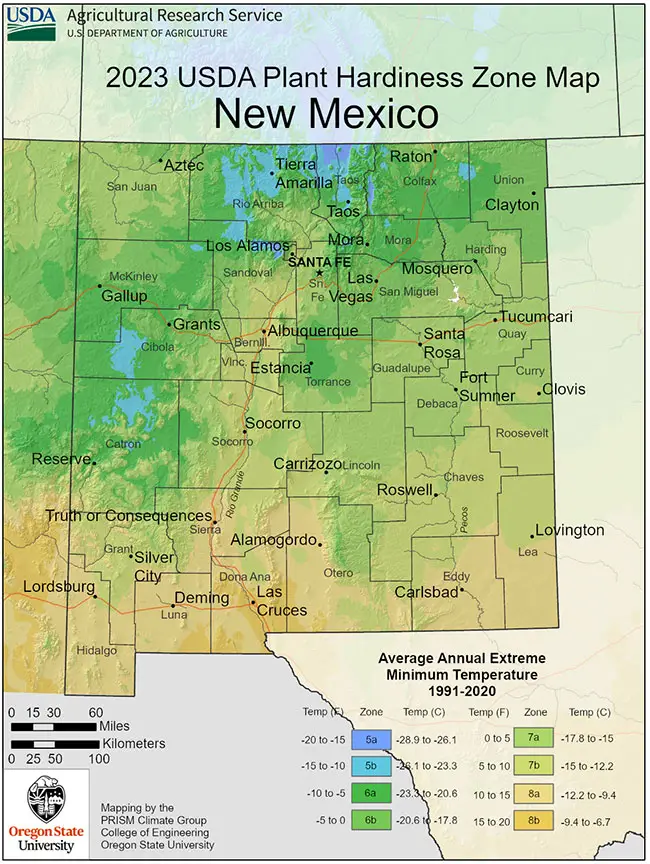
The highest recorded temperature reached a scorching 122°F (50°C), while the lowest plummeted to a frigid -50°F (-46°C). New Mexico’s USDA hardiness zones span from 4b to 9a.

Growing Palm Trees in New Mexico

New Mexico provides a favorable environment for palm cultivation, particularly in zone 8a, where temperatures don’t drop below 10°F.

Numerous cold-hardy palm species thrive in the warm regions of New Mexico. Here are some of them:

More Palm Trees»

Major Cities in New Mexico

Albuquerque – USDA Zone 7a
Similar Posts

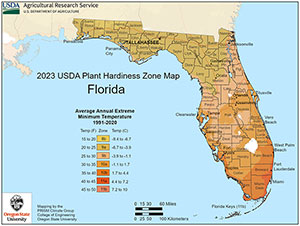
  • Florida Palm Trees

    Palm trees thrive in the warm, humid embrace of Florida’s climate. The state’s weather ranges from tropical to subtropical, featuring mild winters and scorching summers. In the northern part, temperatures typically hover between 65°F to 70°F (18°C to 21°C), while in the south, it’s a balmy 74°F to 77°F (23°C to 25°C). Despite the annual…

  • Nevada Palm Trees

    You can successfully cultivate palm trees in the warm regions of Nevada, which boasts a desert and semiarid climate characterized by a wide range of daily temperatures. Generally, the weather in Nevada is dry and sunny, with the southern region experiencing long, hot summers and short, mild winters. Moving westward, you’ll find short, hot summers…

  • Georgia State Palm Trees

    While Georgia may not boast the same tropical warmth as Florida, it’s still a place where cold-hardy palm trees can thrive. The state enjoys a humid subtropical climate characterized by hot summers and mild winters, thanks to the influence of the nearby Atlantic Ocean. In January, you can expect an average temperature of 39°F (4°C),…

  • Wisconsin Palm Trees

    Growing palm trees in Wisconsin is impractical due to the state’s cold climate. Wisconsin experiences a continental climate characterized by warm summers and extremely cold winters. The presence of Lake Michigan and Superior also influences its weather patterns. During the summer months, particularly in July, Wisconsin witnesses average temperatures ranging from 68°F (20°C) to 80°F…

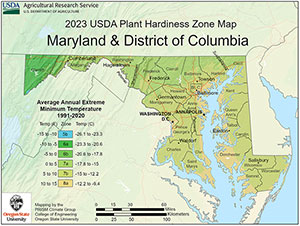
  • Maryland Palm Trees

    While Maryland experiences cool winters overall, there are specific regions where palm trees can thrive. Maryland boasts a humid subtropical climate influenced by the Atlantic Ocean, featuring hot and humid summers with an average July temperature of 77°F (25°C) and cool winters with an average January temperature of 33°F (1°C). The annual snowfall varies significantly,…

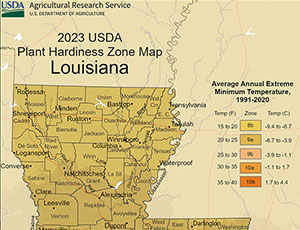
  • Louisiana Palm Trees

    There are numerous palm tree varieties that thrive in the state of Louisiana, thanks to its accommodating climate. Louisiana boasts a humid subtropical climate heavily influenced by the Gulf of Mexico. Summers are characterized by scorching heat and high humidity, with an average July temperature hovering around 82°F (28°C). Winters, on the other hand, are…