Indiana Palm Trees

Indiana’s climate isn’t favorable to palm tree cultivation. The state experiences a humid continental climate, characterized by chilly winters and warm summers. In January, temperatures typically range from 17°F (–8°C) to 35°F (2°C), while July sees averages ranging from 63°F (17°C) to 88°F (31°C).

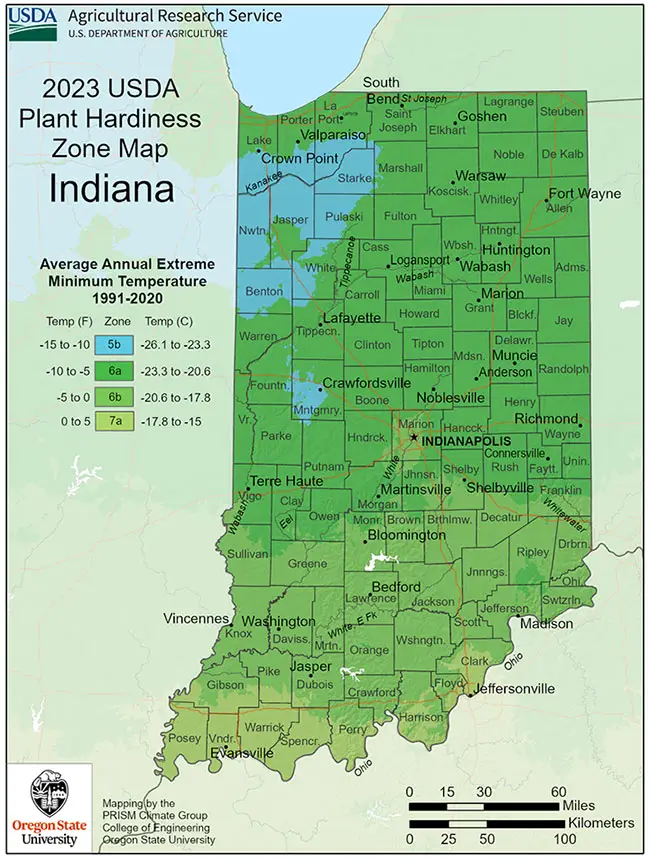
The USDA hardiness zones in Indiana span from 5b to 6b. Extreme temperature records for the state include a scorching high of 116°F (47°C) and a bone-chilling low of –36°F (–38°C).

Precipitation patterns bring occasional droughts and abundant rainfall, along with an annual snowfall averaging about 22 inches (56 cm).

Growing Palm Trees in Indiana

Given these climatic conditions, attempting to grow palm trees in Indiana can be challenging. If you’re determined to have a palm tree in your yard, you’ll need to create a microclimate resembling the milder conditions found in zone 7b.

While the Needle Palm is exceptionally cold-hardy and can withstand temperatures as low as -10°F, it still requires protection from the cold. Here are cold hardiest palm trees:

More Palm Trees»

Major Cities in Indiana

Evansville – Hardiness Zone 6b
Fort Wayne – Hardiness Zone 5b
Gary – Hardiness Zone 5b
Hammond – Hardiness Zone 5b
Indianapolis – Hardiness Zone 5b
Lafayette – Hardiness Zone 5b
South Bend – Hardiness Zone 5b
Terre Haute – Hardiness Zone 5b
Similar Posts

  • New Jersey Palm Trees

    Growing palm trees in New Jersey presents significant challenges. The state’s climate includes several regions, with variations from humid mesothermal to a humid continental climate. Summers tend to be hot and humid, featuring average July temperatures around 75°F (24°C). Winters, on the other hand, are cold, with average January temperatures of 31°F (–1°C). Snowfall accumulates…

  • Ohio Palm Trees

    Ohio’s climate is generally too cold to support the growth of palm trees. The state primarily experiences a humid continental climate, with some southern areas featuring a humid subtropical climate. Summers in Ohio are characterized by heat and humidity, with average July temperatures ranging from 72 to 76°F (22 to 24°C). In contrast, winters tend…

  • California Palm Trees

    Growing palm trees in California is a breeze, especially if you’re situated in the warmer regions. California’s climate spans the gamut from arid to subarctic, featuring dry summers and rainy winters. In July, temperatures across the state average between 75°F (24°C) and 93°F (34°C), varying by location. Come January, you can expect average temperatures to…

  • Texas Palm Trees

    Texas offers a wide variety of palm trees suitable for cultivation. Spanning a vast expanse, Texas encompasses diverse climates, ranging from arid conditions in the west to humid environments in the east. The state experiences an average July temperature range of 73-91°F (22-32°C), while January temperatures typically fall between 42-61°F (5-16°C). Texas faces natural threats…

  • Utah Palm Trees

    In Utah, you can successfully cultivate cold-hardy palm trees that exhibit remarkable durability and adaptability to desert conditions. Utah boasts a semi-arid to arid climate, characterized by pleasant weather featuring warm summers and mild winters. Approximately 33% of the state comprises true desert areas, where winter temperatures typically average below 32°F during the winter months….

  • Rhode Island Palm Trees

    Rhode Island’s climate is not conducive to palm trees, as it experiences cold temperatures throughout the year. The state features a humid continental climate characterized by chilly winters and brief, rainy summers. Summers are relatively warm, with average July temperatures around 73°F (23°C), while winters are cold, with an average January temperature of 28°F (–2°C)….

One Comment

  1. Chris gentry says:

    I’ve seen banana palm trees growing in new castle Indiana. What’s the hardiness zone for new castle?

Comments are closed.