
5 Most Common Nutrient Deficiencies In Palms (with Pictures)
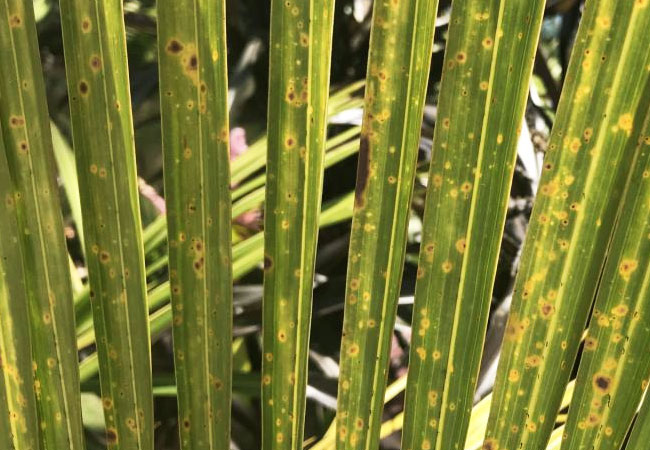
Palm trees can be vulnerable to nutritional deficiencies in essential elements such as potassium (K), nitrogen (N), manganese (Mn), and magnesium (Mg).
Additionally, less common deficiencies of calcium (Ca), boron (B), zinc (Zn), and copper (Cu) may also manifest. These deficiencies often arise due to factors such as poor soil quality, insufficient fertilization, incorrect planting depth, elevated soil pH levels, and inadequate soil aeration.
Diagnosing nutritional issues can be challenging, as symptoms of different deficiencies may overlap, varying among palm species.
For instance, on Royal and Queen palms, late-stage potassium (K) and manganese (Mn) deficiencies may present as new growth appearing frizzled and reduced in size, leading to confusion.
Royal palms can exhibit similar symptoms for iron (Fe) and potassium (K) deficiencies, while Pygmy Date palms may display signs of magnesium (Mg) deficiency that resemble potassium imbalances.
In any case, I always recommend establishing a regular fertilizing schedule and using high-quality, slow-release fertilizers.
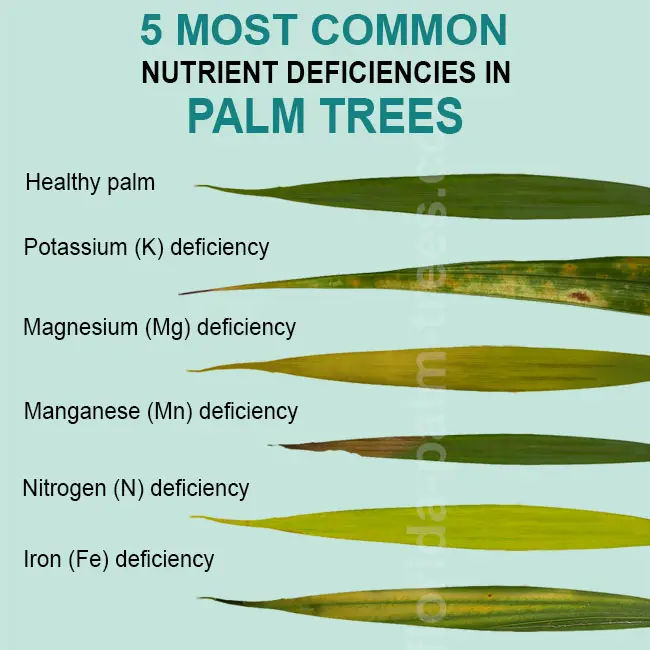
1. Palm Tree Potassium (K) Deficiency
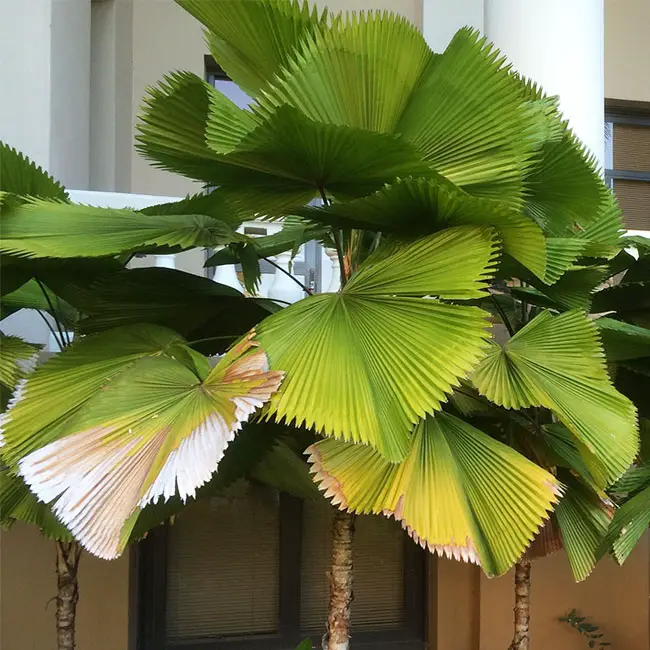
Palm trees have a substantial need for potassium. Potassium deficiency is particularly prevalent in regions like Florida and coastal South Carolina, where sandy soils naturally lack potassium.
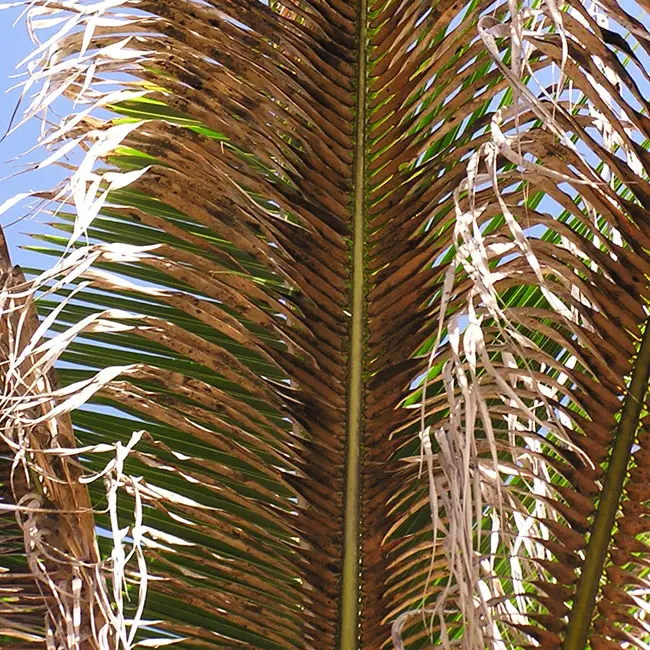
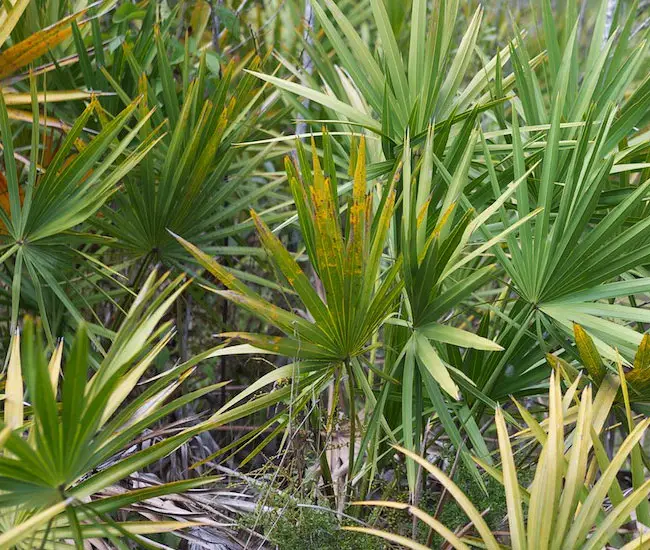
This deficiency initially affects older fronds before progressing to newer leaves as it worsens. Early signs include translucent yellow to orange spots, occasionally accompanied by black patches of dead tissue.
Some palms may exhibit dead tissue along the frond margins as the initial symptom of potassium deficiency. As the condition worsens, entire leaves may appear burnt, wilted, and frizzled.
An illustration of this can be seen in the photo above, where the lower fronds of the Ruffled fan palm begin to develop necrosis (dead tissue) along the margins due to potassium imbalance.
Once all the potassium has been relocated from older fronds to new ones, the palm’s health deteriorates. Severe cases result in small, frizzled emerging fronds and a narrowing of the trunk toward the crown, giving rise to the “pencil-pointing” appearance. Without immediate fertilization treatment, the palm tree’s survival is jeopardized.
Palm species particularly susceptible to potassium deficiency include Coconut, Areca, Spindle, Queen, and Royal palms.
A common cause of potassium deficiency in palms is the use of the same turfgrass fertilizer for both lawns and palm trees, as lawn fertilizers are typically high in nitrogen but low in potassium.
Treatment
To address potassium deficiency, applying slow-release potash with magnesium is the recommended course of action. Magnesium is essential to prevent magnesium deficiency, which can arise as a result of increased potassium levels.
It’s important to note that potassium-containing fertilizer sprays are ineffective due to the insufficient quantity of potassium required to rectify the deficiency.
Complete recovery from potassium deficiency in a palm tree can take up to two years, as the tree needs to produce new fronds to replace those affected.
Pictures Of Palms With Potassium (K) Deficiency
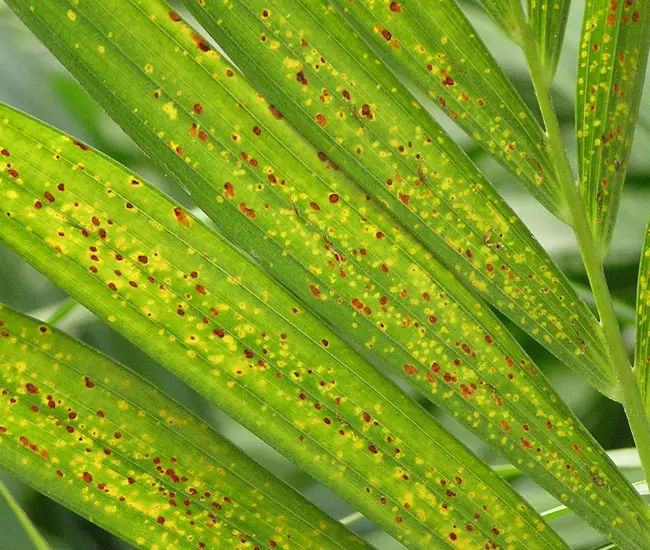
2. Palm Tree Magnesium (Mg) Deficiency
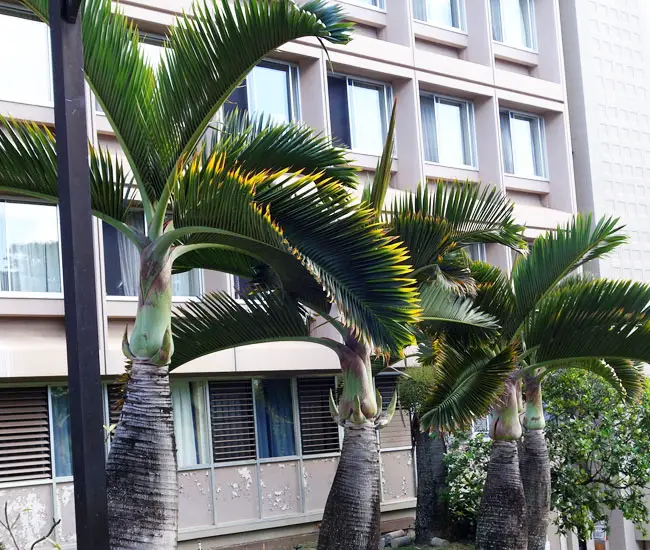
Magnesium deficiency is a prevalent issue in Florida and other regions with poor soil quality. Sandy soils, coupled with heavy rainfall, lead to rapid leaching of this crucial nutrient. While magnesium deficiency is not typically fatal, it does significantly impact the palm tree’s appearance.
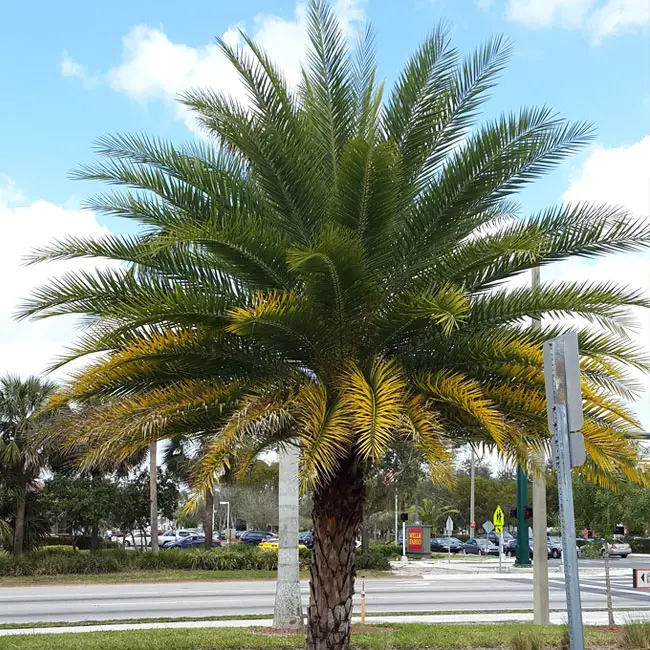
The primary symptom is a wide, light-yellow band along the leaf margins, with a green center. This yellowing initially appears on older leaves and gradually advances upward to affect the newest fronds.
In severe cases, the tips of the leaflets may turn brown due to tissue damage. As with other deficiencies, the affected foliage will never regain its green color and must be replaced by new, healthy leaves. Date palms are particularly susceptible to magnesium deficiency.
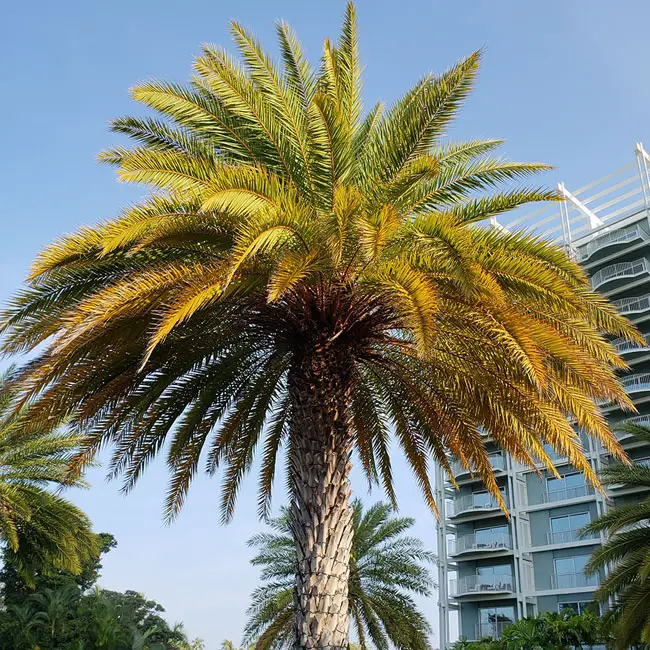
The accompanying image illustrates a severe case of magnesium deficiency in a Sylvester Date Palm (Phoenix sylvestris). Almost the entire crown exhibits yellowing, with necrotic leaflet tips on older fronds.
Treatment
Preventing magnesium deficiency is preferable to waiting for recovery, which can take years. To address the issue, apply 2-4 pounds of magnesium sulfate (Epsom salt) per tree four times a year.
Prilled kieserite, a form of magnesium sulfate that dissolves slowly compared to Epsom salts, serves as an excellent, cost-effective, and slow-release source of magnesium.
Pictures Of Palms With Magnesium (Mg) Deficiency
3. Palm Tree Maganese (Mn) Deficiency
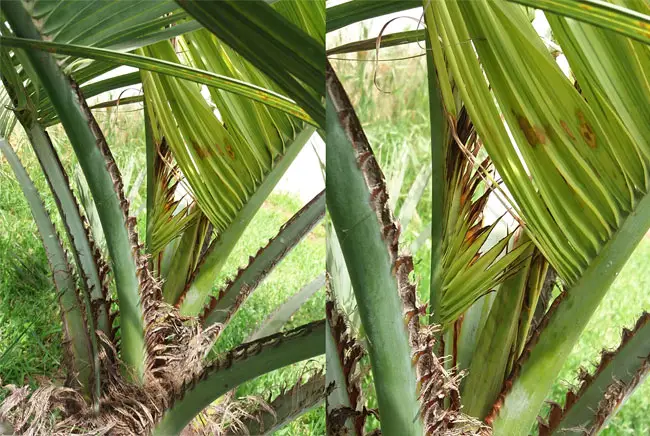
Manganese deficiency, commonly referred to as ‘frizzletop,’ poses a potential fatality risk to palm trees if left unaddressed. It primarily affects acid-loving palms cultivated in alkaline soils.
This issue arises due to insufficient manganese (Mn) levels in the soil or elevated pH levels (above pH 6.5). Poor drainage or excessive water can also contribute to the problem.
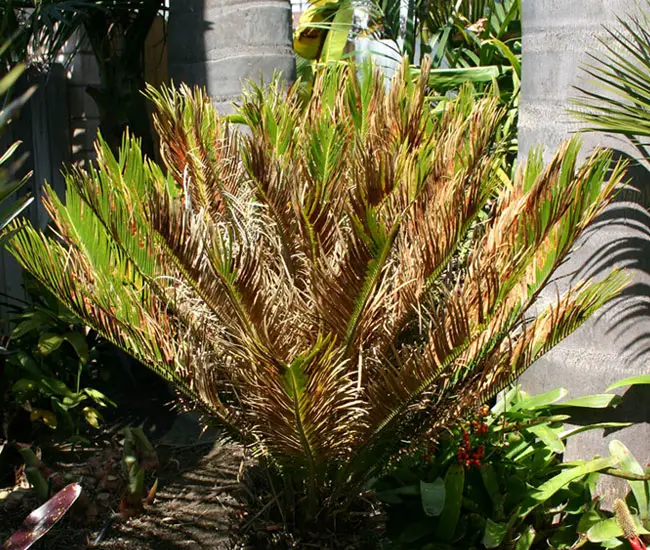
Manganese deficiency can also be triggered by cold temperatures, which diminish root activity in soils with marginal manganese levels. Symptoms manifest solely on new growth, appearing deformed, smaller in size, and displaying dead brown areas.
As the condition worsens, only dead leaf stems emerge, eventually leading to the death of the palm’s bud. When the palm’s bud dies, the tree cannot survive.
Treatment
Preventing manganese deficiency involves avoiding the planting of acid-loving palms in alkaline soil. To rectify a manganese deficiency, apply manganese sulfate to the soil or spray it onto the foliage.
Palms most susceptible to manganese deficiency include the Pygmy Date, Royal, Queen, and Paurotis palms.
4. Palm Tree Nitrogen (N) Deficiency
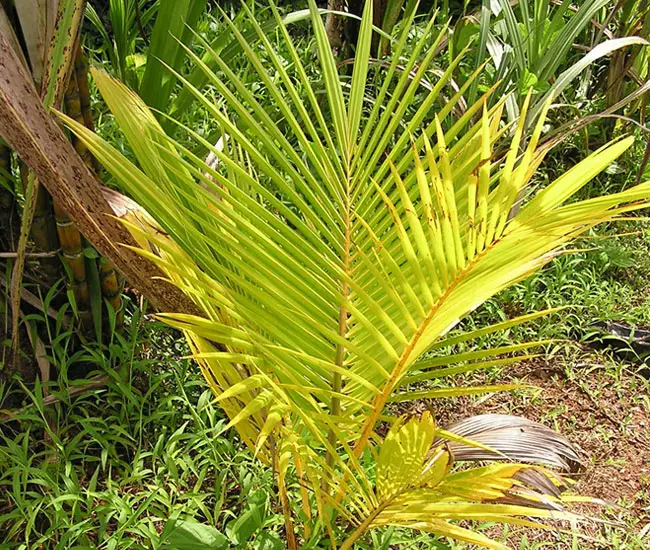
Nitrogen deficiency is generally not a significant concern for palms. It typically occurs only in regions with poor soil quality and insufficient supplemental fertilization.
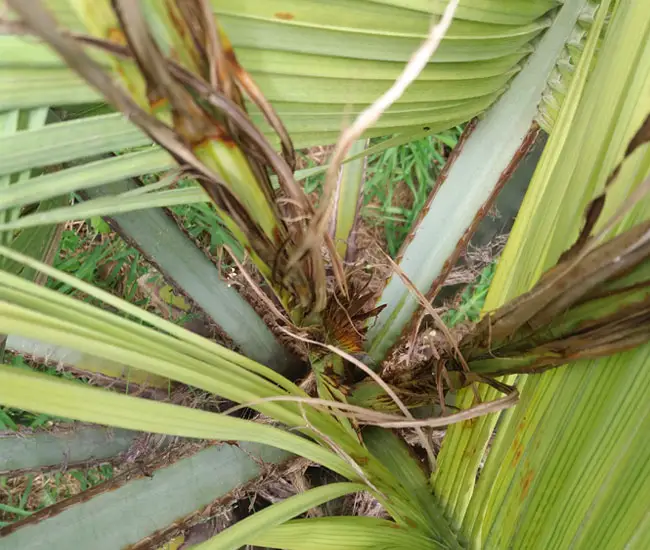
Symptoms of nitrogen deficiency include an overall light green coloration of the leaves and reduced palm growth.
This deficiency begins by affecting the oldest fronds before progressing to impact the newer growth, as nitrogen is translocated from older leaves to younger ones.
If left unaddressed, the entire canopy may turn yellow-green, with some leaves even becoming nearly white. As growth slows down, the palm’s trunk diameter near the top may decrease, resulting in a ‘pencil-pointing’ appearance.
Treatment
To address nitrogen deficiency, apply a slow-release fertilizer containing nitrogen to correct the issue. Alternatively, you can treat the foliage with a liquid fertilizer spray, which should rapidly improve the color of the leaves.
Pictures Of Palms With Nitrogen (N) Deficiency
5. Palm Tree Iron (Fe) Deficiency
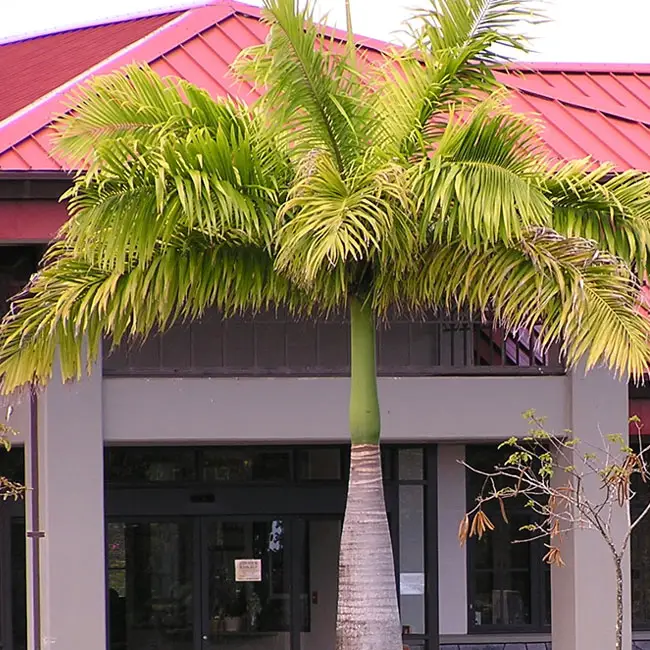
Iron deficiency in palm trees is generally uncommon and is more likely to result from issues such as poorly aerated soil, root damage, or incorrect planting depth, rather than a genuine lack of iron (Fe) in the soil.
Insufficient drainage or waterlogged soil conditions can suffocate the roots, especially in palms planted too deep.
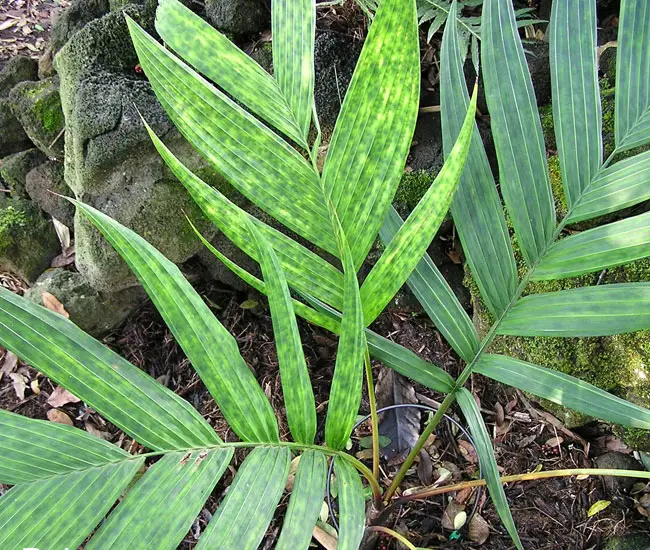
Identifying iron deficiency involves observing yellow-green fronds with green veining, typically appearing first on the newest leaves. As the issue progresses, new growth becomes stunted and displays significant dead tissue at the tips.
While primarily a cosmetic concern, iron deficiency can lead to stunted palm growth if left untreated. In cases of waterlogged soil, root rot may develop, ultimately leading to the demise of the palm.
Treatment
Iron fertilization may provide temporary relief, but the problem persists until the planting depth or soil aeration is addressed. Various options are available to supplement iron in the soil.
The most effective treatment involves chelated iron, which comprises organic elements binding iron like a claw, making it readily available to the plant.
EDDHA iron chelates represent the optimal choice for iron release, especially in high-pH environments. Additionally, iron sulfate foliar spray can be used to alleviate iron deficiency in palm trees.
Pictures Of Palms With Iron (Fe) Deficiency
Overlapping Nutrient Deficiencies in Palms
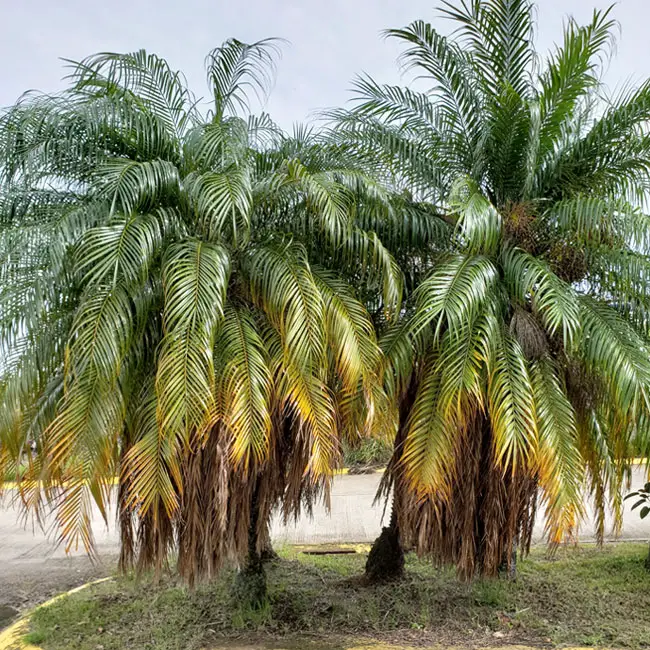
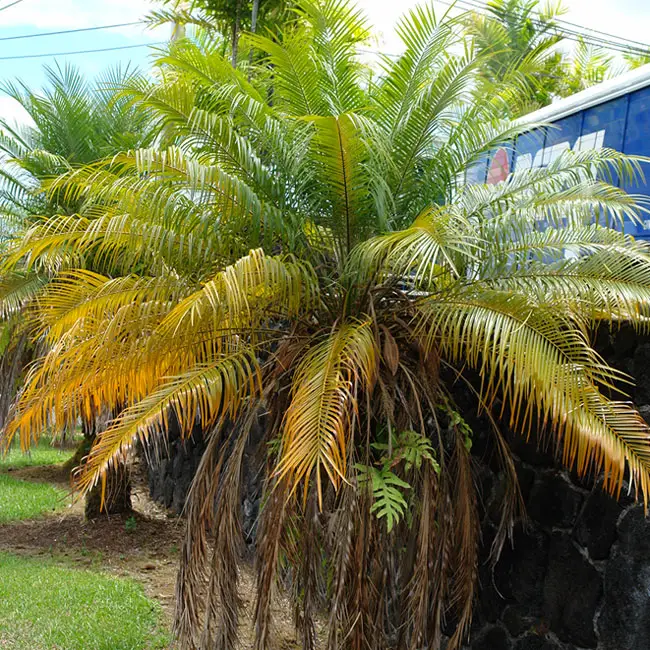
As mentioned earlier, nutrient deficiencies in palms can sometimes overlap. Below, you’ll find images of palm trees exhibiting overlapping deficiencies of magnesium (Mg) and potassium (K).
In the case of Pygmy Date Palm Trees (Phoenix roebelenii), the older fronds display marginal yellowing, along with brown tips and yellow flecks on the leaflets.
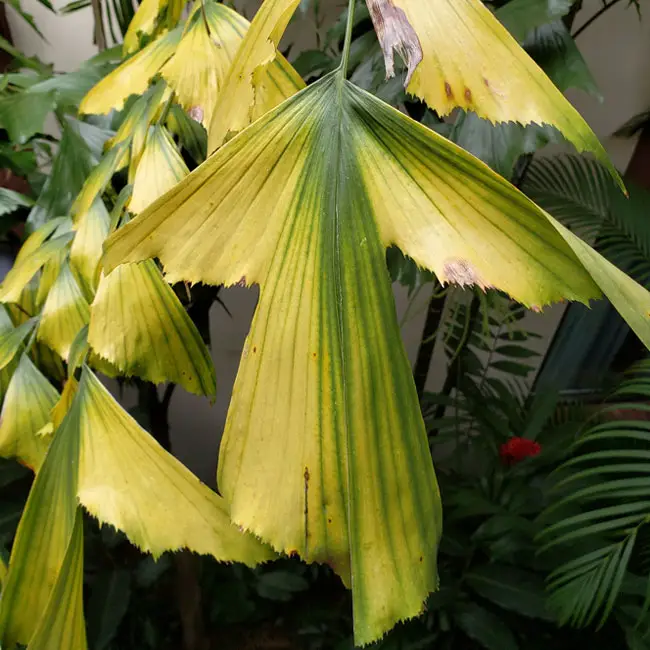
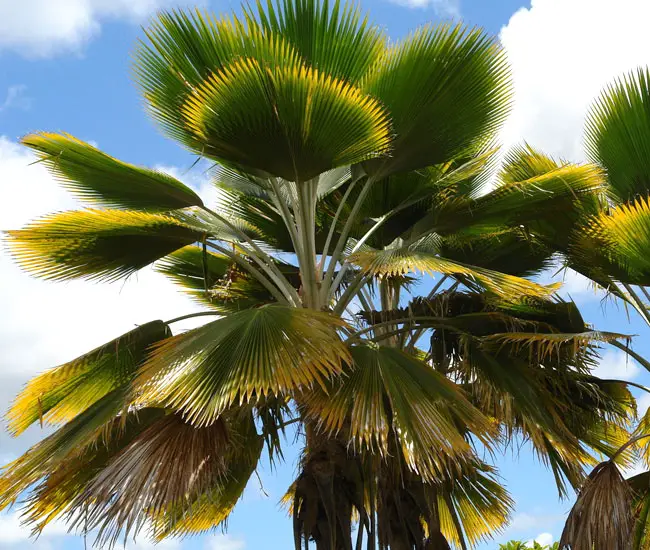
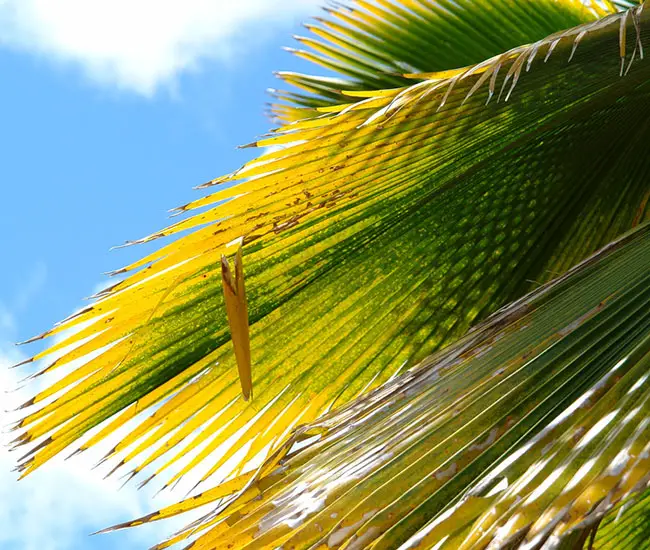
Similarly, a Fiji fan palm demonstrates overlapping deficiencies of magnesium (Mg) and potassium (K). On the older lower leaves, you can observe evidence of magnesium deficiency with yellowish-orange leaf tips.
Additionally, there is potassium (K) deficiency manifesting as leaf tip necrosis (dead tissue) and yellow flecking.
Here is more information on palm nutrient deficiencies on idtools site.
How Often Should I Fertilize a Palm Tree?
Your palm tree’s fertilization schedule should be tailored to your region’s rainfall patterns and soil type. In areas with sandy soils and heavy rainfall, nutrients leach from the soil rapidly.
Therefore, it’s recommended to fertilize your palm approximately 3-4 times a year to maintain balanced nutrient levels.
Conversely, in regions with lower rainfall and higher-quality soil, fertilizing 2-3 times annually should be enough.
The quality of the fertilizer you use also plays a significant role. Slow-release formulas provide continuous fertilization over several months.
What Is The Best Palm Tree Fertilizer
I always recommend using high-quality slow-release fertilizer with a continuous release formula. Such fertilizers nourish your palm tree over an extended period, preventing nutrients from being washed away after a couple of rain showers.
While there is a wide variety of palm fertilizers available, I prefer those with a formula that contains an equal amount of nitrogen (N) and potassium (K). Therefore, fertilizers with an NPK (Nitrogen, Phosphate, and Potassium) ratio of 12-4-12, 15-5-15, or 3-1-2 are excellent choices for palm tree care.
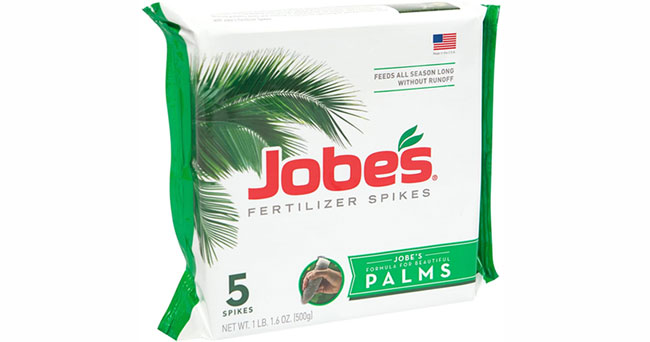
Jobe’s Palm Fertilizer Spikes
One of my preferred fertilizers is Jobe’s Palm Fertilizer, well-known for its effectiveness in palm tree care.
This fertilizer employs a slow-release formula with an NPK (Nitrogen, Phosphate, and Potassium) ratio of 10-5-10, precisely designed to provide nourishment to your palms while shielding them from common deficiencies in essential nutrients such as Magnesium, Potassium, Manganese, and Iron.
Moreover, Jobe’s offers specialized spikes tailored for indoor palms.
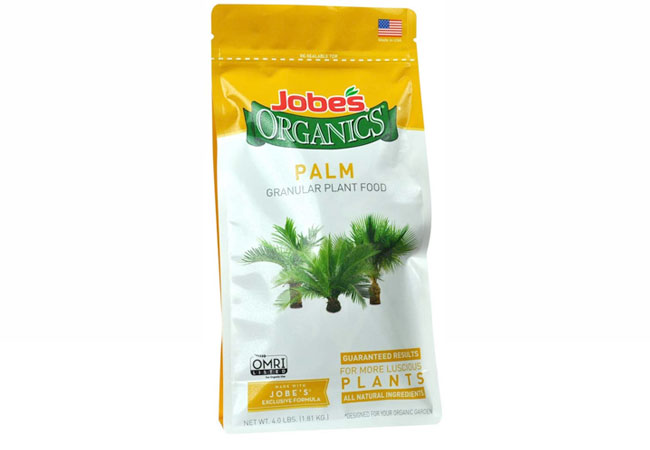
Jobe’s Organics Fertilizer
If you have pets and kids and prefer an organic fertilizer, try Jobe’s Organics. It has received over 4,000 five star reviews on Amazon, and is considered the best on the market by many gardeners. It’s formula of NPK of 4-2-4 is perfect for palms.
Related articles:



I have a queen palm and the temperatures are getting into the 20’s and 30’s this week. What can I go to protect the tree?
The base of my palm tree is beginning to turn black and the trunks of the trees are cracking. I don’t know what to do. Can you give me a suggestion as to what is wrong? Thank you.