North Dakota Palm Trees

North Dakota’s climate is simply too cold to support the growth of palm trees. The state experiences a continental climate characterized by hot summers and cold winters. In January, the average temperature drops to a chilly 7°F (-14°C), while July brings an average temperature of 69°F (21°C).

North Dakota is known for its extreme weather, with very cold winters featuring below-freezing temperatures and heavy snowfall. The state also encounters freezing rain, ice, sleet, and blizzards.

From late spring to early fall, North Dakota experiences 22–34 days of thunderstorm activity and witnesses 13 tornadoes per year.

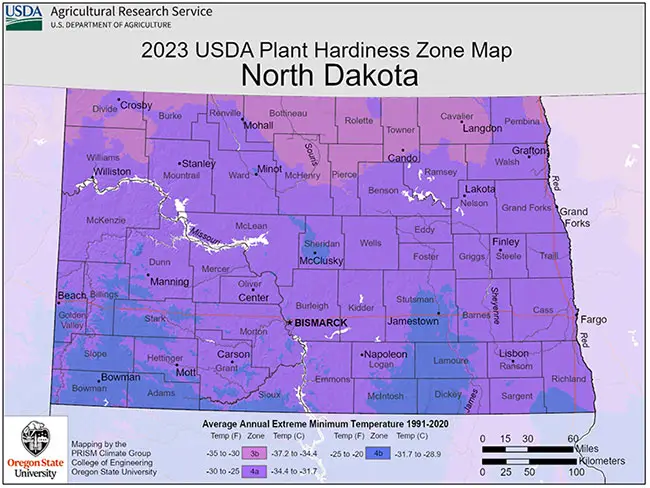
The highest temperature ever recorded in North Dakota reached a scorching 121°F (49°C), while the lowest plummeted to a bone-chilling -60°F (-51°C). USDA hardiness zones in North Dakota range from 3a to 4b.

Growing Palm Trees in North Dakota

Given that most areas of North Dakota are situated within the cold zone 3, the only feasible way to cultivate palm trees in the state is to grow them indoors, providing the necessary warmth and protection from harsh outdoor conditions. Here are some great indoor palms:

More Palm Trees»

Major Cities in North Dakota

Bismarck – Hardiness Zone 3a
Fargo – Hardiness Zone 3b
Similar Posts

  • Washington DC Palm Trees

    Washington DC boasts a humid subtropical climate with distinctive seasonal variations. Winters are relatively cool, featuring an average temperature of 38°F (3.3°C) in January, while summers can be hot and humid, with an average temperature of 79.2°F (26.2°C). Winter in the district typically witnesses an annual snowfall averaging 14.7 inches (37cm), while summers bring frequent…

  • Maryland Palm Trees

    While Maryland experiences cool winters overall, there are specific regions where palm trees can thrive. Maryland boasts a humid subtropical climate influenced by the Atlantic Ocean, featuring hot and humid summers with an average July temperature of 77°F (25°C) and cool winters with an average January temperature of 33°F (1°C). The annual snowfall varies significantly,…

  • Arkansas Palm Trees

    Despite Arkansas’ reputation for extreme weather, it is possible to cultivate palm trees in the state. Arkansas boasts a subtropical climate characterized by hot, humid summers and relatively colder, drier winters. Summers see average temperatures in the low 90s, accompanied by high humidity levels, while winters tend to linger in the low 50s. Throughout a…

  • Massachusetts Palm Trees

    Cultivating palm trees in Massachusetts is a challenging endeavor, primarily due to the state’s limited zone 7 area and the daunting winter storms it often faces. Massachusetts boasts a continental climate marked by cold, snowy winters and warm, humid summers. In January, average temperatures dip to around 22°F (–6°C), while July ushers in a milder…

  • Indiana Palm Trees

    Indiana’s climate isn’t favorable to palm tree cultivation. The state experiences a humid continental climate, characterized by chilly winters and warm summers. In January, temperatures typically range from 17°F (–8°C) to 35°F (2°C), while July sees averages ranging from 63°F (17°C) to 88°F (31°C). The USDA hardiness zones in Indiana span from 5b to 6b….