
Alabama Palm Trees
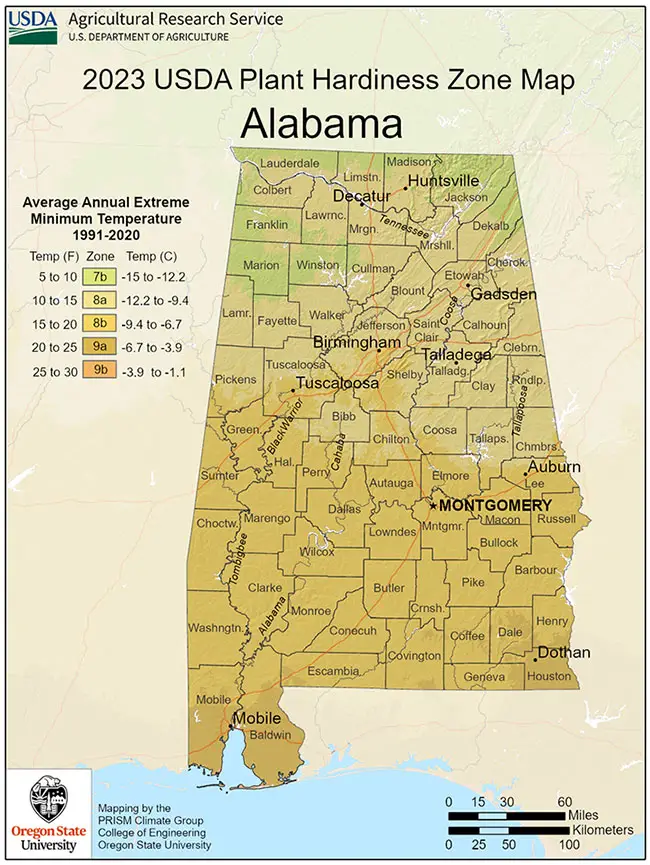
Alabama offers a welcoming environment for numerous cold-hardy palm tree varieties. The state enjoys a warm and humid climate heavily influenced by the Gulf of Mexico, classified as humid subtropical.
Alabama experiences scorching summers and mild winters. Summer average temperatures hover around 90°F (32°C), while winter temperatures settle at approximately 34°F (1°C). The southern part of the state tends to be warmer, while the northern regions experience cooler temperatures.
Alabama typically witnesses an average of 35 days each year when the thermometer dips below freezing. The USDA hardiness zones in Alabama span from 7a to 9a.
Growing Palm Trees in Alabama
If you’re keen on cultivating palm trees in Alabama’s zone 7, it’s crucial to select cold-hardy palm varieties capable of enduring temperatures as low as 0°F. Regardless of your palm choice, it’s advisable to offer cold protection for added resilience.
By creating a microclimate, you can broaden the selection of palm species that thrive in your specific area. Here are some of the most popular palm trees that can grow in Alabama:
- European Fan Palm Tree – Zones 7b – 11 (5 to 10 F)
- Pindo Palm Tree – Zones 7b – 11 (5 to 10 F)
- Sago Palm Tree – Zones 7b – 11 (5 to 10 F)
- Saw Palmetto Palm Tree – Zones 7a – 11 (0 to 5 F)
- Windmill Palm Tree – Zones 7b – 11 (5 to 10 F)
More Palm Trees»
Major Cities in Alabama
Birmingham – Hardiness Zone 7b
Dothan – Hardiness Zone 8a
Huntsville – Hardiness Zone 7a
Mobile – Hardiness Zone 8b
Montgomery – Hardiness Zone 8a
Tuscaloosa – Hardiness Zone 7b

Live in anniston alabama…Any palm trees good for our area
Will a coconut tree live in Lillian Alabama ?
I live in area code 36535 of southern Alabama. I have some sprouted coconuts that I want to plant and grow there. They are from Stuart, FL. Will they survive?