
Mississippi Palm Trees
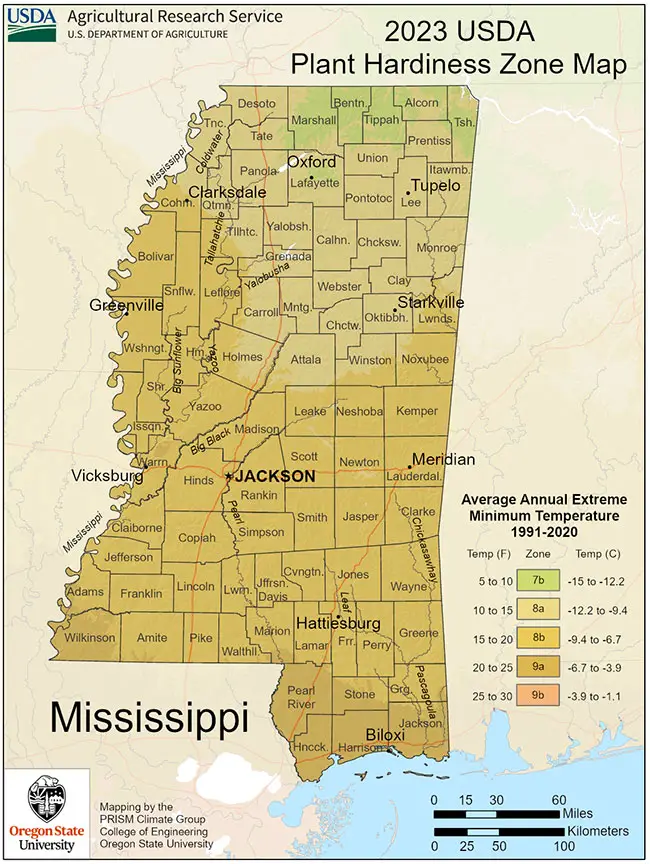
You can successfully cultivate palm trees in the warmer regions of Mississippi, which enjoys a humid subtropical climate characterized by short, mild winters and long, scorching summers.
The summertime here can be quite humid, with an average July temperature soaring to about 95°F (approximately 35°C). On the other hand, January ushers in milder weather, with an average temperature of around 48°F (about 9°C).
While snowfall is infrequent, the northern and central parts of the state do see some. Additionally, Mississippi witnesses roughly 27 tornadoes annually, with the possibility of occasional hurricanes striking during late summer and fall.
Mississippi’s temperature spectrum spans from the sweltering heights of 115°F (46°C) at its warmest to the bone-chilling depths of –19°F (–28°C) at its coldest. The USDA hardiness zones in Mississippi range from 7b to 9a.
Growing Palm Trees in Mississippi
Mississippi’s climate closely resembles that of Alabama. If you’re keen on cultivating palm trees, you’ll want to focus on the warmer areas, starting with zone 7b and moving upward.
To ensure success, opt for cold-hardy palm varieties capable of withstanding temperatures as low as 5°F. However, it’s crucial to bear in mind that even these cold-hardy palms can endure cold weather only for a limited time when mature.
If the frigid temperatures persist for more than a few hours, your palm trees may suffer cold damage. Here are some of the most popular palm trees that can grow in Mississippi:
- European Fan Palm Tree – Zones 7b-11 (5 to 10 F)
- Pindo Palm Tree – Zones 7b-11 (5 to 10 F)
- Sago Palm Tree – Zones 7b-11 (5 to 10 F)
- Saw Palmetto Palm Tree – Zones 7a-11 (0 to 5 F)
- Windmill Palm Tree – Zones 7b-11 (5 to 10 F)
More Palm Trees»
Major Cities in Mississippi
Biloxi – Hardiness Zone 8b
Greenville – Hardiness Zone 7b
Hattiesburg – Hardiness Zone 8a
Jackson – Hardiness Zone 8a
Meridian – Hardiness Zone 7b
Tupelo – Hardiness Zone 7b
Can you get a sabal Palm to grow in Tupelo Mississippi?