
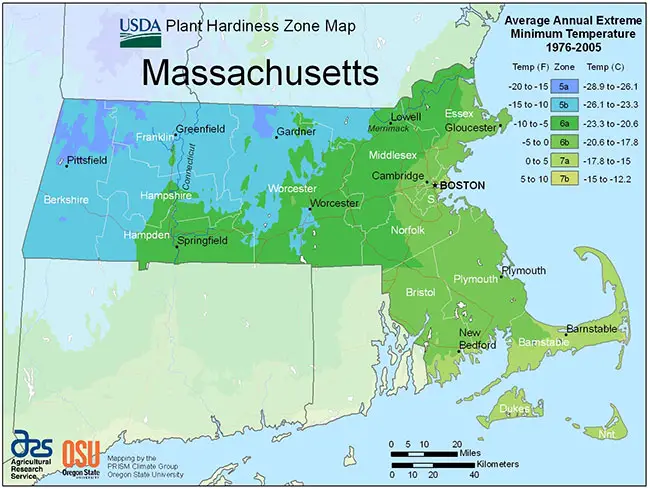
Cultivating palm trees in Massachusetts is a challenging endeavor, primarily due to the state’s limited zone 7 area and the daunting winter storms it often faces.
Massachusetts boasts a continental climate marked by cold, snowy winters and warm, humid summers. In January, average temperatures dip to around 22°F (–6°C), while July ushers in a milder climate with an average temperature of approximately 68°F (20°C).
Temperature extremes in Massachusetts reveal a wide spectrum, with the highest ever recorded at a toasty 107°F (42°C) and the lowest plunging to a bone-chilling –35°F (–37°C).
In the Boston area, snowfall is a common occurrence, averaging about 42 inches (107 cm) annually. The state is also known for its propensity to be hit by powerful winter storms that bring flooding, coastal erosion, hurricane-force winds, and heavy snowfall. Massachusetts’ USDA hardiness zones encompass a range from 5a to 7b.
Growing Palm Trees in Massachusetts
Trying to grow palm trees in Massachusetts is like taking on a real challenge. This state is known for its cold and windy weather, and it only has a small zone 7 area where you can attempt this.
To make it work, you’ll have to pick palm tree types that can handle the cold, give them plenty of time to adjust after transplanting, and, most importantly, shield them from the harsh winter conditions by providing some protection from the cold and wind. Here are some palms that will grow in zone 7:
- Needle Palm Tree – Zones 5b-11 (-15 to -10F)
- European Fan Palm Tree – Zones 7b-11 (5 to 10 F)
- Pindo Palm Tree – Zones 7b-11 (5 to 10 F)
- Sago Palm Tree – Zones 7b-11 (5 to 10 F)
- Saw Palmetto Palm Tree – Zones 7a-11 (0 to 5 F)
- Windmill Palm Tree – Zones 7b-11 (5 to 10 F)
More Palm Trees»
Major Cities in Massachusetts
Boston – Hardiness Zone 6b
Brockton – Hardiness Zone 6a
Cambridge – Hardiness Zone 6b
Fall River – Hardiness Zone 6a
Lynn – Hardiness Zone 6b
New Bedford – Hardiness Zone 6b
Newton – Hardiness Zone 6a
Quincy – Hardiness Zone 6a
Somerville – Hardiness Zone 6b
Springfield – Hardiness Zone 6a
Worcester – Hardiness Zone 6a

Comments are closed.