Indiana Palm Trees

Indiana’s climate isn’t favorable to palm tree cultivation. The state experiences a humid continental climate, characterized by chilly winters and warm summers. In January, temperatures typically range from 17°F (–8°C) to 35°F (2°C), while July sees averages ranging from 63°F (17°C) to 88°F (31°C).

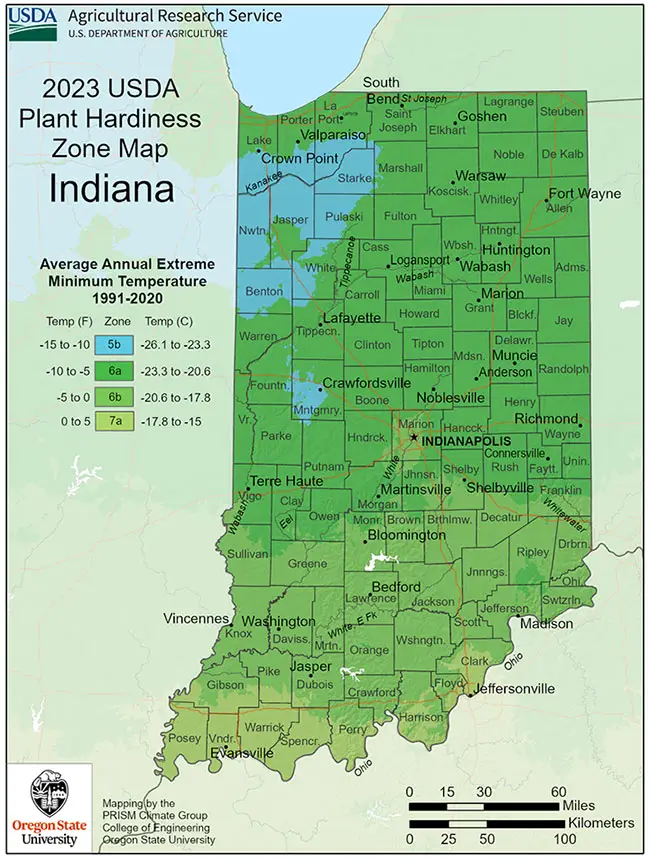
The USDA hardiness zones in Indiana span from 5b to 6b. Extreme temperature records for the state include a scorching high of 116°F (47°C) and a bone-chilling low of –36°F (–38°C).

Precipitation patterns bring occasional droughts and abundant rainfall, along with an annual snowfall averaging about 22 inches (56 cm).

Growing Palm Trees in Indiana

Given these climatic conditions, attempting to grow palm trees in Indiana can be challenging. If you’re determined to have a palm tree in your yard, you’ll need to create a microclimate resembling the milder conditions found in zone 7b.

While the Needle Palm is exceptionally cold-hardy and can withstand temperatures as low as -10°F, it still requires protection from the cold. Here are cold hardiest palm trees:

More Palm Trees»

Major Cities in Indiana

Evansville – Hardiness Zone 6b
Fort Wayne – Hardiness Zone 5b
Gary – Hardiness Zone 5b
Hammond – Hardiness Zone 5b
Indianapolis – Hardiness Zone 5b
Lafayette – Hardiness Zone 5b
South Bend – Hardiness Zone 5b
Terre Haute – Hardiness Zone 5b
Similar Posts

  • Colorado Palm Trees

    Colorado presents a significant challenge for anyone thinking of cultivating palm trees, given its frigid climate and diverse geography. The state comprises mountains, foothills, high plains, and desert lands, resulting in a semi-arid to alpine climate that varies with elevation. Extreme weather is par for the course in Colorado. Winters are bitterly cold and snow-laden,…

  • Washington Palm Trees

    You can indeed grow palm trees in the warm parts of Washington state. Washington has a mild climate, and it’s divided into two main regions: the western part, which has an oceanic climate, and the eastern part, which leans more towards a continental climate. The Cascade Mountains split the state. In the western region, the…

  • New York Palm Trees

    New York state’s chilly climate isn’t ideal for palm trees. It has a humid continental climate influenced by the Atlantic Ocean. July temperatures average between 79°F and 84°F (26°C to 28°C), while January temperatures range from 28°F to 38°F (-2°C to 3°C). Snowfall varies from 29 to 110 inches (74-279 cm) across the state, depending…

  • Florida Palm Trees

    Palm trees thrive in the warm, humid embrace of Florida’s climate. The state’s weather ranges from tropical to subtropical, featuring mild winters and scorching summers. In the northern part, temperatures typically hover between 65°F to 70°F (18°C to 21°C), while in the south, it’s a balmy 74°F to 77°F (23°C to 25°C). Despite the annual…

  • Arizona Palm Trees

    While palm trees are typically associated with tropical climates, some hardy varieties can endure the arid desert conditions found in Arizona. Selecting the right palms for your Arizona landscape can indeed be a challenge. This vast state is predominantly desert, characterized by scorching summers and mild winters, and it sees minimal rainfall. During winter, temperatures…

  • Massachusetts Palm Trees

    Cultivating palm trees in Massachusetts is a challenging endeavor, primarily due to the state’s limited zone 7 area and the daunting winter storms it often faces. Massachusetts boasts a continental climate marked by cold, snowy winters and warm, humid summers. In January, average temperatures dip to around 22°F (–6°C), while July ushers in a milder…

One Comment

  1. Chris gentry says:

    I’ve seen banana palm trees growing in new castle Indiana. What’s the hardiness zone for new castle?

Comments are closed.